

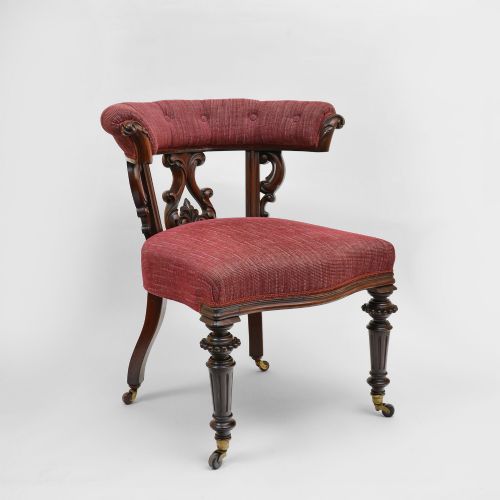
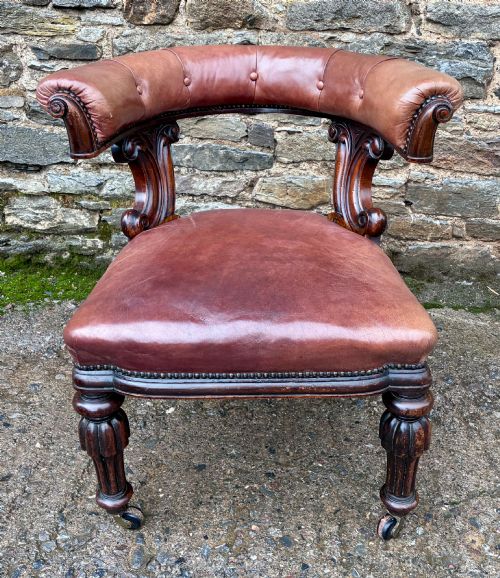
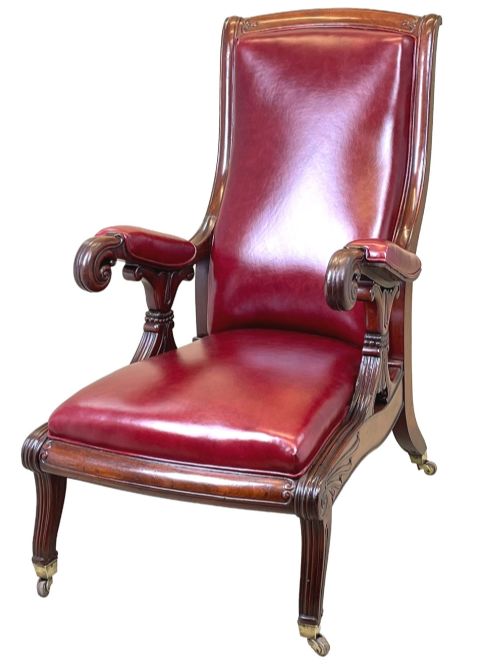
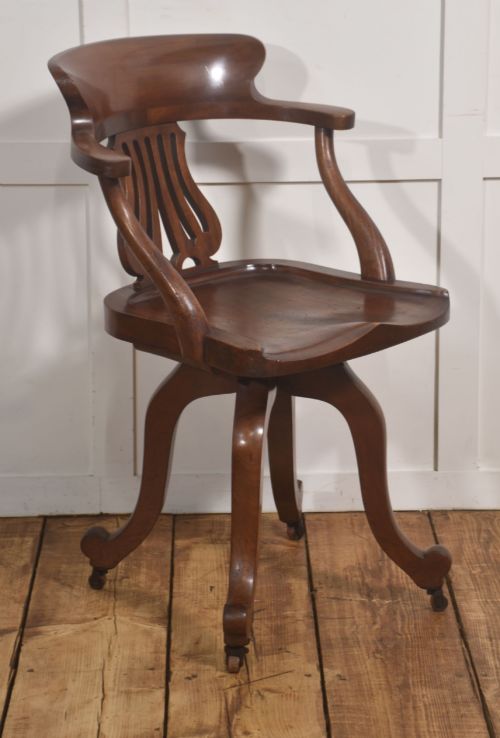

Carved Mahogany Captain Chair
A carved mahogany captain chair offers sturdy seating with a curved back rail, built for long hours at a desk.
Carved Mahogany Captain Chair
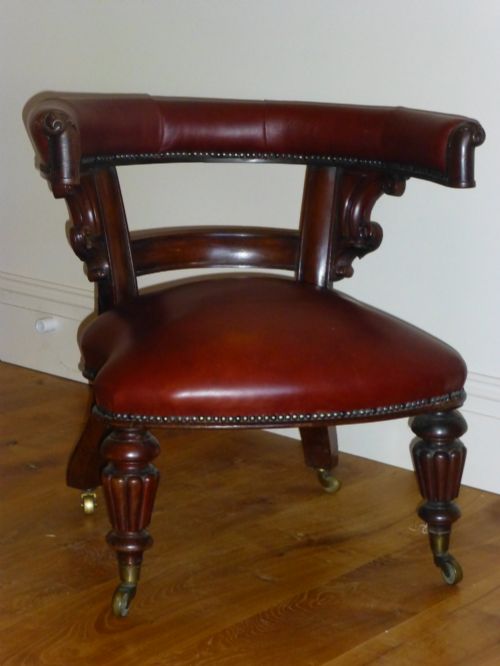
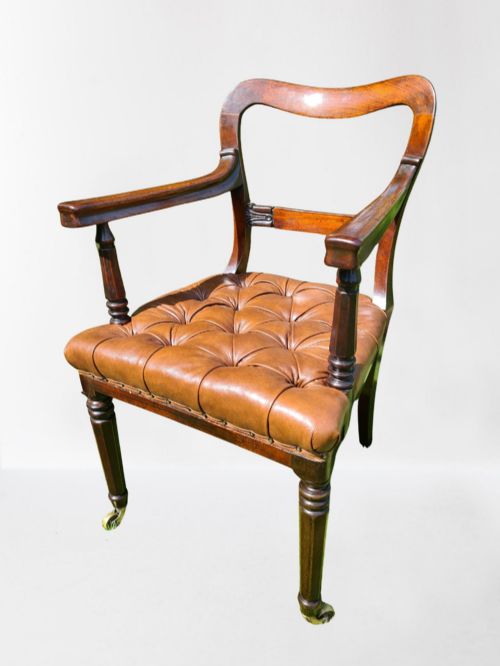
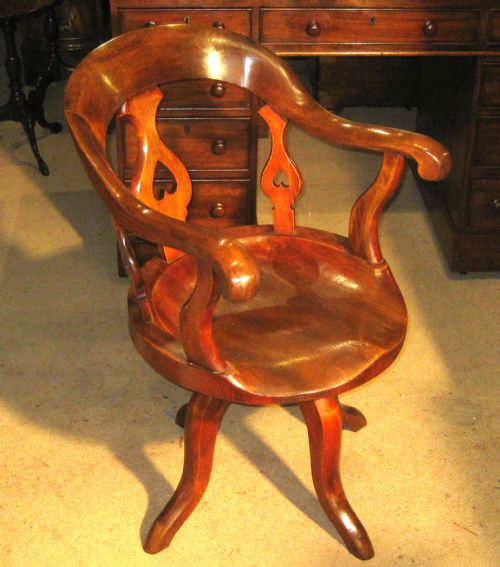
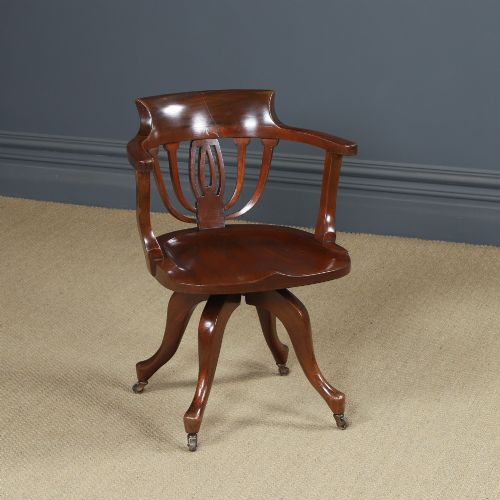
A carved mahogany captain chair is a sturdy seating option traditionally designed for use at a desk or in a library. The form combines a low, rounded back rail supported by turned or carved spindles with a generous seat, providing practical support for extended work.
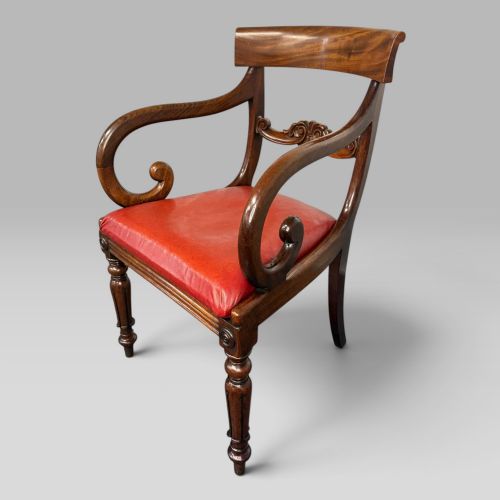
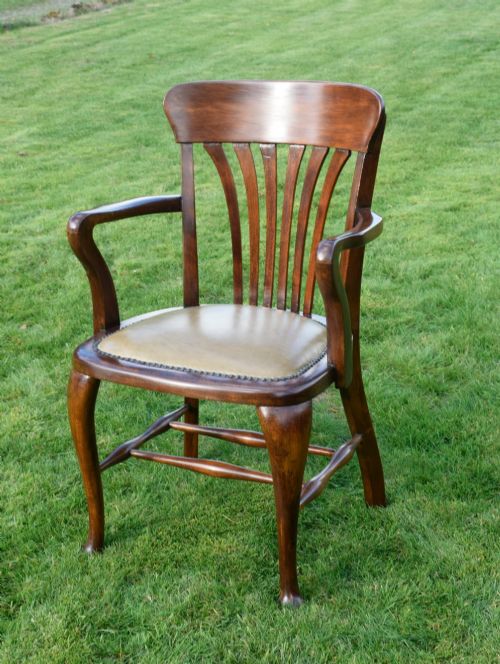
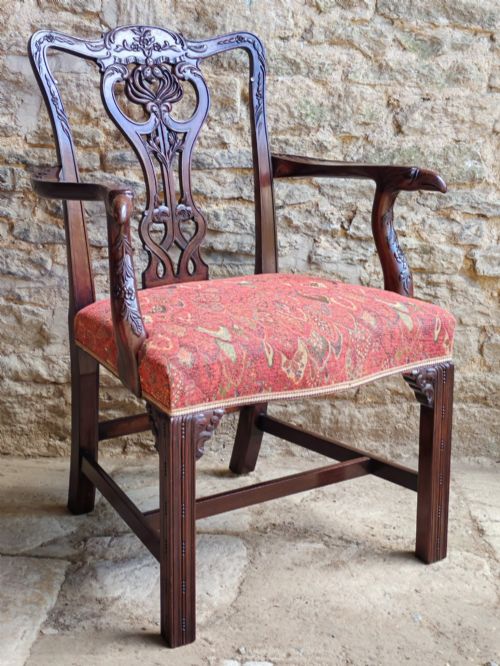
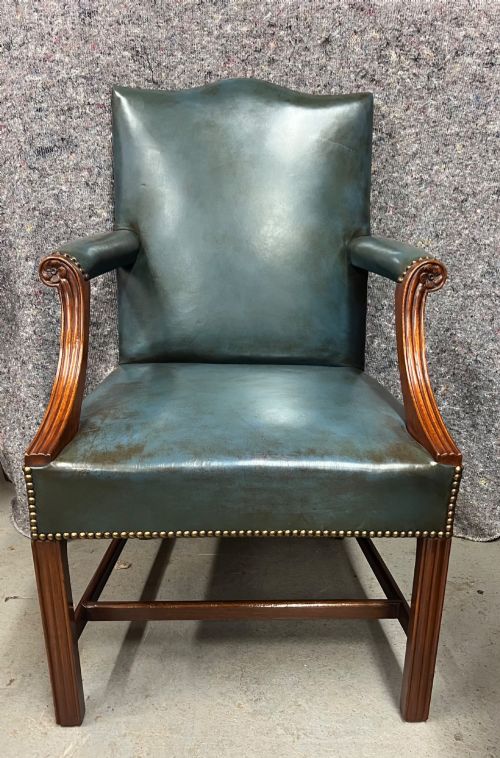
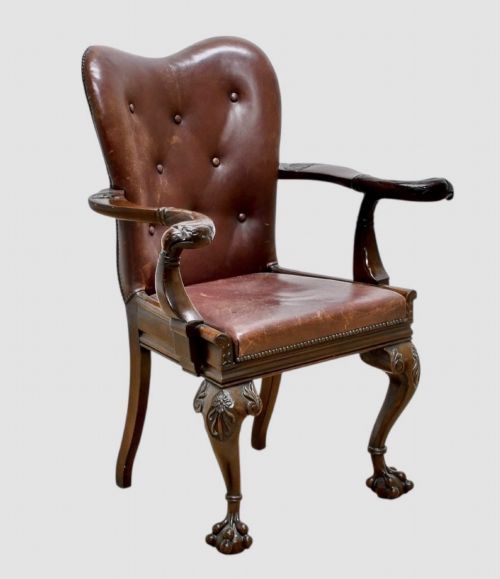
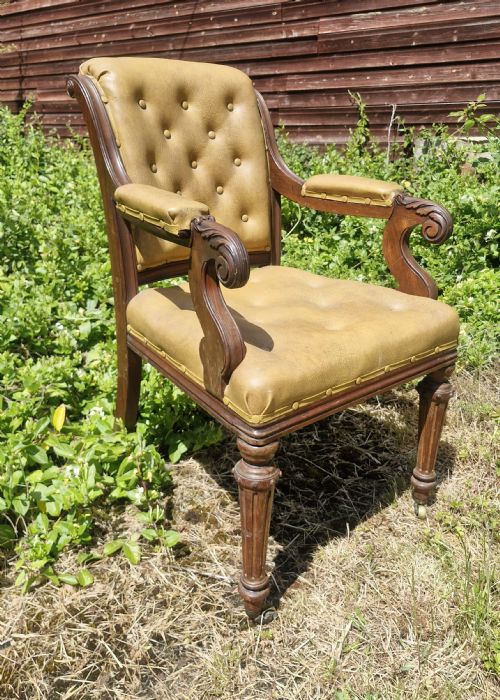
Examples on this page span the nineteenth and early twentieth centuries, drawing on Regency, Victorian, Edwardian, and William IV periods. Many pieces incorporate swivel mechanisms or leather upholstery suited to office work, while others adopt Chippendale or Gainsborough revival styles.
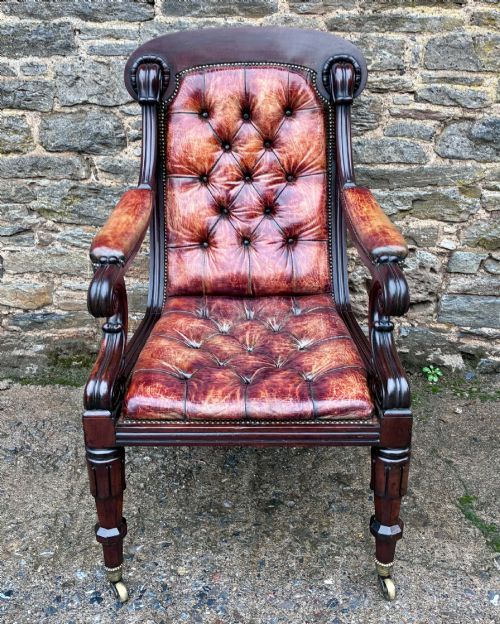
The materials and construction reflect utilitarian origins transformed into domestic comfort. Solid timber frames are frequently paired with brass hardware, iron mechanisms, and seats upholstered in leather, fabric, or velvet.
What varies in quality
The calibre of timber selection and depth of hand carving set individual pieces apart. Finer examples display crisply articulated foliage or scrollwork on the arm terminals and back splats, whereas utilitarian versions remain plain.
Mechanical complexity also divides the range, particularly in revolving models. Robust iron and brass swivel apparatuses that operate smoothly indicate higher initial manufacture than stiff or loose replacement fittings.
The integrity of the frame construction and the quality of the upholstery materials define the overall standard. Original leather upholstery with hand-dyed finishes sits at a different level from later replacement covers.
Carved Mahogany Captain Chair Retail Price Guide 2026
Typical asking prices for carved mahogany captain chair among the pieces listed under this phrase on Sellingantiques today, from the lower quarter to the upper quarter. They describe what is for sale here now, not the wider market.
Several chairs include built-in swivel actions designed to help nineteenth-century clerks reach distant ledgers without standing up.
Howard and Sons·Shoolbred·George Bartholomew and Co
The Carved Mahogany Captain Chair Glossary
- Carver
- An armchair, often designed en suite with a set of dining chairs but featuring more substantial arms. It shares the general form of the captain chair.
- Revolving
- A seating mechanism allowing the upper portion of the chair to turn full circle on a central spindle. This design appears frequently on office and library chairs from the Victorian period onward.
- Tub chair
- An armchair with a continuous curved back and armrest rail forming a circular enclosure. It provides a compact and enclosing seat.
- Spindle
- A turned wooden rod supporting the upper rail of the chair back. Spindles are shaped on a lathe to decorative profiles.
- Brass castor
- A small wheel mounted in a brass bracket attached to the foot of a leg. It allows the chair to roll easily across a floor.
Carved Mahogany Captain Chair: Frequently Asked Questions
What is a captain chair?
A captain chair is a sturdy wooden armchair with a low, curved back rail supported by spindles, designed originally for use on ships or at office desks.
Over time, the form evolved into a domestic library and study seat, combining durable timber construction with comfortable upholstered options.
How do I date a mahogany chair?
Dating relies on observing construction methods, timber patination, and stylistic details such as Regency curves or Victorian turning.
Hardware like brass castors and swivel mechanisms also provide clues to the manufacturing decade.
Are swivel chairs antique?
Yes, revolving desk chairs with iron and brass mechanisms were widely produced during the nineteenth century for offices and libraries.
These early mechanical chairs offered functionality similar to modern office seating while retaining traditional hand-carved wood frames.
How do I care for leather upholstery?
Leather seats benefit from regular dusting and occasional treatment with appropriate conditioning balms to prevent drying.
Keeping the chairs away from direct heat sources helps preserve the suppleness of nineteenth-century hides.