

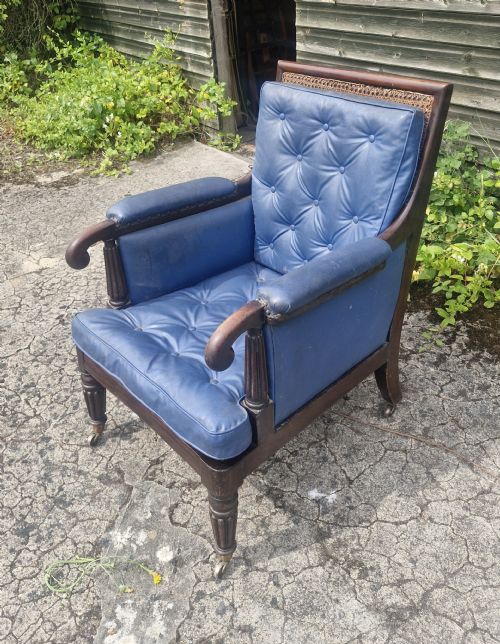


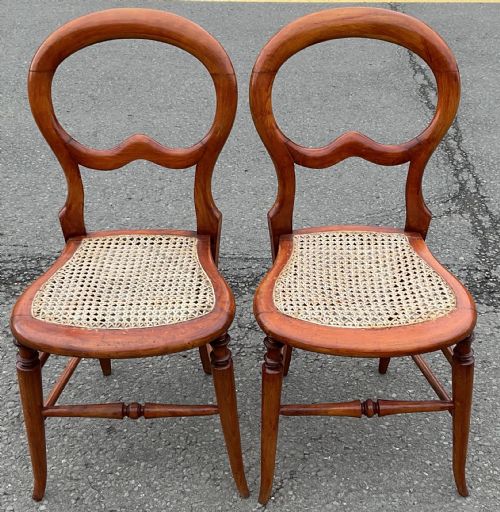


Carved Mahogany Cane Chairs
These carved mahogany cane chairs combine solid wood frames with woven seating, offering durable elegance for dining rooms and libraries alike.
Carved Mahogany Cane Chairs
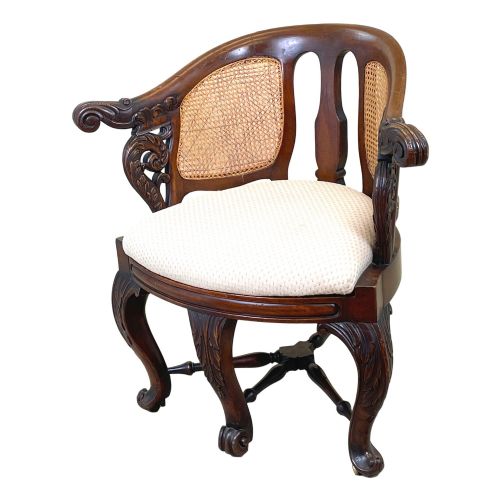
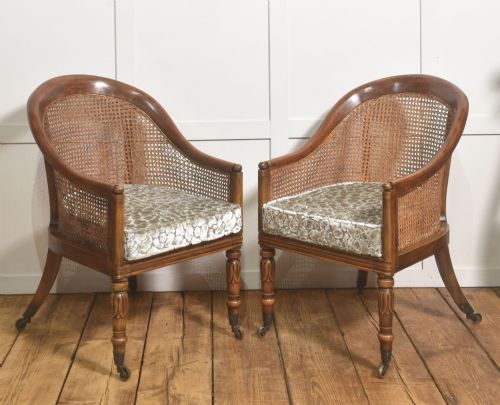
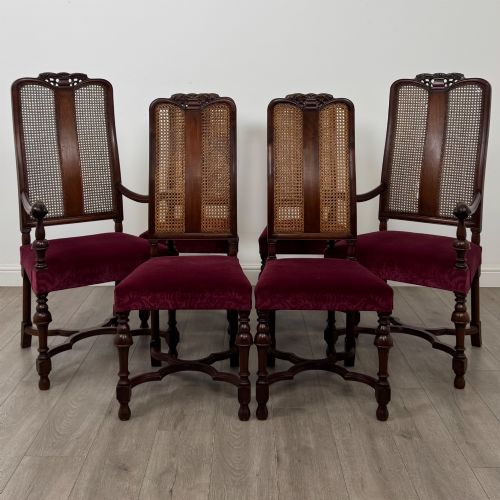
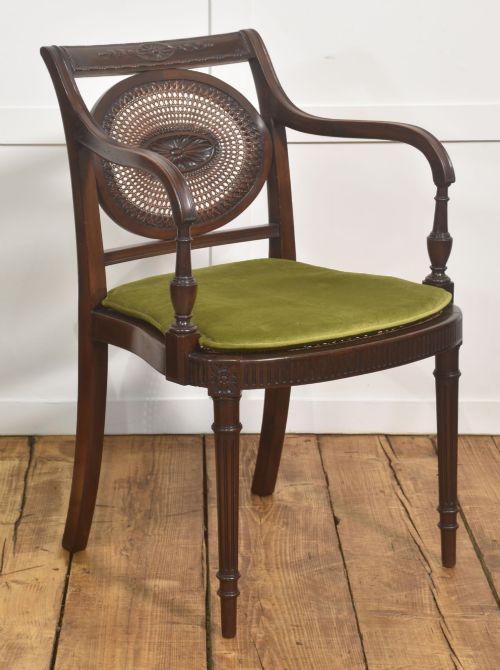
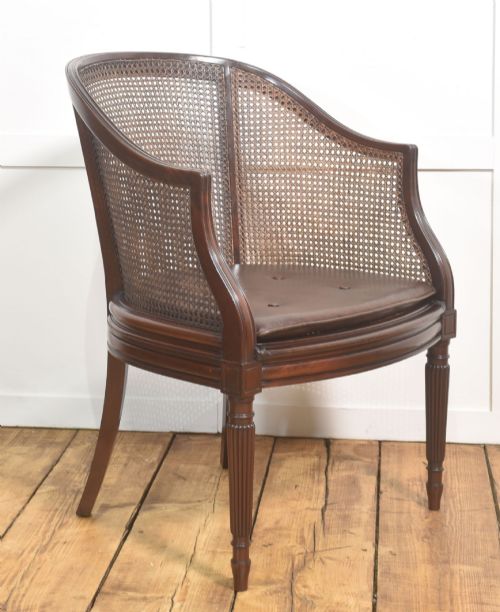
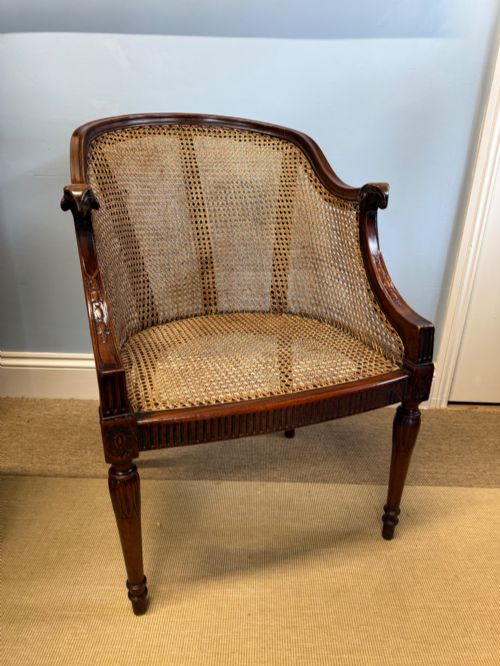
Carved mahogany cane chairs span formal dining sets, library armchairs, and occasional seating originating from the Regency, Victorian, and Edwardian periods. Buyers encounter various forms here, including expansive sets of dining chairs, pairs of tub armchairs, and small children's high chairs.
Materials and construction methods
Makers utilised dense mahogany for the structural frames, allowing for crisp carving along the back rails, arms, and legs. This hardwood provided the necessary strength to support the tension of woven seating.
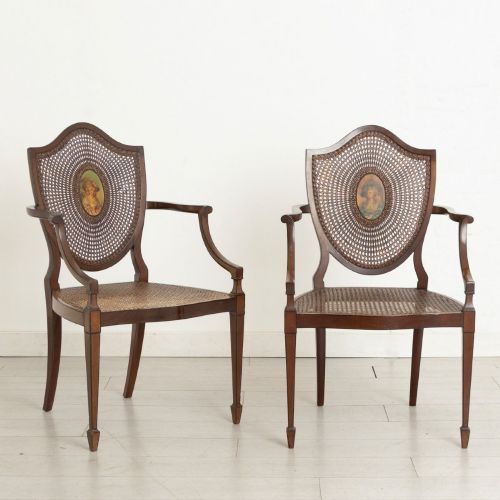
Cane panels were hand-woven into the seat and back frames, creating a flexible and supportive mesh. Selected pieces also incorporate brass accents, leather upholstery, velvet inserts, or painted highlights to complement the polished wood.
Carved Mahogany Cane Chairs Retail Price Guide 2026
Typical asking prices for carved mahogany cane chairs among the pieces listed under this phrase on Sellingantiques today, from the lower quarter to the upper quarter. They describe what is for sale here now, not the wider market.
The listings span the nineteenth and early twentieth centuries, encompassing Regency, Victorian, Edwardian, and Art Deco periods.
Distinctions in quality and finish
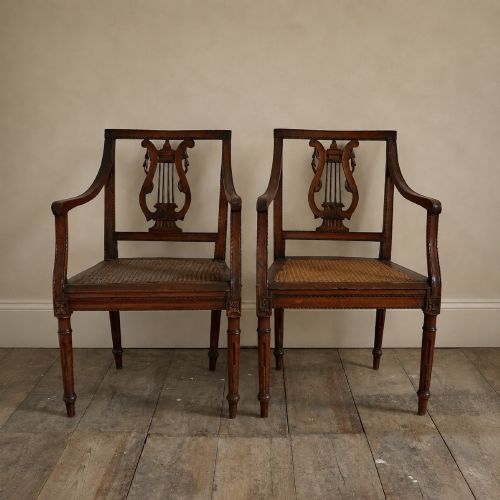
Superior examples display precise, deep hand-carving on the mahogany frame rather than superficial moulding, alongside tightly woven cane without loose strands. The crispness of detail in motifs like the lyre back or carved top rail distinguishes finer workshop production.
Proportion and scale dictate the visual weight of the chair, with well-balanced armchairs and matching dining sets commanding greater presence. The integrity of the frame joints and the original patina of the polished mahogany further separate standard items from exceptional ones.
Gillows
The Carved Mahogany Cane Chairs Glossary
- Bergere
- An enclosed upholstered armchair with wooden framing and woven cane sides and back. This French form became popular in British drawing rooms and libraries during the Regency era.
- Tub chair
- An armchair featuring a rounded, semi-circular back enclosing the sitter. The continuous curved rail often integrates directly into the armrests.
- Klismos
- An ancient Greek chair shape revived in the nineteenth century, characterised by outward-curving legs and a concave backrest. These graceful seats offer both structural stability and classical aesthetic balance.
- Curule
- A style of cross-framed ancient Roman folding chair adapted for decorative open armchairs. The X-shaped support structure provides a distinctive architectural silhouette.
- Caning
- The craft of weaving plant material, typically rattan, into open mesh panels for seats and backs. This technique creates a resilient surface that adapts to the contours of the body.
Carved Mahogany Cane Chairs: Frequently Asked Questions
How do I care for cane seats?
Keep woven cane panels supple by wiping them lightly with damp cloth periodically to prevent the natural material from drying out and snapping.
Avoid placing these chairs directly beside intense heat sources or in harsh sunlight, which weakens the tension of the weave over time.
Are these chairs comfortable for daily use?
Woven cane naturally flexes under weight, providing a surprisingly supportive and breathable seat for dining or reading.
Many library armchairs and bergères also accept loose squab cushions upholstered in leather or fabric to increase everyday comfort.
How do I identify Regency style pieces?
Regency and Regency style seating typically displays clean classical lines, often incorporating specific motifs like lyre backs, sabre legs, and subtle carved details.
Original pieces date to the early nineteenth century, whilst later revival versions from the Edwardian era and the early twentieth century replicate these balanced proportions.
Can I mix these chairs with modern dining tables?
The rich reddish-brown tones of polished mahogany pair easily with contemporary wood or glass dining tables, adding traditional warmth to modern interiors.
Matching sets or paired armchairs work particularly well as accent seating around a central room layout.