



Carved Mahogany Bergere
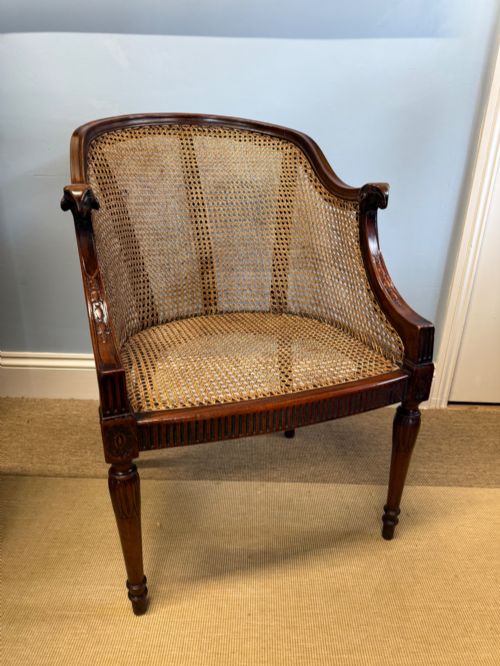
A carved mahogany bergere brings deep timber frames and woven caning together, offering a traditional seated piece that anchors any period room.
Carved Mahogany Bergere
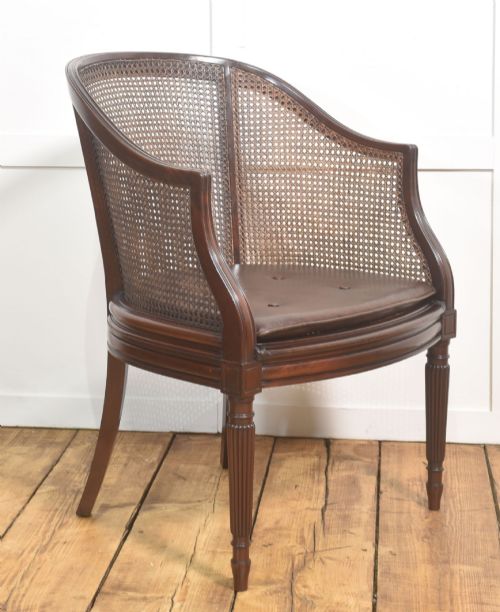
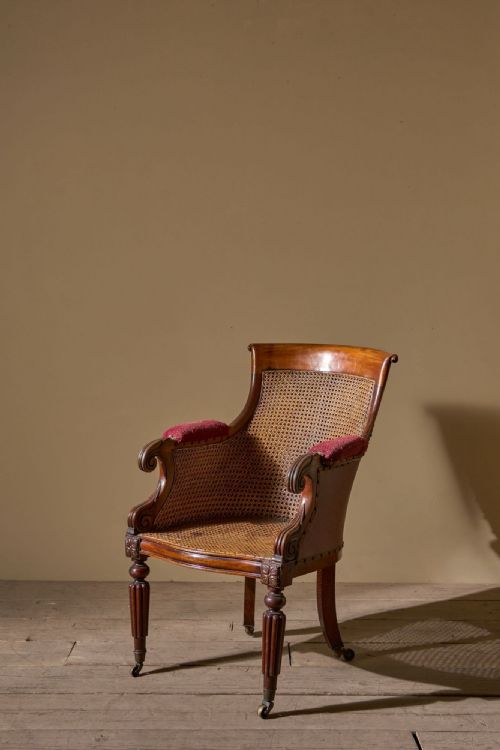
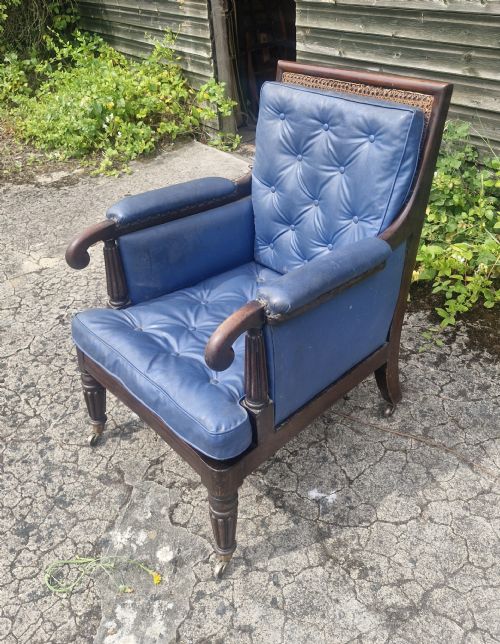
A carved mahogany bergere is a substantial upholstered or caned armchair, sofa, or occasional seat built from dense tropical hardwood. When searching for a carved mahogany bergere, buyers encounter pieces spanning the nineteenth century through the early twentieth century, alongside revival iterations.
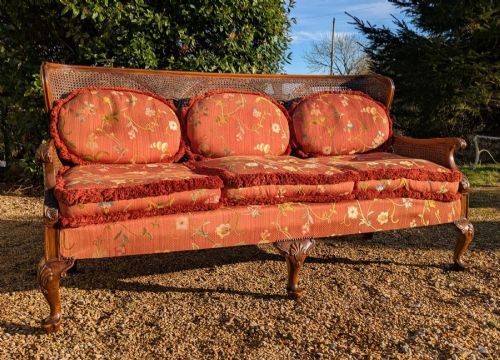
The selection on this page leans heavily toward nineteenth-century library armchairs, Edwardian frame armchairs, and matching suite pieces. Alongside standard armchairs, forms extend to sofas, small chairs, children's high chairs, and even occasional fire screens.
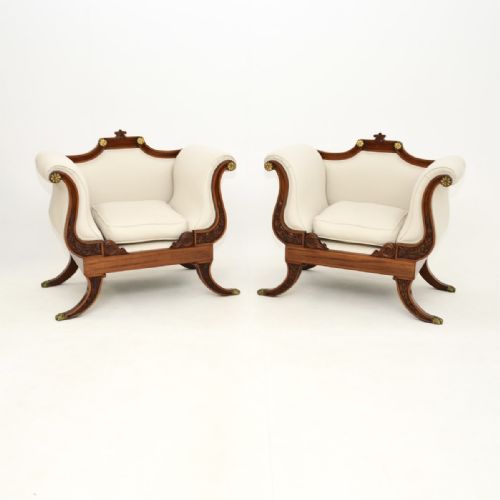
Stylistic influences range widely across the periods represented, including Regency, Victorian, Edwardian, George IV, and Louis XVI styles. Buyers will find both British craftsmanship and French-inspired seating designs shaping the available options.
Materials and construction
Solid mahogany forms the structural backbone of these pieces, providing a heavy, durable framework that accepts detailed hand carving along the crest rails, arms, and legs. Caning is woven tightly into the frame channels to create the distinctive supportive panels of the bergere form.
Upholstery elements incorporate materials such as leather, brass details, and various textiles including velvet and feather cushions. These soft additions complement the rigid timber and cane work, balancing structural support with comfort.
Even the smallest family members required proper seating, as shown by surviving child-sized high chairs complete with caned panels.
Assessing quality in carved mahogany
The distinction between tiers rests upon the crispness of the hand carving and the integrity of the timber frame. Superior examples demonstrate deep, clean chisel work on the mahogany and tightly preserved woven cane panels.
Proportion and scale also dictate worth, as unusually large or diminutive pieces, such as small chairs or child seats, require precise joinery to maintain structural balance. The quality of associated upholstery materials, from leather to feather fillings, further separates standard production from finer output.
Gillows
The Carved Mahogany Bergere Glossary
- Bergere
- An enclosed upholstered French-style armchair with solid sides filled with cane or upholstery. This form became popular in Britain during the eighteenth and nineteenth centuries.
- Caning
- A method of weaving rattan or split cane material to create a porous, resilient panel. It provides flexible support on the back and sides of seating furniture.
- Mahogany
- A durable, reddish-brown tropical hardwood prized for stability and fine grain. It serves as the primary structural material for these frames.
- Klismos
- An ancient Greek chair design featuring curved legs and a concave backrest. Revival pieces adopt this graceful silhouette.
- Tub armchair
- A fully rounded seating form where the back and arms merge into a single continuous curve. It offers enclosed comfort.
Carved Mahogany Bergere: Frequently Asked Questions
How do I identify a Regency bergere?
Regency pieces often display classical revival motifs, sabre legs, and darker mahogany tones consistent with the early nineteenth century.
Look for restrained classical carving and robust frames that reflect the architectural tastes of the period.
Can I replace the cane on a bergere?
Traditional cane panels can be re-woven by skilled artisans who match the gauge and pattern of the original work.
This maintenance preserves the structural integrity and historical appearance of the armchair.
Are these chairs comfortable for daily use?
Most models are designed with deep seats and often include loose feather cushions for added softness.
Their enclosed proportions make them well-suited as library or reading chairs in modern living spaces.
What is the difference between Edwardian and Victorian styles?
Victorian iterations tend to be heavier and more ornate, reflecting eclectic nineteenth-century revival tastes.
Edwardian pieces often feature lighter framing and simpler carved details inspired by eighteenth-century designs.