




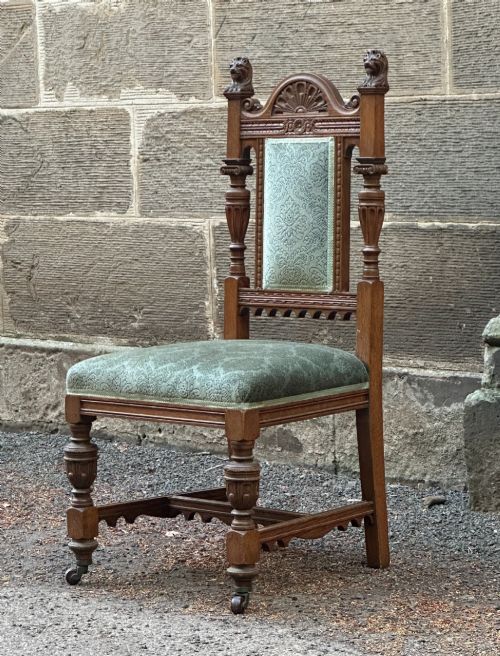
Carved Lion Head
A carved lion head brings muscular authority to seating, desks, and architectural accents across several centuries of British and continental design.
Carved Lion Head
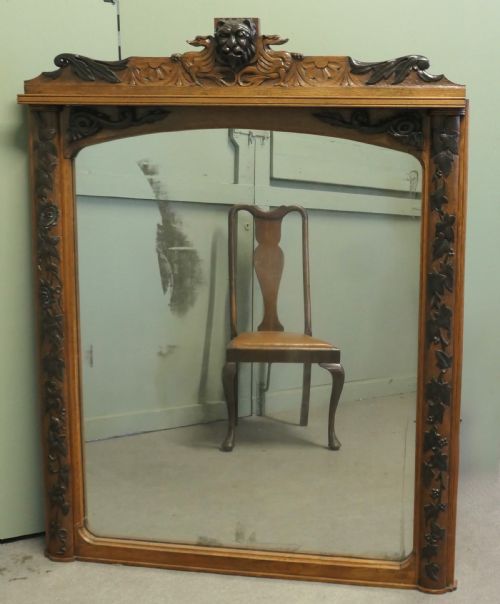
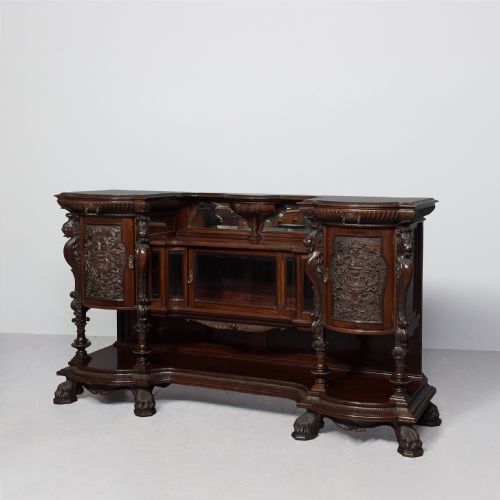
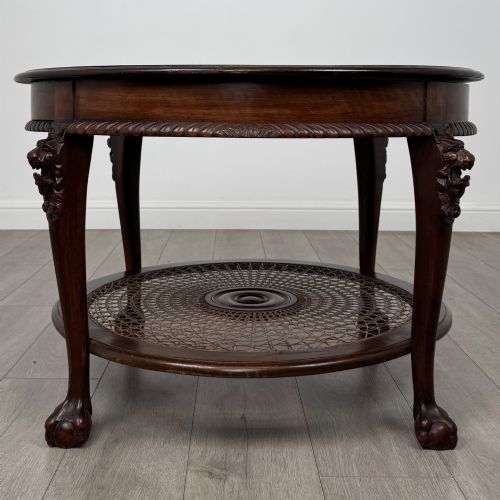
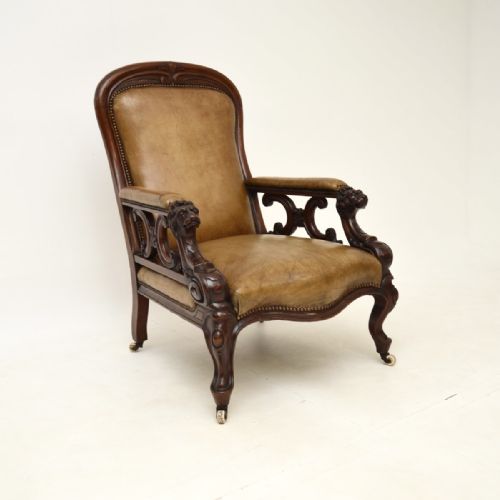
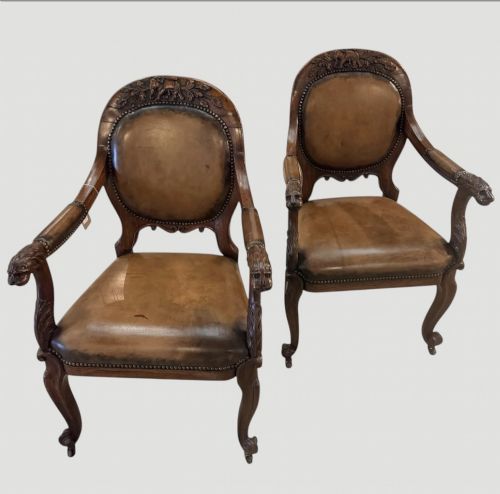
When you search for a carved lion head, you encounter sculptural woodwork and brass fixtures integrated into functional furniture or mounted as wall masks. These fierce visages ornament armchairs, oak desks, library seating, and heavy sideboards from the Georgian, Victorian, and Edwardian eras.
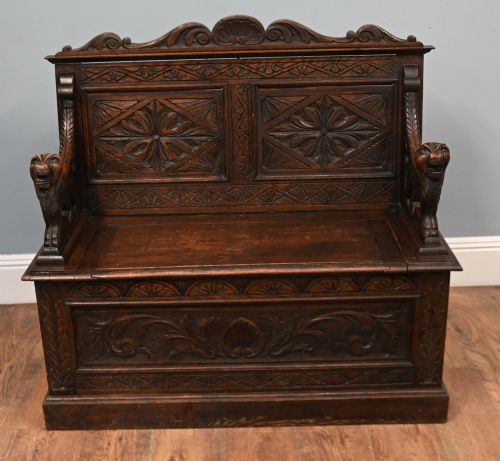
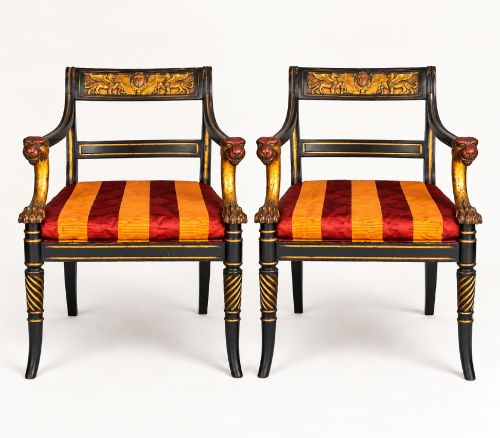
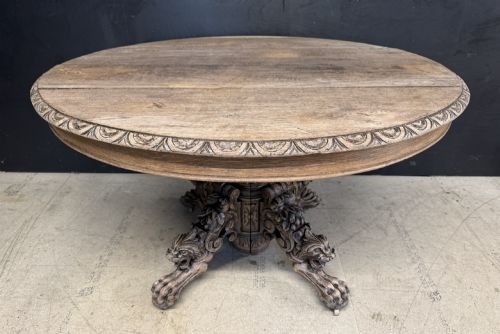
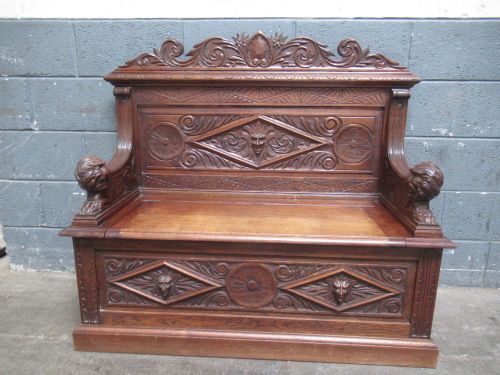
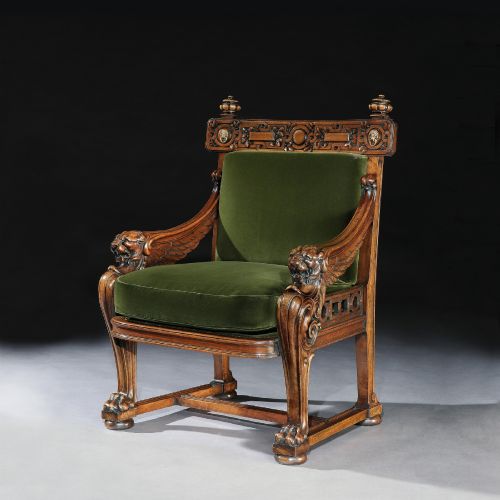
The most common forms on this page are sturdy oak armchairs, hall benches, and library seats where the beast terminates armrests or supports structural framing. Architectural wall masks and occasional walnut panels also appear, drawn from Renaissance Revival, Gothic Revival, and Regency traditions.
Materials and construction methods
Cabinetmakers predominantly utilised solid oak and mahogany for these substantial forms, carving the dense timber directly to shape expressive manes and jaws. Walnut, pine, and ash also serve as structural bases for stools, tables, and bookends.
Surface ornamentation frequently incorporates gilt gesso, parcel-gilt paint, and fitted leather upholstery secured with brass studs. Artisans combined hand-chizzled relief work with mortise and tenon joinery to anchor heavy projecting wooden heads safely to frames.
Carved Lion Head Retail Price Guide 2026
Typical asking prices for carved lion head among the pieces listed under this phrase on Sellingantiques today, from the lower quarter to the upper quarter. They describe what is for sale here now, not the wider market.
Listings feature oak, mahogany, walnut, and pine across Victorian, Georgian, and Edwardian seating, desks, and architectural salvage.
Assessing craftsmanship and sculptural depth
The distinction between ordinary production and superior execution lies in the anatomical precision and undercut depth of the carving. Stronger examples display deeply chiselled manes, realistic eye sockets, and expressive teeth rather than shallow, formulaic surface stamping.
Integration with the host object also dictates grade. Superior pieces treat the beast as an organic extension of the armrest, leg, or frieze, whereas lesser items appear merely stuck on as an afterthought.
Bruce Talbert·Thomas Hope·Gillows
The Carved Lion Head Glossary
- Monopodia
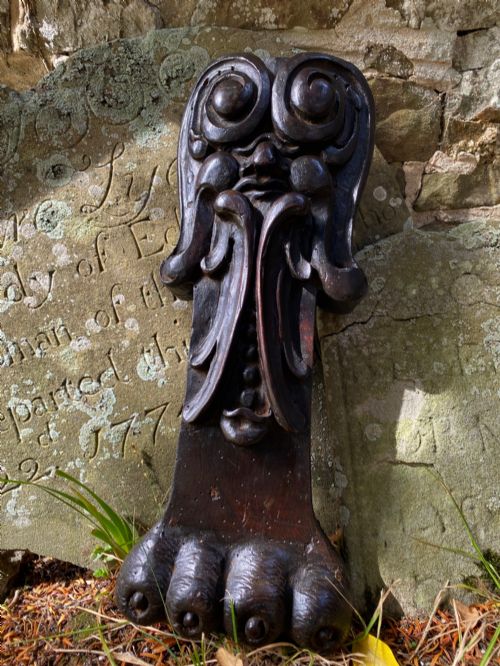
- A furniture support comprising a single carved animal leg ending in a paw or head. This classical form often appears on Regency and Neoclassical library chairs.
- Gesso
- A plaster-like mixture applied to wood surfaces and carved before gilding. It provides a smooth base for crisp decorative mouldings on mirrors and frames.
- Architectural salvage
- Building elements removed from structures for reuse. Wall masks and timber panels are frequently preserved through this practice.
- Renaissance Revival
- A nineteenth-century style drawing inspiration from sixteenth-century European art. It heavily favours robust animal carvings, strapwork, and dark timbers.
Carved Lion Head: Frequently Asked Questions
What periods do these carved lion items date from?
The selection spans from the eighteenth century through the Victorian and Edwardian eras into the early twentieth century. Most survivals originate in the nineteenth century during revivals of Gothic and Renaissance styles.
Cabinetmakers of the Georgian, Victorian, and Edwardian periods utilised sturdy hardwoods like oak and mahogany to execute these heavy sculptural details.
How were these carved pieces used originally?
Sculptural heads functioned primarily as assertive decorative terminals on library armchairs, desks, hall benches, and sideboards. They projected authority and status in domestic studies, libraries, and formal reception rooms.
Wall masks and panels served as architectural ornaments within grand interiors, while smaller items functioned as bookends or tabletop accessories.
Where should I place a heavy oak chair?
These robust seats require stable flooring and sufficient clearance to accommodate projecting armrests and carved paw feet. They suit studies, libraries, or spacious hallways alongside similarly solid historic furniture.
Keep them away from direct heat sources and strong sunlight to protect the aged timber, leather upholstery, and historic surface finishes.
How do I distinguish Regency from Victorian examples?
Regency items often reflect strict classical Neoclassical or French provincial influences with cleaner lines and gilt accents. Victorian pieces tend toward heavier, more imposing Gothic and Renaissance Revival proportions with deeply recessed oak carvings.
Examining the underlying timber species, joinery methods, and secondary woods helps clarify the specific manufacturing decade.