

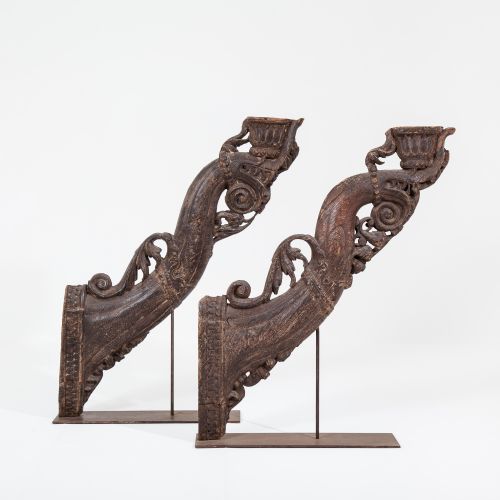


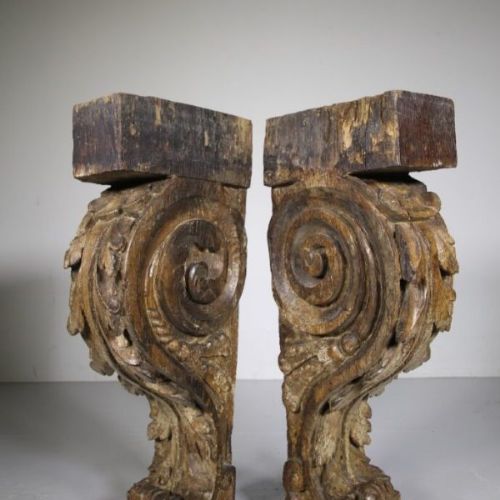


Carved Leaf Wall Bracket
A carved leaf wall bracket brings architectural depth to an interior, offering a sculptural ledge designed to support lamps, figures or urns.
Carved Leaf Wall Bracket
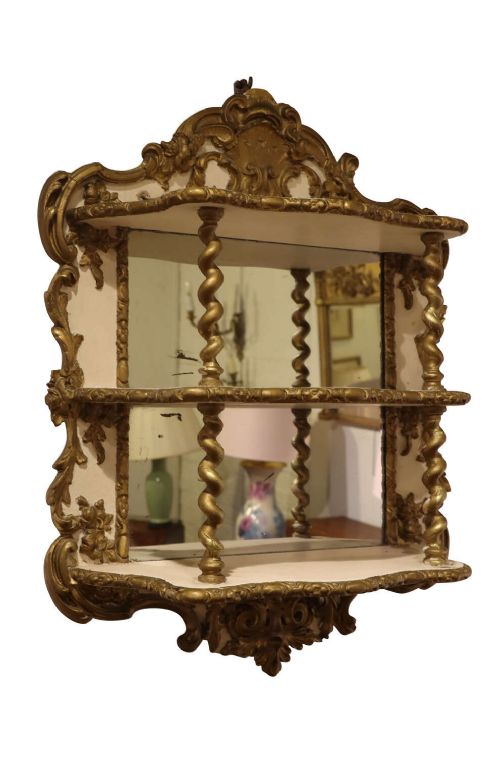
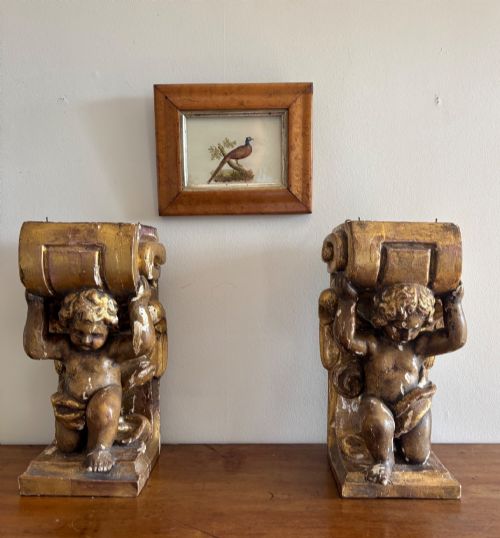
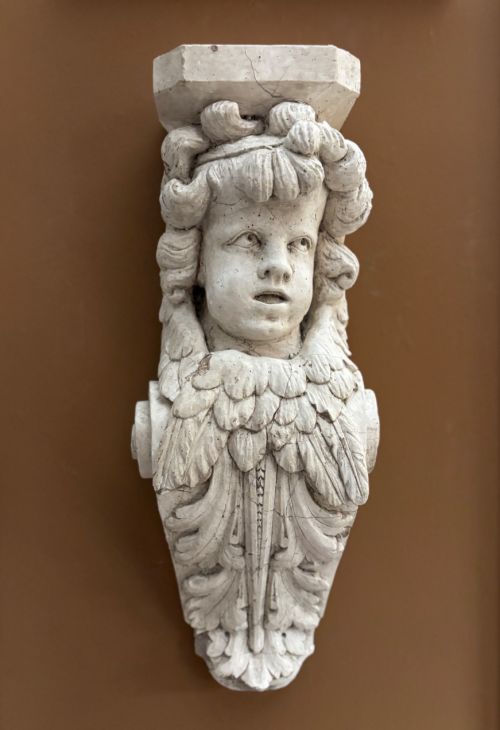
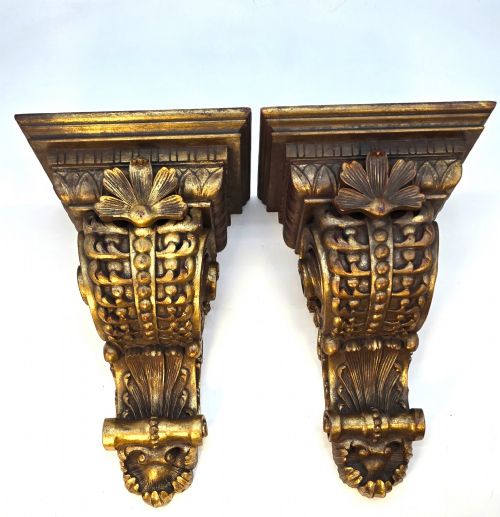
A carved leaf wall bracket takes several distinct architectural and decorative forms across this selection, appearing as single wall shelves, figural corbels and mounted consoles. The listings span multiple periods from the eighteenth century through the twentieth century, with strong representation from Italian and French workshops.
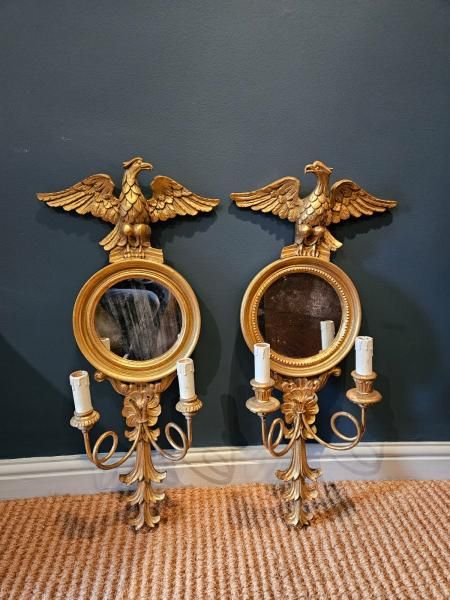
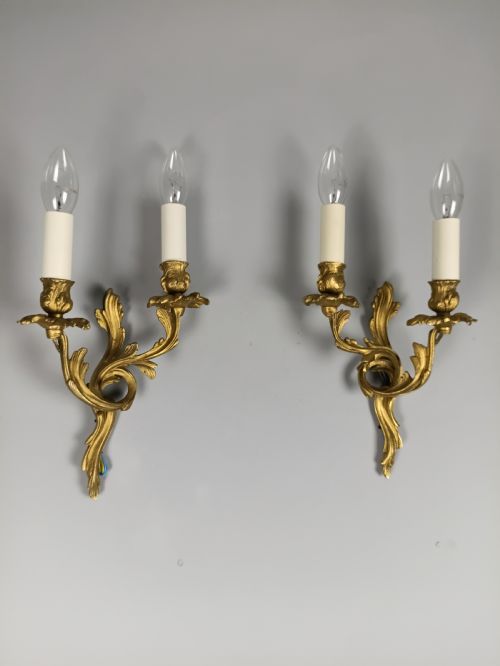
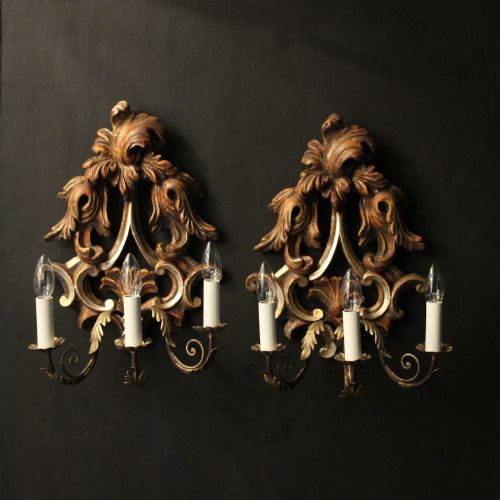
Buyers encounter these pieces functioning as wall lights, sconces, mirrors and pier glasses alongside traditional bracket shelves. The designs incorporate elaborate foliage, scrolls and classical capitals executed in wood, plaster and stone.
Originating largely from continental design traditions, these items frequently display regional characteristics such as Florentine giltwood or French rococo revival detailing. The forms serve both structural and ornamental purposes within domestic interiors.
Materials and construction
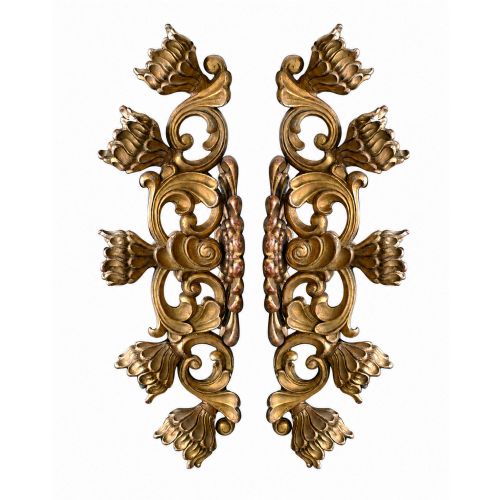
The construction relies heavily on carved timber, gesso and applied gold leaf, creating rich reflective surfaces typical of antique wall furniture. Master craftsmen shaped the wood before applying successive layers of gesso to build up high-relief botanical motifs.
Gilding techniques utilise genuine gold leaf applied over bole, while other examples combine white paint, polychrome or plain carved wood finishes. Alternative materials such as plaster and stone appear in heavy architectural corbels and large structural brackets.
Materials recorded across the selection include giltwood, gesso, gold leaf, carved wood, glass, metal, paint and stone.
Assessing quality and execution
Quality reveals itself primarily in the crispness and depth of the hand-carving across foliage, scrolls and figurative elements. Superior examples display undercut leaves and clean botanical details that demonstrate the hand of a skilled artisan rather than mechanical production.
The integrity of the underlying gesso and the finesse of the original gilding further separate standard items from exceptional pieces. Depth in the layering of gold leaf and paint provides a warmth and luminosity absent in later or heavier restorations.
The Carved Leaf Wall Bracket Glossary
- Giltwood
- Wood that has been coated with gold leaf or gold paint. This technique creates a rich metallic surface commonly found on decorative wall furniture from the eighteenth and nineteenth centuries.
- Gesso
- A plaster mixture applied to wood as a base for gilding and painting. It allows artisans to carve intricate relief details before applying gold leaf.
- Corbel
- A structural piece of stone, wood or plaster projecting from a wall to bear a weight. In decorative contexts, they often feature carved botanical or figural designs.
- Sconce
- A wall-mounted lighting fixture designed to hold candles or electric lamps. Many period examples incorporate mirrored backs or carved wooden backplates to amplify light.
- Étagère
- A set of open shelves for displaying small objects or ornaments. These wall-mounted furniture pieces often feature elaborate French rococo or neoclassical framing.
Carved Leaf Wall Bracket: Frequently Asked Questions
How do I hang a heavy carved bracket?
Heavy carved wall brackets require secure fixing directly into masonry or substantial timber studs within the wall. Due to the substantial weight of dense woods, gesso and applied gold leaf, appropriate wall anchors are essential for safety.
Professional installation is recommended for larger eighteenth and nineteenth-century architectural elements, stone corbels and console tables. Ensuring the weight distributes evenly protects both the antique and the wall surface.
Where should I place a wall bracket?
Wall brackets suit entrance hallways, living rooms and dining areas where they provide a focal point at eye level. Placing them above a console table or flanking a mirror creates balance and symmetry in a traditional interior.
They function effectively as display ledges for small sculptures, clocks or ceramic vessels. Selecting a location away from direct heat sources helps protect antique wood, gesso and gilt surfaces.
How do I clean antique giltwood?
Cleaning antique giltwood requires gentle dusting with a soft, dry brush or feather duster to remove surface particles safely. Moisture and modern chemical cleaners can strip delicate gold leaf and historical gesso layers.
Professional conservation is advised if the surface requires deeper cleaning or stabilisation. Keeping the pieces out of direct sunlight prevents the gesso and paint finishes from drying out over time.