







Carved Leaf Cabinet
A carved leaf cabinet brings rich foliage detail and organic form to a room.
Carved Leaf Cabinet
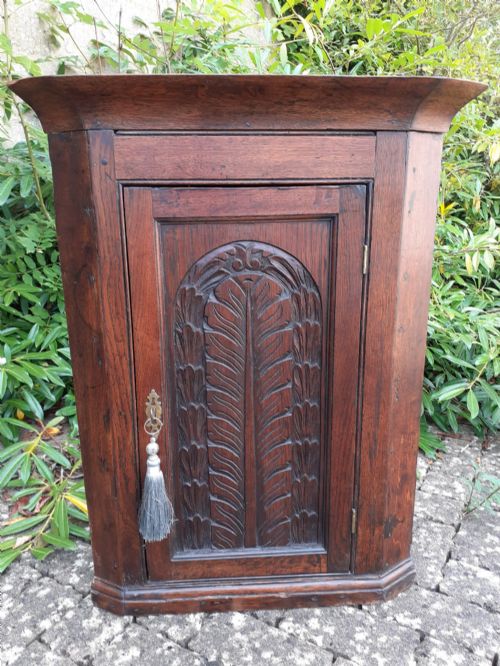
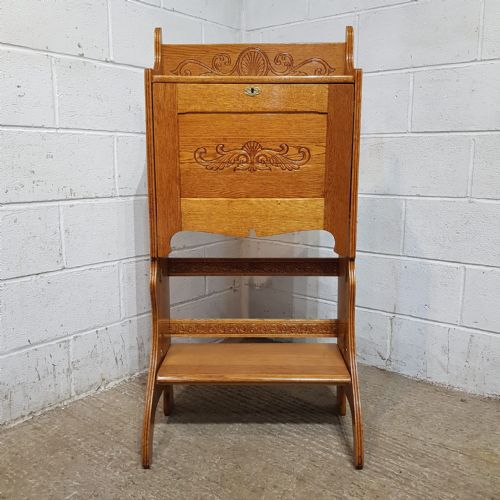
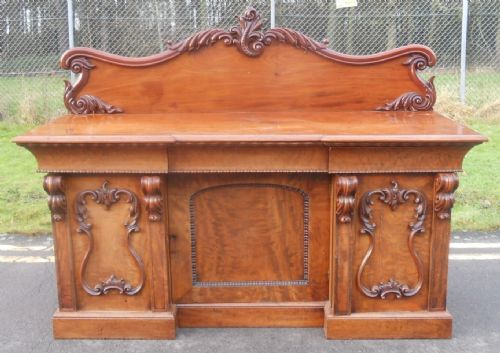
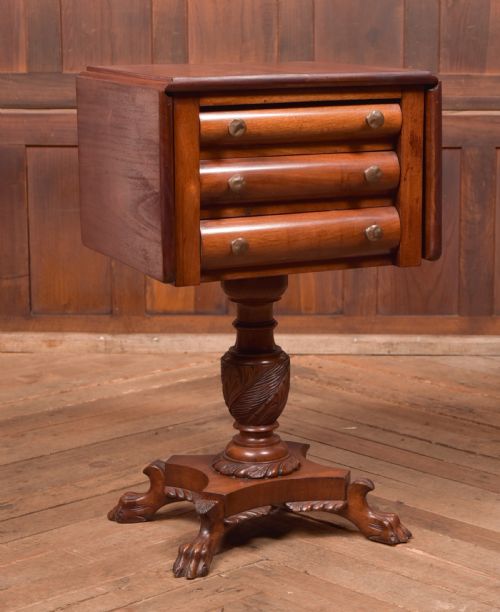
When you search for a carved leaf cabinet, you are looking at storage pieces adorned with botanical relief work. These range from hanging corner cupboards to display cabinets and sideboards.
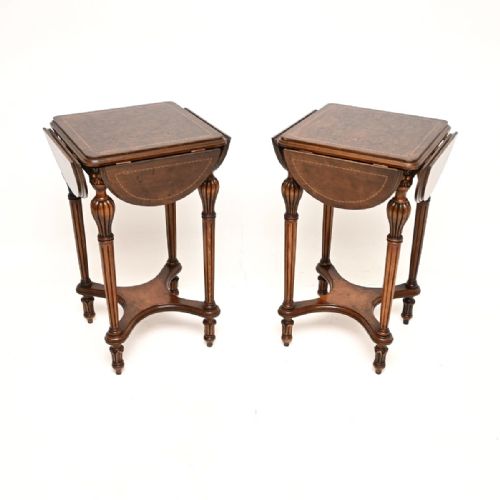
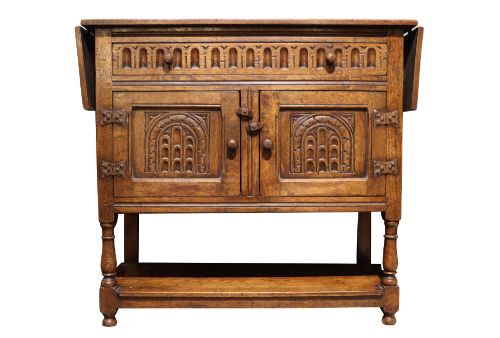
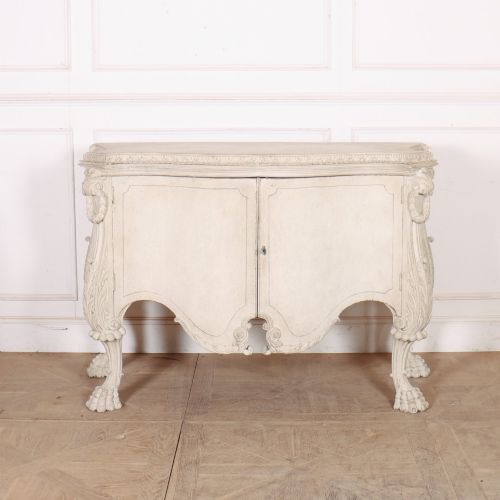
The pieces on this page span multiple periods including the Victorian era, the eighteenth century, and the early twentieth century. You will encounter Revival styles such as Jacobean and Rococo alongside Arts and Crafts examples.
Forms vary from compact wall-hanging cupboards to substantial side cabinets and glazed display pieces. Oak and walnut form the structural core of many items, while giltwood appears in decorative display furniture.
Materials and construction methods
Cabinet makers utilised dense hardwoods such as oak, walnut, and mahogany to provide a stable base for deep relief carving. Figured veneers were also employed on select surfaces to create natural patterning.
Leaf motifs and botanical details were hand-carved directly into the timber or built up using gesso beneath gold leaf. Brass hardware and glass panels complete the construction of the display and storage pieces.
Carved Leaf Cabinet Retail Price Guide 2026
Typical asking prices for carved leaf cabinet among the pieces listed under this phrase on Sellingantiques today, from the lower quarter to the upper quarter. They describe what is for sale here now, not the wider market.
Some nineteenth-century makers hid secret compartments behind carved foliage, rewarding those who explore every nook.
Judgements of quality
The standard of a carved leaf cabinet rests upon the crispness and depth of the botanical carving. Sharp undercut foliage displays the hand of a skilled artisan, whereas soft or mechanical moulding indicates mass production.
Material selection dictates durability and visual harmony. Solid timbers with well-figured grain and intact original gilding sit at the upper end of the range, while later alterations or heavy surface repairs diminish the integrity of the piece.
The Carved Leaf Cabinet Glossary
- Relief carving
- A sculptural technique where figures or patterns project from a flat background. This method defines the botanical and leaf decoration found on the cabinets.
- Giltwood
- Timber that has been coated with a thin layer of gold leaf. It is frequently seen on decorative Italian display furniture and architectural elements.
- Gesso
- A plaster-like mixture applied to wood to create a smooth surface for gilding and fine detail work. It supports delicate ornamentation around door frames and panels.
- Corner cupboard
- A triangular storage unit designed to fit neatly into the corner of a room. Early examples are often wall-hanging and constructed from oak.
- Canterbury
- A low multi-tiered stand originally used for holding sheet music or books. Walnut versions incorporate turned supports and subtle woodwork.
Carved Leaf Cabinet: Frequently Asked Questions
Where should I place a carved leaf cabinet?
These cabinets work well in living rooms, dining spaces, or hallways where their botanical details can be appreciated up close. Corner cupboards utilise unused wall angles effectively.
Ensure the piece matches the scale of your room and avoids direct, harsh sunlight to protect timber and gilt surfaces.
How do I care for antique wood furniture?
Dust the surfaces regularly with a soft, dry cloth to prevent the buildup of grit in the carved recesses. Apply a quality wax polish sparingly to nourish hardwoods.
Keep furniture away from heat sources and damp areas to prevent the timber from warping or splitting over time.
How can I tell the period of a cabinet?
Examine the construction methods, drawer dovetails, and timber selection used in the interior structure. Tool marks and fastener types offer clear clues to the date of manufacture.
Stylistic markers such as Jacobean Revival motifs or Arts and Crafts simplicity also help narrow down the decade of origin.
What is the difference between a display cabinet and a side cabinet?
Display cabinets feature glass doors or glazed sides designed to showcase porcelain and decorative objects. Side cabinets offer solid enclosed storage for linen or tableware.
Both forms utilise carved leaf ornamentation, but their primary function dictates whether the contents are visible.