


Carved Inlay Writing Desk
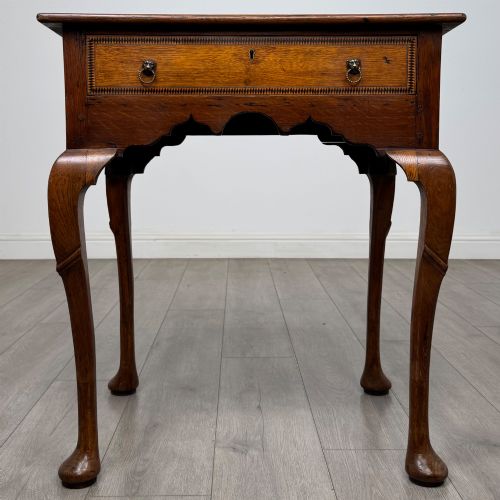
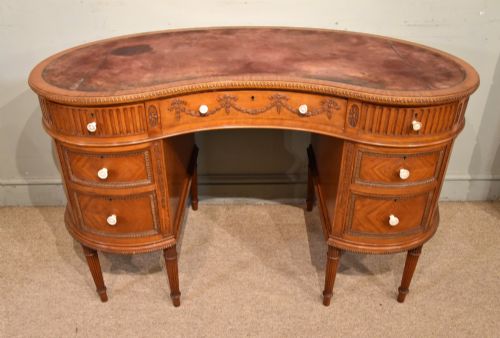
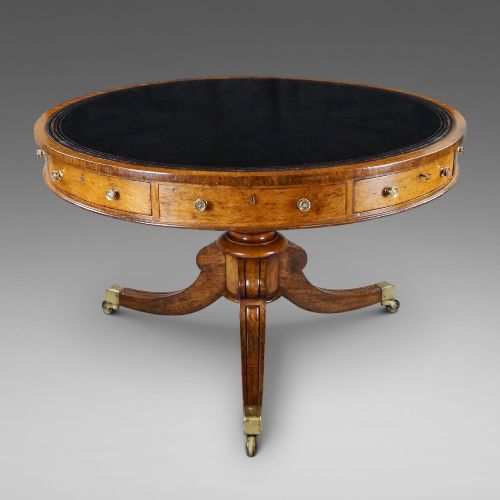
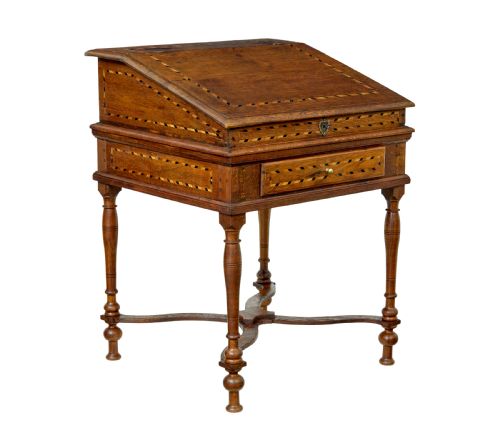
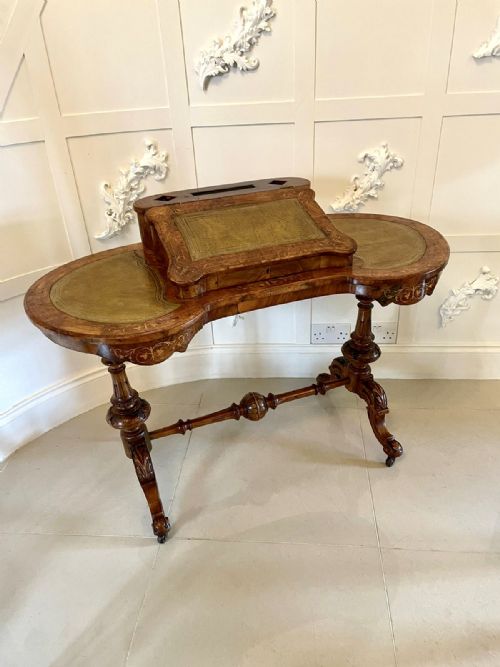
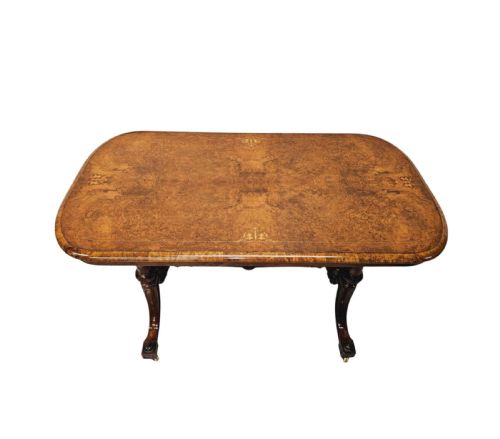
These pieces are a carved inlay writing desk, built to give a surface for correspondence and paperwork while displaying rich timber and marquetry.
Carved Inlay Writing Desk
A carved inlay writing desk combines practical surfaces with decorative timber work, appearing frequently in Victorian and Edwardian forms alongside 18th century bureau shapes. Buyers examining this page encounter kidney-shaped writing tables, Davenport desks, and pedestal writing desks.
The materials span burr walnut, mahogany, satinwood, and oak, often decorated with floral marquetry or boxwood and brass details. Pieces range from compact Davenport desks with pop-up compartments to large freestanding library tables designed for the centre of a room.
Materials and construction
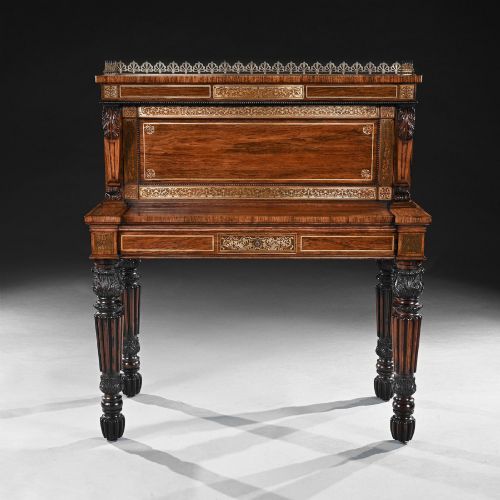
Cabinet makers built these desks using solid timbers like mahogany, oak, and walnut, frequently applying veneers of burr walnut, rosewood, or satinwood to primary surfaces. These decorative veneers were selected for striking grain patterns and enriched with contrasting boxwood and brass inlay.
Marquetry panels were hand-cut and fitted into the timber surfaces to form floral and geometric motifs. Leather writing inserts, often tooled with gold, were then set into the principal writing surfaces of the tables and desks.
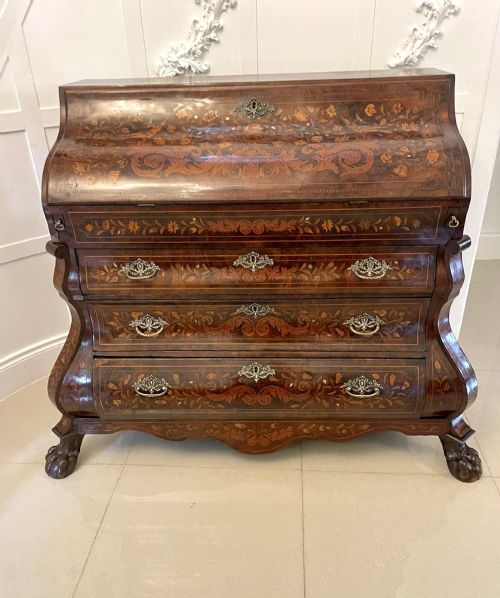
Listings feature 19th century Victorian desks in burr walnut and mahogany alongside 18th century bombe bureaux.
Standards of execution
Quality rests on the depth and precision of the marquetry work and the choice of timber figure, particularly the richness of the burr walnut or flame mahogany. Finer desks display crisp, intricate inlay and well-chosen veneers that wrap harmoniously around curves and corners.
The joinery of drawers and the integration of internal fittings, such as small compartments and secret drawers in Davenport desks and bureau forms, distinguish higher workshops. Superior examples retain original brass hardware, fitted leather panels, and stable structural frames.
Gillows Oxford Street Workshop·Maple and Co·Gill and Reigate·Edwards and Roberts
The Carved Inlay Writing Desk Glossary
- Marquetry
- Decorative veneer work arranged in pictorial or geometric patterns on the surface of a piece. It utilises different coloured woods to create contrast.
- Davenport
- A compact form of writing desk featuring a sloping top above a bank of drawers. It typically includes internal stationery compartments.
- Bombe
- A swollen, bulging contour found on the front and sides of 18th century bureau furniture. This curved profile requires skilled timber shaping.
- Bonheur du Jour
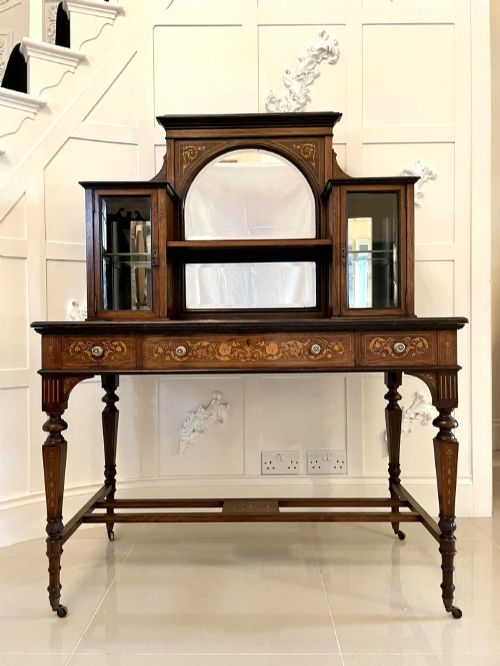
- A light lady's writing desk featuring a small cabinet or set of shelves upon the upper writing surface. It became popular during the 19th century.
- Kneehole desk
- A pedestal desk featuring a central recess for the user's legs, flanked by columns of drawers. This form allows the user to sit directly facing the piece.
Carved Inlay Writing Desk: Frequently Asked Questions
What is a Davenport desk?
A Davenport is a compact writing desk featuring a sloping, hinged writing surface above a set of drawers. It was designed for smaller spaces and often includes internal compartments.
Many examples incorporate a side-opening door, hidden stationery drawers, and a leather-lined writing slope that lifts for storage.
How do I identify a Victorian writing desk?
Victorian desks frequently employ burr walnut, mahogany, or rosewood veneers decorated with floral marquetry and boxwood inlay. They often feature turned legs, kidney-shaped tops, or pedestal configurations.
These pieces typically date from the mid to late 19th century and reflect the period's preference for richly figured timbers and decorative detail.
What is floral marquetry?
Floral marquetry is an inlay technique where thin pieces of various coloured woods are cut and assembled to form flower and leaf designs. This decoration is set flush into the primary timber surface.
It appears prominently on 18th century bureau desks and 19th century walnut writing tables to create ornamental panels.
Where were these desks placed?
Writing desks and library tables were positioned in studies, drawing rooms, and libraries for correspondence and administrative tasks. Freestanding library tables were often placed in the centre of a room.
Smaller forms like the Bonheur du Jour or lady's writing desk were suited to private sitting rooms and boudoirs.