

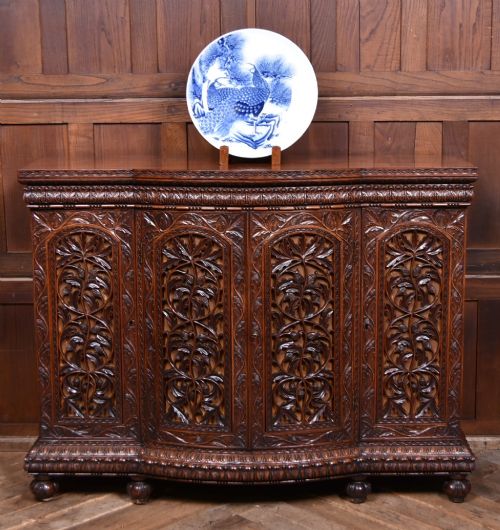
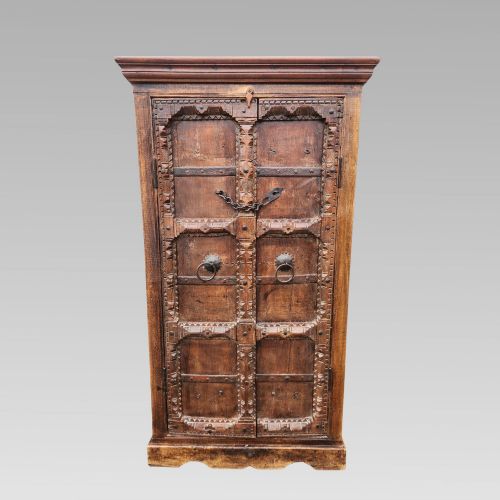
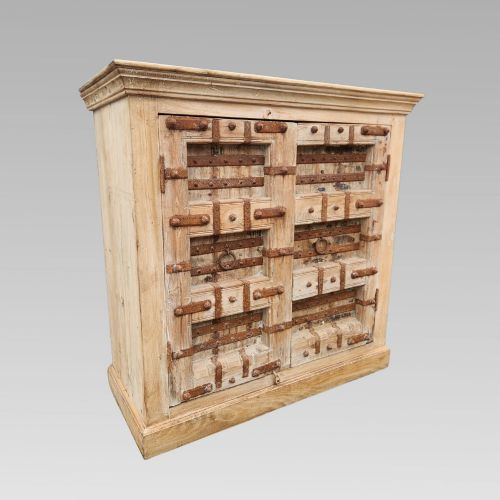
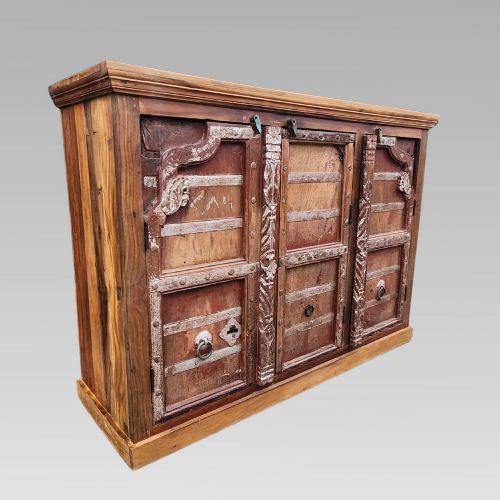


Carved Indian Doors
These carved Indian doors bring heavy timber architectural salvage and painted panels straight into a room, offering tactile history and deep craftsmanship.
Carved Indian Doors
When you search for carved Indian doors, you meet sturdy architectural salvage and substantial storage pieces incorporating heavy timber and reclaimed panels. The selection spans the nineteenth century up through nineteen thirty, with pieces originating from traditional Indian, Anglo-Indian, and Moroccan traditions.
You find functional storage alongside decorative panels framed as wall art. Cupboards, sideboards, and cabinets utilise the heavy timber of these portals to build substantial furniture for modern homes.
How they were made
These pieces rely on dense timbers like teak, padouk wood, satinwood, and general hardwood, chosen for structural strength and deep carving potential. Artisans shaped these materials using traditional joinery and elaborate chisel work to build robust doors and cabinetry.
Metal elements such as iron and brass appear frequently as structural studs, hinges, and decorative mounts. Original paint finishes survive on select panels, while glass inserts appear in specific cabinet forms.
Carved Indian Doors Retail Price Guide 2026
Typical asking prices for carved indian doors among the pieces listed under this phrase on Sellingantiques today, from the lower quarter to the upper quarter. They describe what is for sale here now, not the wider market.
Several doors retain stubborn splashes of original paint, reminding you they once faced bustling village streets before moving indoors.
What varies in quality
The depth and intricacy of the carving separate standard utilitarian builds from exceptional examples. Crisp relief work and untouched original paint surfaces elevate certain doors and cabinets above simpler utilitarian storage.
The integrity of the reclaimed timber and the preservation of original frames determine the overall presence of the piece. Heavier woods like padouk and teak maintain sharper detail in their carved motifs compared to softer or more weathered materials.
The Carved Indian Doors Glossary
- Architectural salvage
- Building elements rescued from older structures for reuse in interior design. These items preserve historical craftsmanship and heavy timber construction.
- Anglo-Indian
- A style blending British furniture forms with traditional Indian decorative techniques. Cabinetmakers produced these pieces during the colonial period.
- Padouk wood
- A dense, durable tropical timber known for its rich colour and stability. It accepts fine chisel work exceptionally well.
- Satinwood
- A luminous hardwood prized for its smooth grain and pale sheen. Makers utilised it for refined nineteenth-century cabinetry.
- Studded door
- A heavy wooden portal punctuated with iron or brass nailheads. This method adds structural reinforcement alongside visual rhythm.
Carved Indian Doors: Frequently Asked Questions
What woods do makers use?
Makers rely on dense hardwoods such as teak, padouk wood, and satinwood to withstand heavy carving and daily wear.
Iron and brass hardware frequently reinforce the wooden structures.
How do I identify nineteenth-century pieces?
Nineteenth-century examples show deep hand-carving in traditional Indian or Anglo-Indian styles, often utilising reclaimed teak or padouk.
Original painted surfaces and heavy iron studs further point to this era of construction.
Do these doors come with frames?
Certain listings include the original wooden frame, particularly when the piece is sold as wall art.
Other examples are integrated directly into the structure of wardrobes, cabinets, and sideboards.