
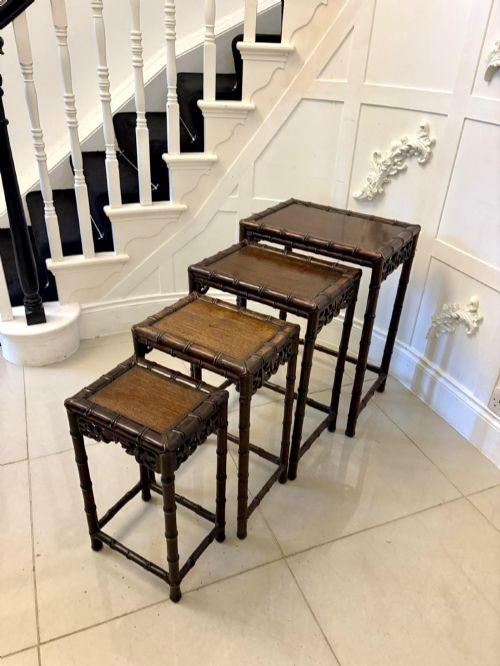
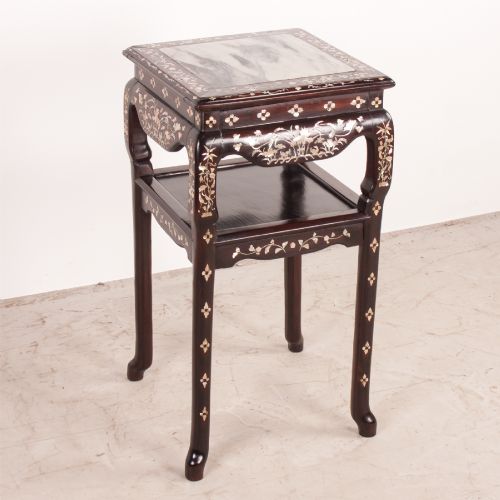
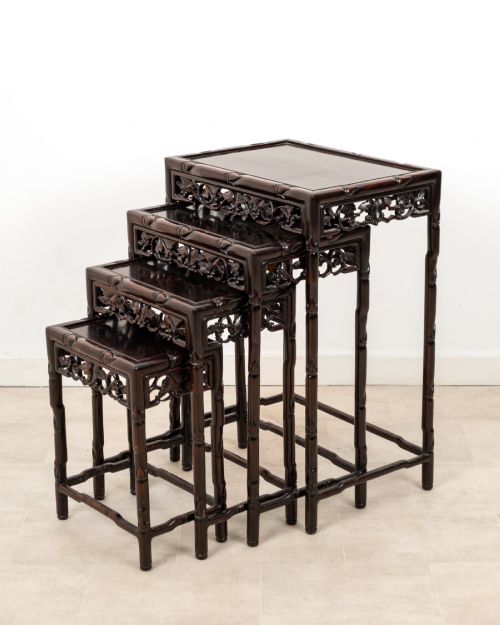
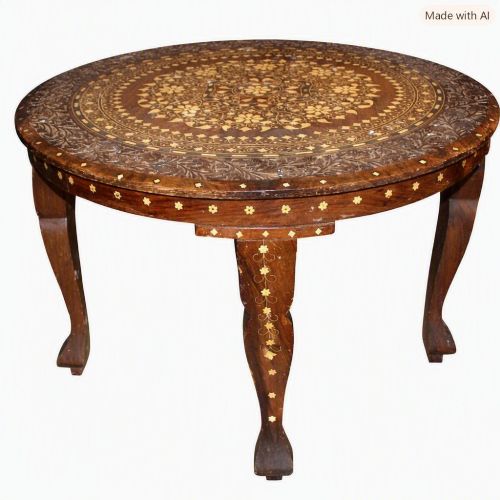
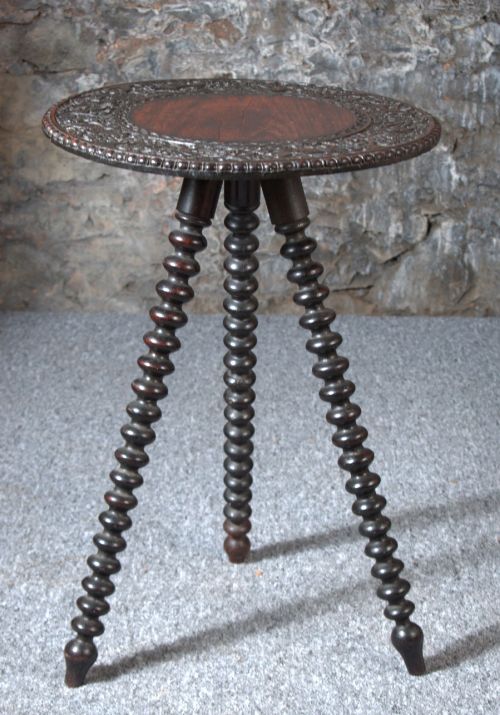
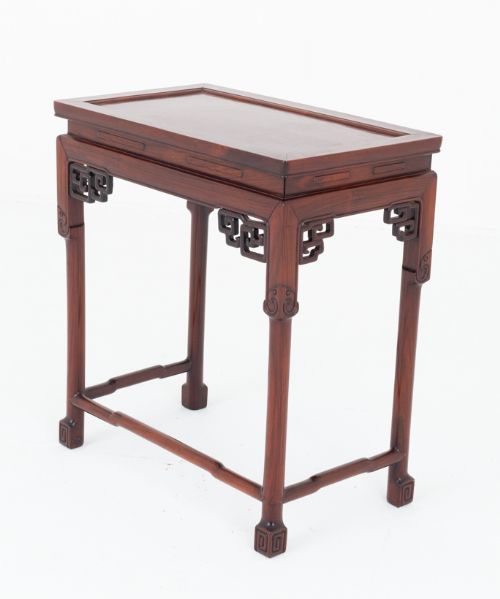


Carved Hardwood Occasional Table
A carved hardwood occasional table brings deep timber grain and intricate regional hand-carving straight into a sitting room.
What these pieces are
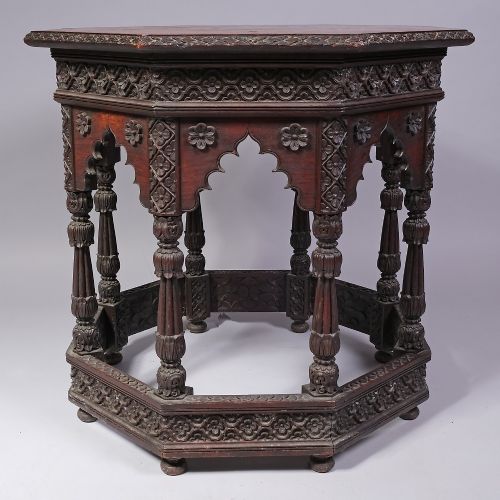
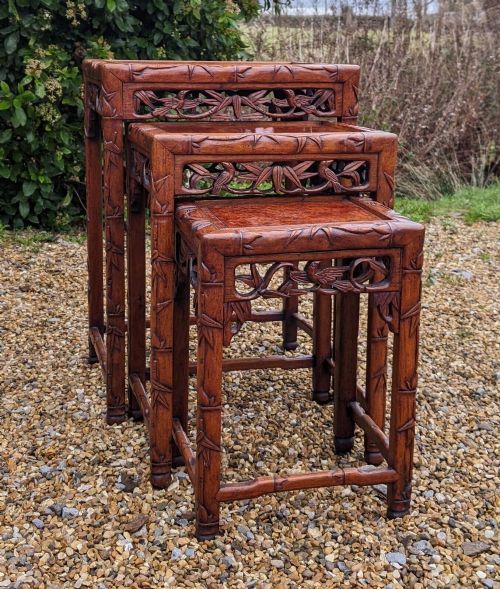
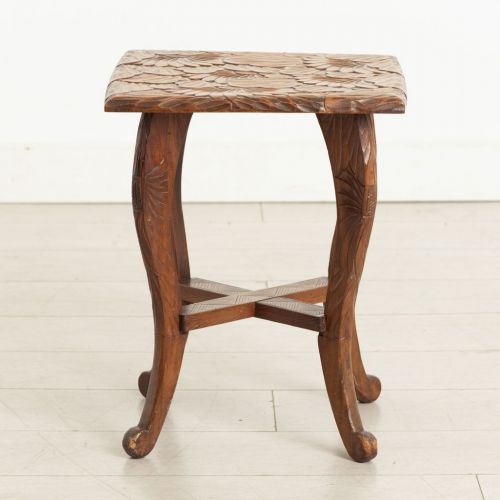
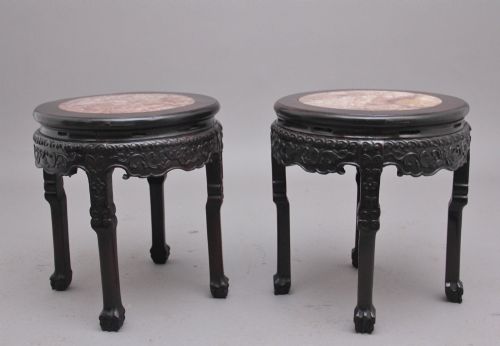
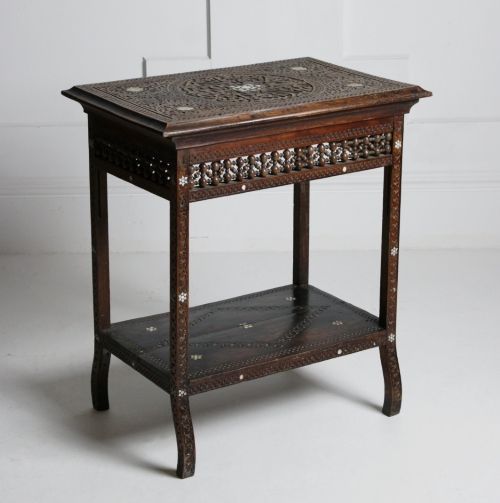
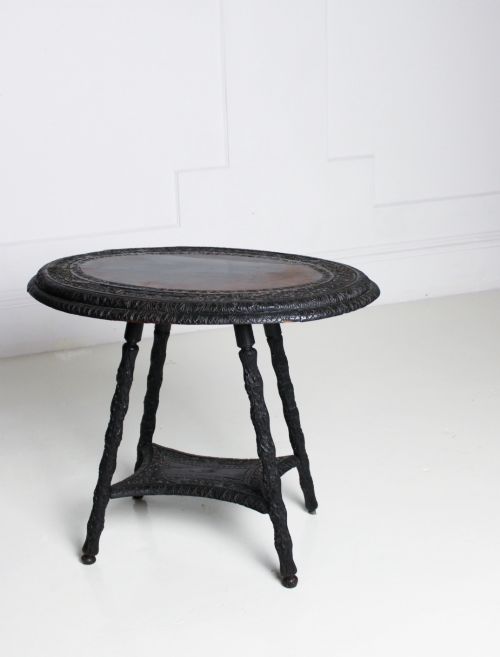
When you search for a carved hardwood occasional table, you encounter compact, portable surfaces designed for domestic display and entertaining during the nineteenth century. The examples on this page predominantly take the form of side tables, lamp stands, and tea tables originating from Anglo-Indian, Burmese, Chinese, and Moorish workshops.
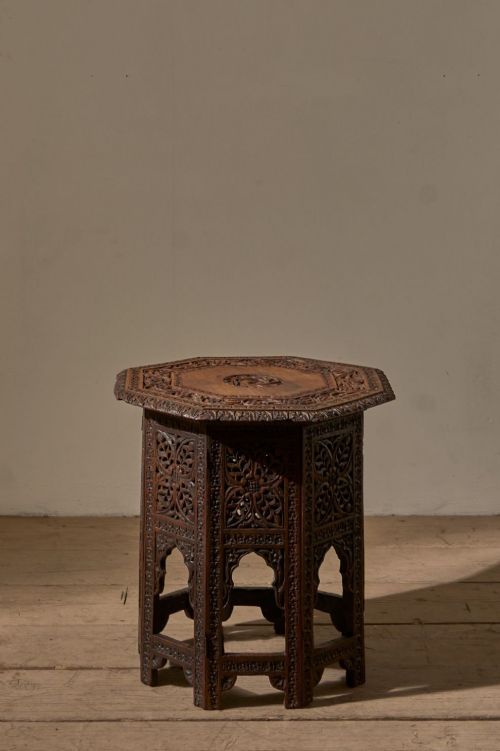
You are most likely to meet round, octagonal, or folding variations rather than large dining formats. These tables utilise dense exotic timbers shaped to support daily use while serving as decorative focal points.
The historical spread covers nineteenth-century production, including specific dates such as 1880 and 1890, alongside related Qing Dynasty pieces. They function easily beside armchairs or sofas as resting spots for small objects.
How they were made
Cabinetmakers worked with heavy tropical timbers including teak, padouk, rosewood, and ebonised hardwood, often enhancing the natural grain with a smooth wax finish. These materials provided the structural stability required for deep relief carving without splitting or warping.
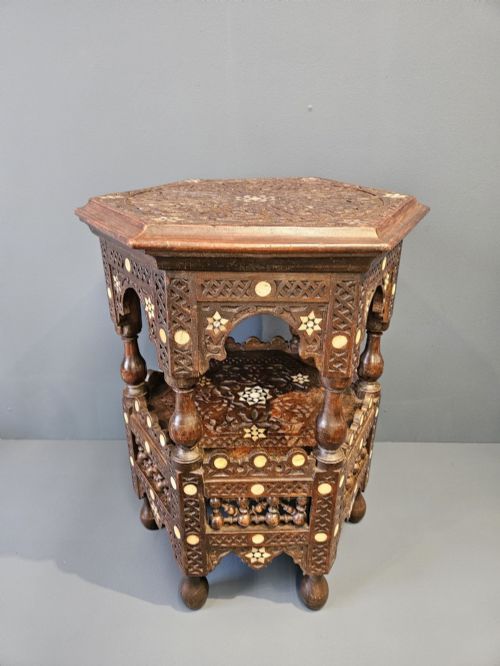
Surface ornamentation relied on hand-chiselled detailing, creating high-relief foliage, scrollwork, and figural motifs such as elephants. Certain regional examples incorporated contrasting materials like bone inlay directly into the hardwood structure.
Construction techniques frequently included folding bases and modular two-tier frames that allowed the furniture to be packed flat or moved easily between rooms.
Retail Price Guide 2026
Typical UK retail prices for carved hardwood occasional table, calculated from the Sellingantiques database of over a million retail prices indexed since 2003. This retail price guide relies exclusively on Sellingantiques data; no external sources or auction records are used, so the figures do not describe the wider market.
Several nineteenth-century tables feature carved elephants peering out from beneath the tabletop, keeping a silent watch over the room.
What varies in quality
The distinction between standard domestic items and superior examples lies entirely in the depth and sharpness of the hand-carving. Top-tier pieces exhibit crisp undercutting and well-defined figurative elements, whereas simpler versions rely on repetitive, shallow stamping.
Timber selection dictates the baseline quality of the object, with dense, evenly grained rosewood and padouk commanding greater presence than secondary mixed timbers. The precision of joinery in folding bases and inlaid sections further separates mass production from master craftsmanship.
The Carved Hardwood Occasional Table Glossary
- Padouk
- A heavy, durable reddish-brown tropical hardwood prized for its stability and fine finish. It takes deep hand-carving exceptionally well without splintering along the grain.
- Ebonised
- Timber treated with a chemical stain or finish to imitate expensive ebony. This dark, uniform surface was popular in nineteenth-century decorative furniture.
- Octagonal
- Having eight sides and eight angles. This geometric tabletop shape appears frequently in nineteenth-century Indian occasional furniture.
- Bone inlay
- The technique of recessing small pieces of carved bone into channels cut within the hardwood surface. It creates striking geometric and floral contrast against dark timber.
- Qing Dynasty
- The final imperial dynasty of China, lasting from 1644 to 1912. Furniture from this period is noted for intricate hardwood carving and folding mechanisms.
Frequently Asked Questions
What is an occasional table?
An occasional table is a small, moveable piece of furniture designed for specific, intermittent use in a room rather than permanent placement. They serve well beside seating areas for holding lamps, books, or cups.
Historically, these pieces were easily shifted around the home to suit the social needs of the household. Their compact footprints make them practical additions to modern interiors.
Where were these tables made?
The listings show origins spanning British colonial India, Burma, China, and Moorish workshops. Each region applied distinct decorative motifs and structural forms to dense tropical timbers.
Anglo-Indian pieces frequently feature elephant and leaf motifs, whilst Chinese examples utilise folding bases and deeply carved floral panels.
How do I care for a waxed hardwood table?
Maintain the surface by applying a quality beeswax periodically to nourish the dense timber and preserve its natural sheen. Avoid placing the table in direct sunlight or near heat sources to prevent the wood from drying out.
Dust regularly with a soft, dry cloth following the direction of the grain. Avoid chemical sprays that can strip the traditional wax finish.
Are folding tables stable?
Yes, traditional folding bases on these tables utilise interlocking wooden frames designed to lock securely under the weight of the top. When properly aligned, they offer sturdy support for daily use.
The clever pivoting joints also allowed nineteenth-century owners to store the furniture flat when not in use.