


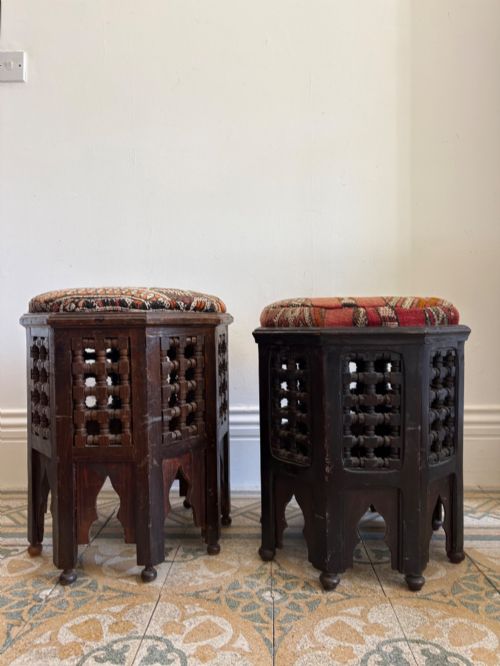
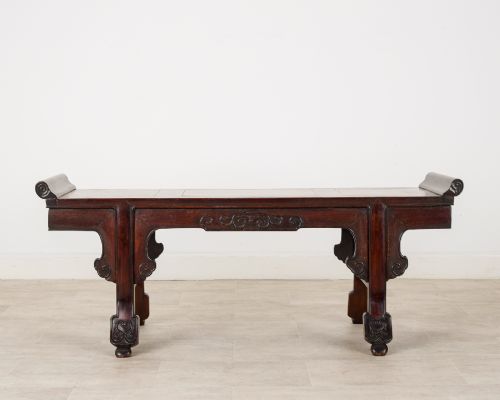


Carved Hardwood Low Stool
These carved hardwood low stool examples bring dense timber and low seating into a room with striking presence.
Carved Hardwood Low Stool
A carved hardwood low stool bridges diverse regional traditions from nineteenth-century workshops to early twentieth-century creations. Buyers searching for a carved hardwood low stool encounter pieces ranging from Chinese rosewood and huali wood forms to Anglo-Indian footstools and African tribal seating.
The assortment on this page leans heavily towards nineteenth-century origins, alongside items dated around nineteen hundred and nineteen thirty. Forms shift between square dressing stools, window seats, low tables, altar benches, and barrel-shaped occasional stands.
Originating styles encompass Qing Dynasty, Anglo-Indian, Batavian Baroque, African Tribal, and Arts and Crafts aesthetics. These variations mean a buyer might secure a compact footstool or a wide ottoman-style bench depending on the listed inventory.
How they were made
Maker's hands utilised dense timber varieties including rosewood, huali wood, elm, and general hardwoods. Construction relied on traditional joinery suited to heavy tropical and domestic woods.
Surface ornamentation involved intricate hand carving across frames, often paired with upholstered elements. Workshops applied textiles such as fabric, damask, tapestry textile, and hessian to seating surfaces.
Carved Hardwood Low Stool Retail Price Guide 2026
Typical asking prices for carved hardwood low stool among the pieces listed under this phrase on Sellingantiques today, from the lower quarter to the upper quarter. They describe what is for sale here now, not the wider market.
The furniture forms range from Chinese dressing stools and altar benches to Anglo-Indian footstools, African tribal seating, and Batavian Baroque designs.
What varies in quality
Quality rests upon the crispness of the hand carving and the selection of timber used in the frame. Dense woods like rosewood and huali wood carry greater natural weight and allow for sharper, deeper relief work.
The integrity of the original structure and the harmony between carved timber and any upholstered textile section define the better examples. Pieces displaying cohesive regional motifs stand apart from simpler utilitarian items.
The Carved Hardwood Low Stool Glossary
- Hardwood
- Timber derived from broad-leaved trees, offering exceptional density and durability for detailed carving. Rosewood and huali wood belong to this broad category.
- Huali Wood
- A prized Chinese hardwood noted for its rich grain and stability in traditional furniture making. It frequently appears in Qing Dynasty seating.
- Anglo-Indian
- A style blending British colonial furniture forms with traditional Indian carving techniques. These pieces often feature deep floral or geometric relief.
- Batavian Baroque
- A stylistic crossover originating in colonial Batavia, combining European baroque curves with Asian dense timber construction. It creates robust and ornate low seating.
- Qing Dynasty
- The final imperial dynasty of China, spanning over two centuries and yielding distinctive low tables and dressing stools. Furniture from this era displays refined proportions and disciplined carving.
Carved Hardwood Low Stool: Frequently Asked Questions
How were these low stools used originally?
These low pieces served versatile roles in domestic interiors across different continents, functioning as seats near windows, dressing furniture, or low tea tables. In many traditions, seating remained close to the floor for comfort and social custom.
Larger variations also acted as footstools or benches alongside larger seating arrangements. Their solid timber construction allowed them to withstand heavy daily use.
What timber types should I expect to find?
The selection includes general hardwoods alongside specific varieties like rosewood, huali wood, and elm. Each timber brings distinct weight, colour, and grain patterns to the frame.
Some examples incorporate upholstered elements using fabric, damask, or hessian over the wooden structure. The choice of material often reflects the regional origin and period of the piece.
How do I identify an Anglo-Indian piece?
Anglo-Indian pieces combine British furniture proportions with intricate, dense hand carving executed by local artisans. They frequently appear as footstools, ottomans, or low coffee tables from the nineteenth century.
The carving typically covers visible wooden surfaces with deep floral or foliate motifs. This aesthetic bridges European comfort with South Asian decorative skills.
Are these pieces suitable for modern living rooms?
Their low profile makes them ideal for placement beside modern sofas or as standalone accent pieces in a room. They function effectively as coffee tables, footstools, or occasional seating.
The durable hardwood construction ensures they handle everyday domestic placement with ease while adding historical texture to a space.