



Carved Handle Stick
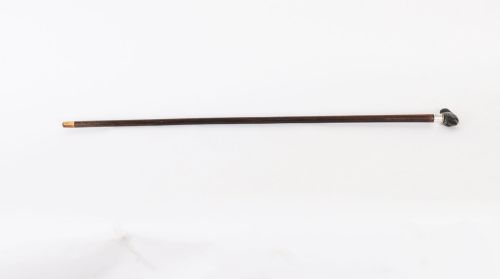
A carved handle stick offers a functional support while doubling as a sculptural conversation piece.
Carved Handle Stick
When you search for a carved handle stick, you encounter walking canes, parasols, and swagger sticks finished with elaborate grips. These items served as daily accessories for gentlemen and ladies during the nineteenth and early twentieth centuries.
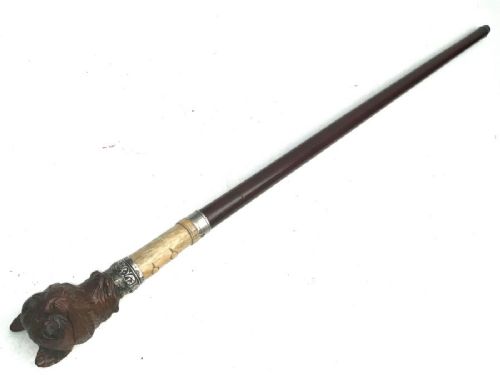
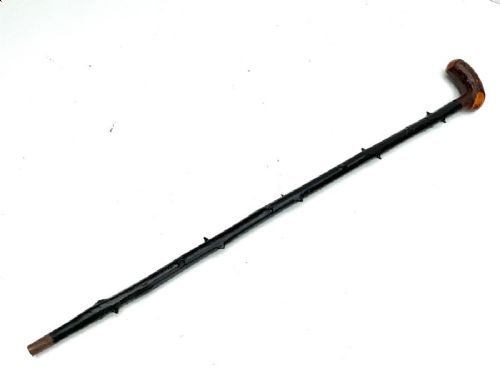
The versions most commonly met on this page combine wooden shafts with grips shaped into animal heads, human figures, or novelty forms. Makers turned to traditional Irish blackthorn, bamboo, malacca, and various hardwoods alongside metal mounted shafts.
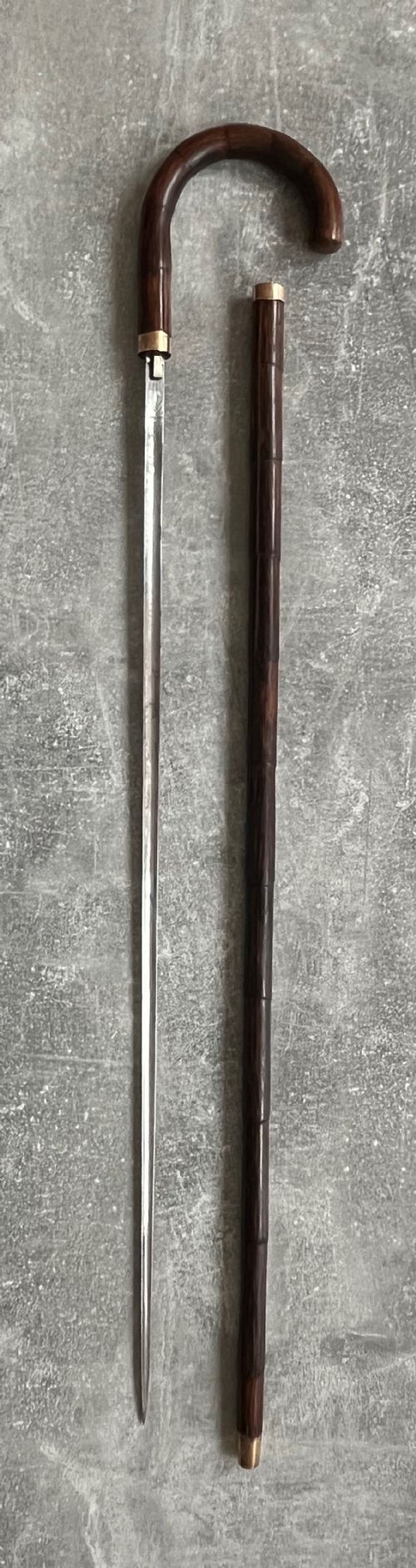
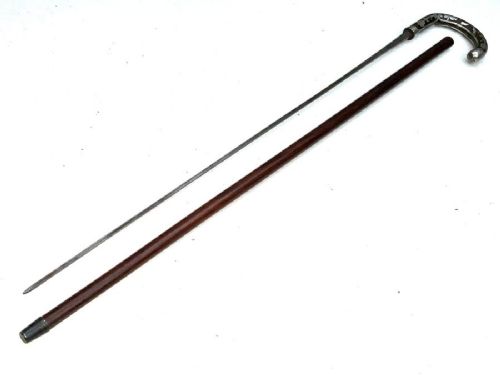
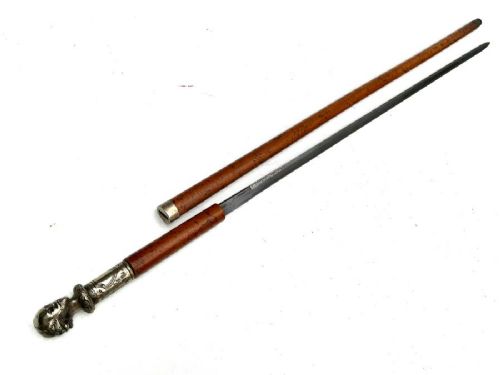
Originating across Victorian Britain, continental Europe, and Asian export markets, these pieces range from military officer gear to civilian vanity items. Many examples incorporate hidden gadgets such as blades, corkscrews, or snuff boxes beneath the grip.
How they were made
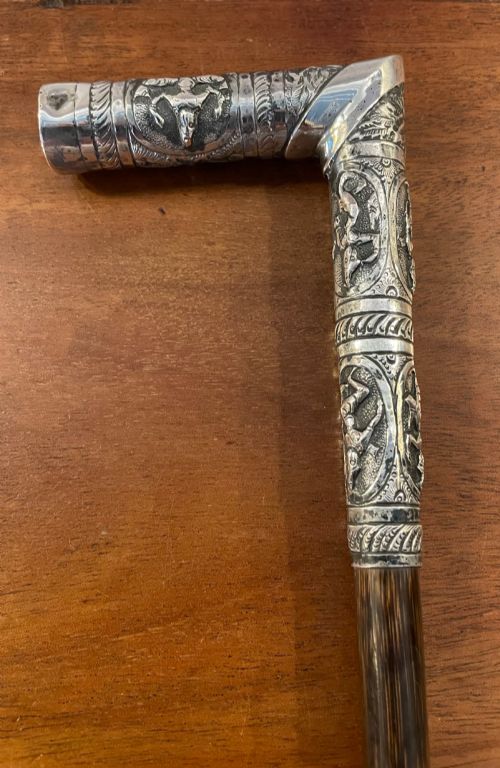
Craftsmen utilised organic materials like stag horn, whale bone, ivory, tortoiseshell, and fruitwood to carve intricate figures by hand. These handles required precise shaping to fit comfortably into the palm while displaying fine anatomical or decorative detail.
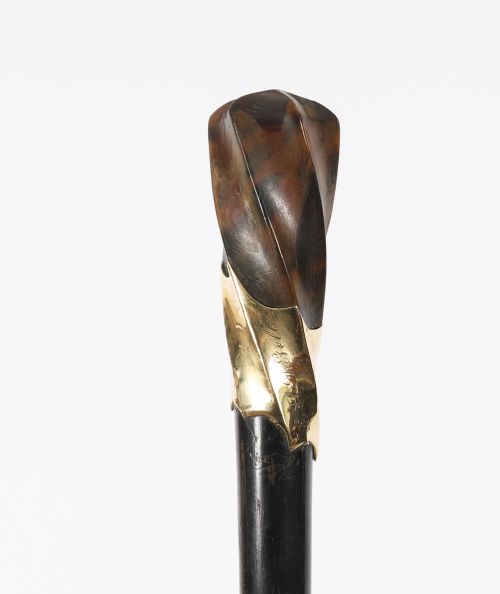
Shafts were formed from durable natural timbers including oak and bamboo, or constructed with faux bamboo effects. Metal components, predominantly silver, brass, and gold pommels, were then fitted securely to the carved top using internal collars or pins.
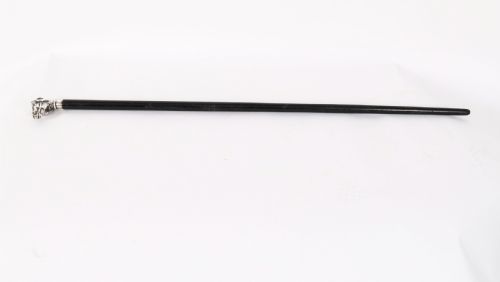
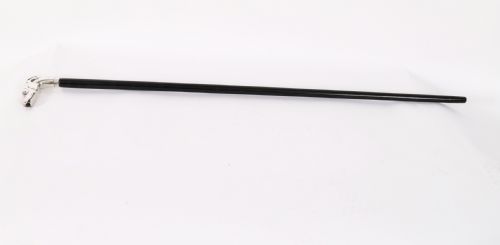
The archive demonstrates popular novelty handle motifs including horses, greyhounds, rabbits, parrots, and clenched fists.
What varies in quality
The standard of a carved handle stick depends upon the depth and precision of the carving on the grip. Master carvers achieved expressive realism in animal portraits and human figures, whereas lesser pieces show simple, shallow tool marks.
Material choice dictates the upper tier of the range, with solid precious metals, substantial ivory, or marked gold pommels elevating an object above standard wood and brass assemblies. The integration of hidden mechanisms, such as tightly fitted concealed blades or functional snuff boxes, further distinguishes high grade examples.
Brigg
The Carved Handle Stick Glossary
- Pommel
- The rounded or decorative knob on the end of a walking stick handle. It often bears maker marks or high carat precious metal plating.
- Swagger stick
- A short, light cane carried by military officers or gentlemen as a mark of authority rather than for physical support. These frequently feature specialised metal or carved wooden tops.
- Gadget cane
- A walking stick that conceals a secondary function within its shaft or handle, such as a sword blade, corkscrew, or snuff box. These pieces were popular for personal protection or amusement.
- Blackthorn
- A dense, tough wood traditionally sourced in Ireland and fashioned into rustic walking sticks. It is characterised by distinct knot formations where side branches were trimmed.
Carved Handle Stick: Frequently Asked Questions
What is a gadget walking stick?
A gadget walking stick is a disguised dual purpose item that conceals a hidden mechanism or tool within its shaft or grip. Common examples include concealed sword blades, folding corkscrews, and small compartments for snuff.
These pieces were manufactured for personal utility, self defence, or polite amusement during the nineteenth century. The mechanisms are typically accessed by unscrewing the handle or releasing a hidden catch.
How do I identify the period of a cane?
Dating relies upon examining the materials, metal hallmarks, style of carving, and overall construction methods. Victorian pieces frequently feature detailed animal carvings and silver mounts, while Edwardian examples often display sleeker lines or distinct military associations.
Consulting any accompanying silver stamps or maker names inscribed on the collar provides a precise manufacturing date. Stylistic cues such as Art Deco geometric forms or Meiji period Asian export motifs also anchor the object in a specific decade.
Were these sticks used for support?
Many examples functioned as daily walking aids for Victorian and Edwardian gentlemen and ladies. Sturdy shafts made from hardwood, malacca, or blackthorn provided reliable physical support during urban strolls.
Conversely, lighter versions like swagger sticks or parasol handles were carried strictly as fashion accessories. The inclusion of heavy metal collars or delicate ivory grips often indicates a piece intended more for display than heavy weight bearing.
What materials are the handles made from?
Handles were carved from a wide variety of organic and synthetic materials depending on the desired aesthetic and cost. Common natural substances include stag horn, whale bone, ivory, tortoiseshell, and dense fruitwoods.
Craftsmen also utilised precious metals like silver and gold for solid pommels or decorative mounts. Each material required specialised carving or casting techniques to achieve the finished novelty or figurative shape.