
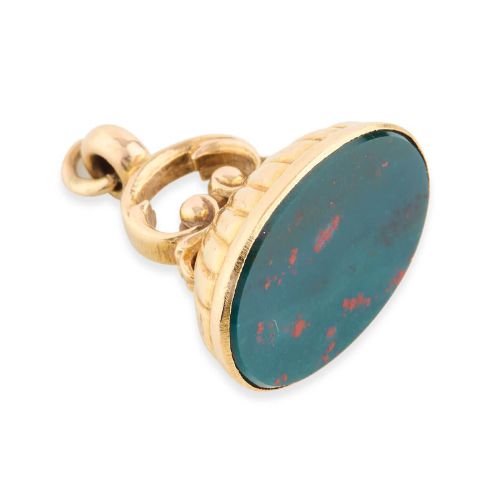
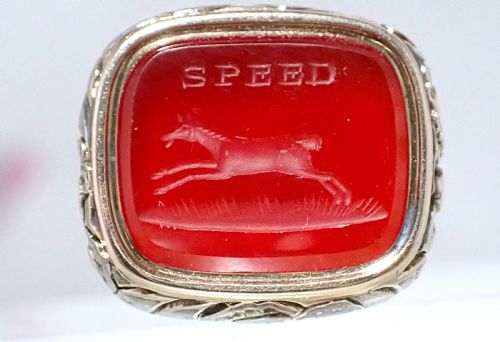


Carved Gold Fob Pendant
These carved gold fob pendant pieces combine intricate intaglio carving with precious metal work, offering a tangible link to historical personal sealing practices.
Carved Gold Fob Pendant
When you search for a carved gold fob pendant, you find small seals and charms historically used for stamping wax documents. These items span periods from the Georgian and Victorian eras through to the twentieth century, reflecting shifting tastes in personal adornment.
The versions most commonly met on this page include swivel and stationary seals fashioned from nine carat gold or gold cased metal. They frequently take the form of detailed pendants and charms that double as functional signet seals.
Makers and lapidaries of the past shaped these objects into varied decorative forms, incorporating animals, classical figures, and portraits. Each piece demonstrates the specific stylistic markers of its period, whether neoclassical restraint or Victorian ornamentation.
Materials and construction methods
Craftsmen utilised precious metals such as nine carat gold and gold cased metal to form the structural mounts and swivels of each seal. These metals provide both the durability required for daily wear and a rich frame for the stones.
The hardstones set into the base include carnelian, bloodstone, chalcedony, sardonyx, and rock crystal. Lapidaries carved these stones by hand using abrasive techniques to create intaglio designs, ranging from heraldic motifs to detailed animal portraits.
William Shakespeare makes an unexpected cameo appearance carved into rock crystal.
Assessing quality in carved gold fob pendant examples
Quality rests primarily on the depth and clarity of the intaglio carving set into the stone. Superior pieces display crisp lines in motifs like horses, elephants, or classical figures, whereas lesser examples show shallower, softer cutting.
The choice of materials also dictates the standing of a piece, with solid nine carat gold mounts generally surpassing gold cased metal alternatives in substance. Furthermore, the intricacy of the metalwork surrounding the stone distinguishes standard production from more ornate work.
The Carved Gold Fob Pendant Glossary
- Intaglio
- A design carved into the surface of a stone so that an impression in wax creates a raised image. This technique is the defining characteristic of the hardstones found on these seals.
- Fob seal
- A small pendant attached to a pocket watch ribbon or chain, featuring a carved stone matrix at the base. These objects served to authenticate letters and documents.
- Gold cased
- A method of manufacturing where a layer of gold is bonded to a base metal core. This technique offered the appearance and wear resistance of solid gold at a lower cost.
- Carnelian
- A brownish-red variety of chalcedony quartz that lapidaries frequently selected for intaglio carving. Its warm colour made it a popular choice across Georgian and Victorian jewellery.
Carved Gold Fob Pendant: Frequently Asked Questions
What is a carved gold fob pendant?
A carved gold fob pendant is a historical seal featuring a hardstone intaglio set into a gold or gold cased mount. They were designed to hang from watch chains and stamp wax seals.
Over time, these functional items transitioned into decorative pendants worn for their miniature carved art and historical association.
How were these fob seals used?
Owners pressed the carved stone matrix into heated sealing wax to close letters and secure important documents. The intaglio left a distinct personal or family mark in the wax.
Today, they are worn on chains as pendants rather than utilised for correspondence, serving as personal ornaments.
How do I date a Georgian fob?
Georgian fobs often feature distinct neoclassical design elements, heavy gold mounts, and hand-carved stones depicting classical figures or historical portraits. Examining the specific style of the intaglio provides strong clues.
Comparing the metal fabrication techniques and stone settings against known period examples helps confirm the era of manufacture.
What stones are common in fobs?
Carnelian and bloodstone appear most frequently, valued for their hardness and suitability for detailed intaglio carving. Other stones such as chalcedony, sardonyx, and rock crystal also feature.
Lapidaries favoured these semi-precious materials because they hold a sharp edge when carved and contrast well with sealing wax.