

Carved Glass Bookcase
A carved glass bookcase brings together timber and glazing to display volumes and objects, uniting practical storage with decorative presence.
Carved Glass Bookcase
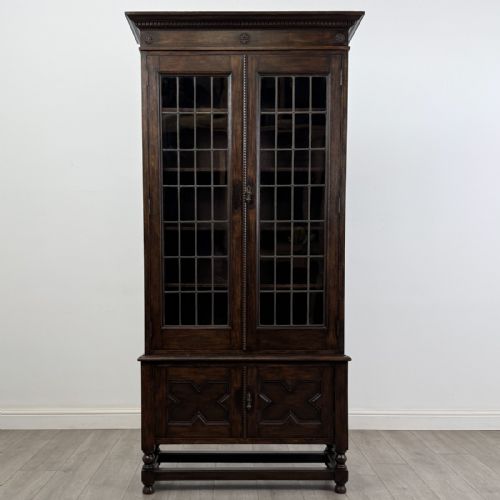
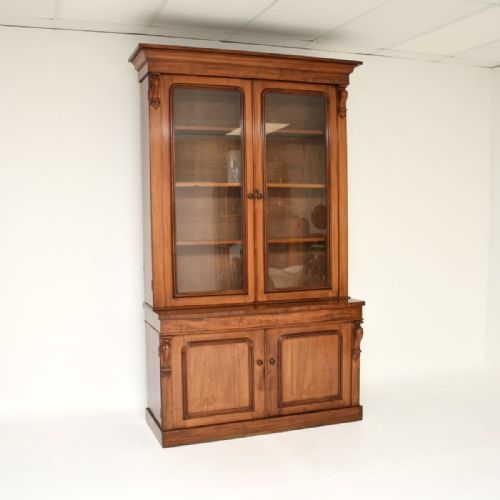
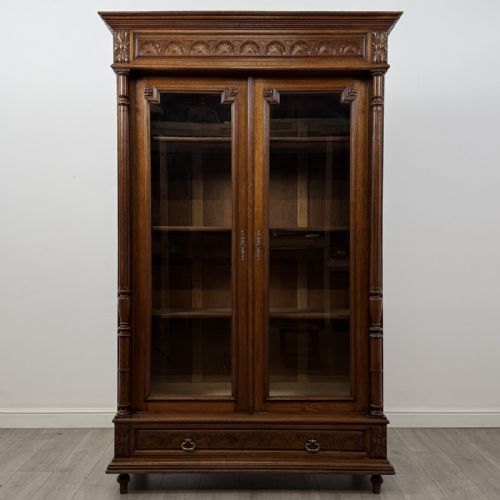
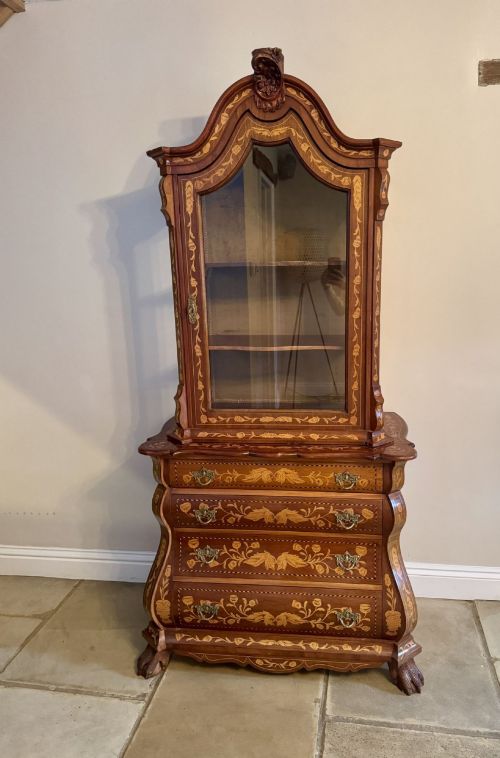
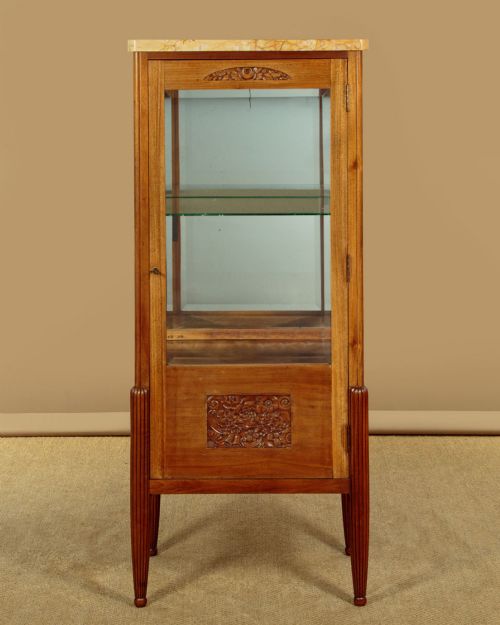
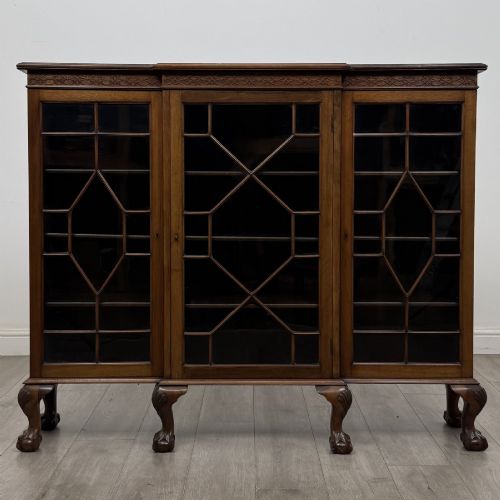
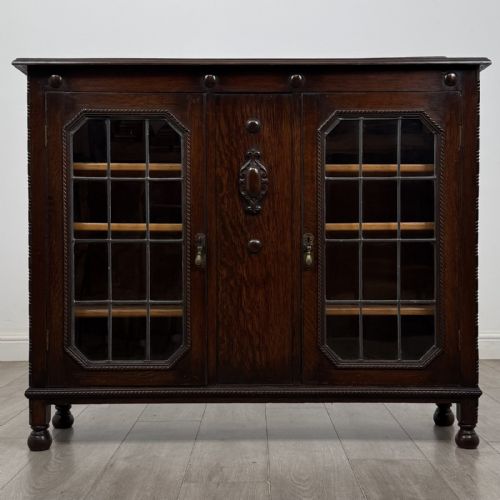
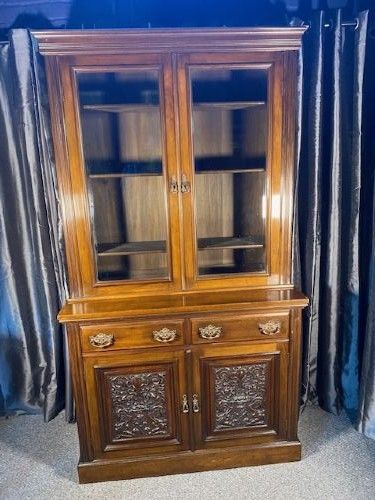
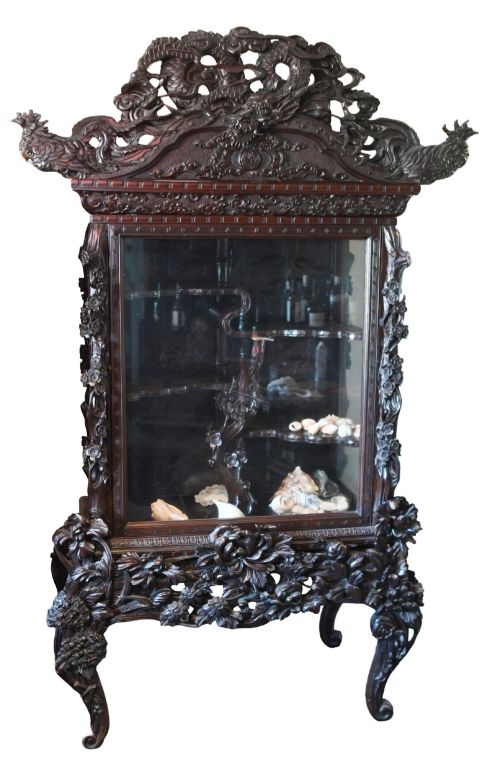
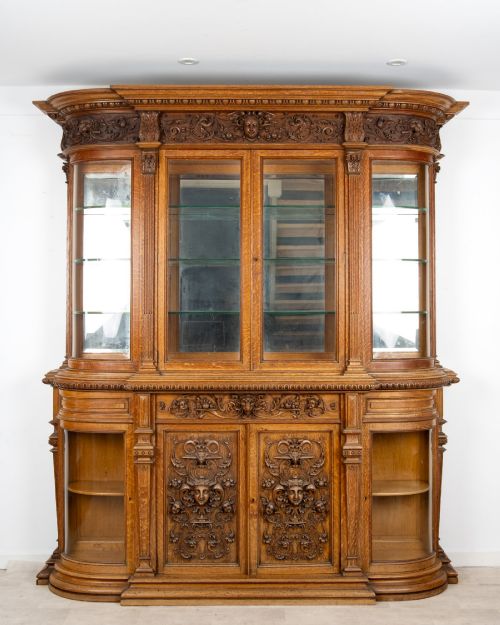
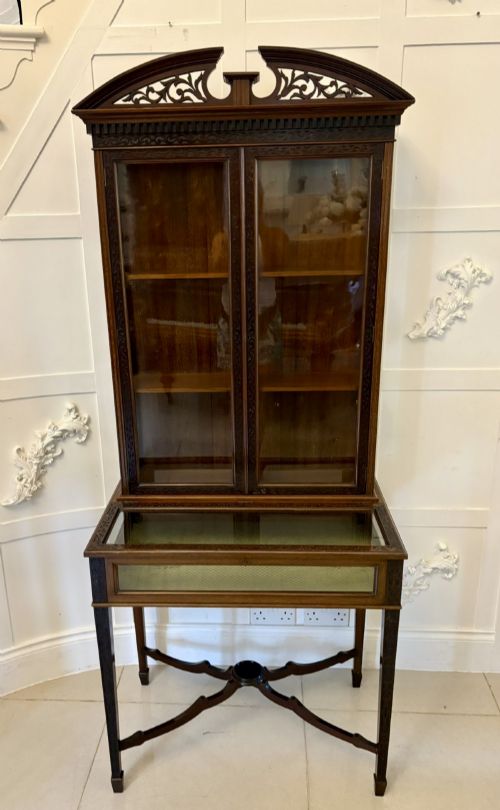
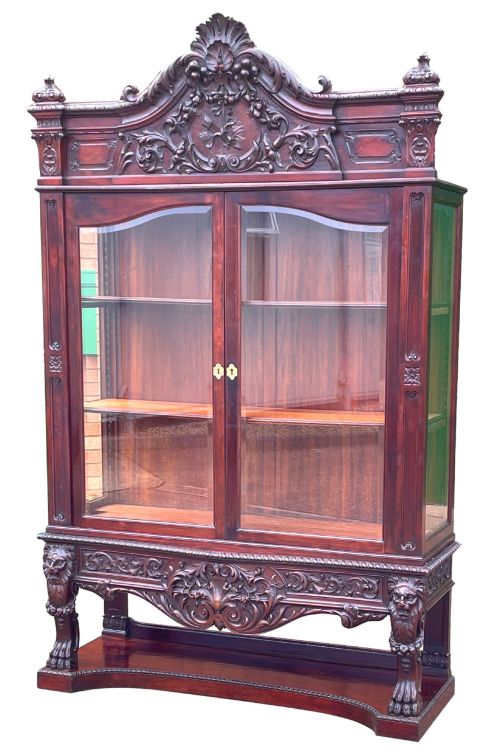
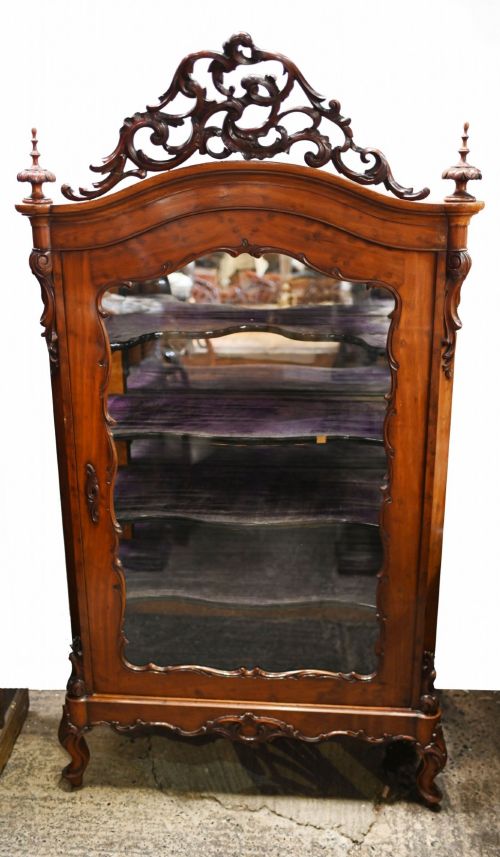
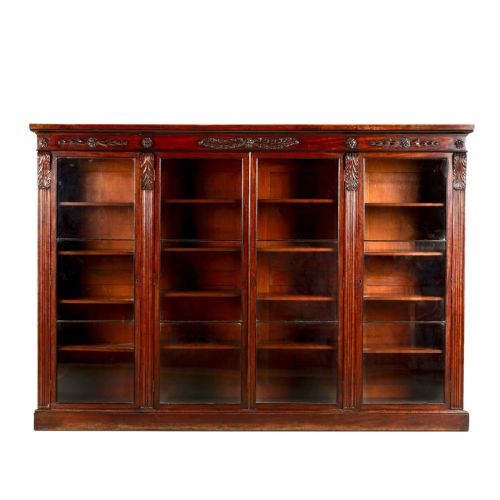
A carved glass bookcase merges the functions of a bookcase and a display cabinet, taking the form of upright timber housings fitted with glazed doors and decorative carving. The pieces found here span the nineteenth century through the early decades of the twentieth century, with strong representation from the Victorian and Edwardian periods.
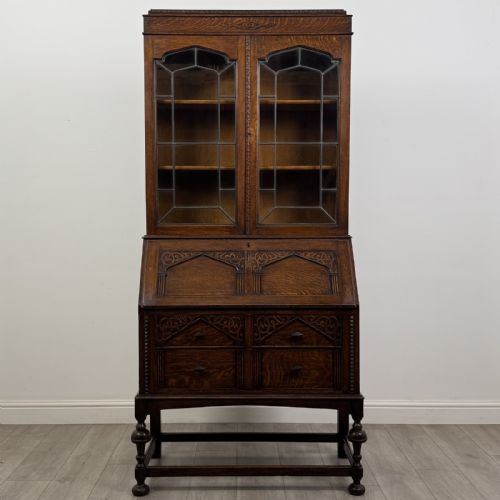
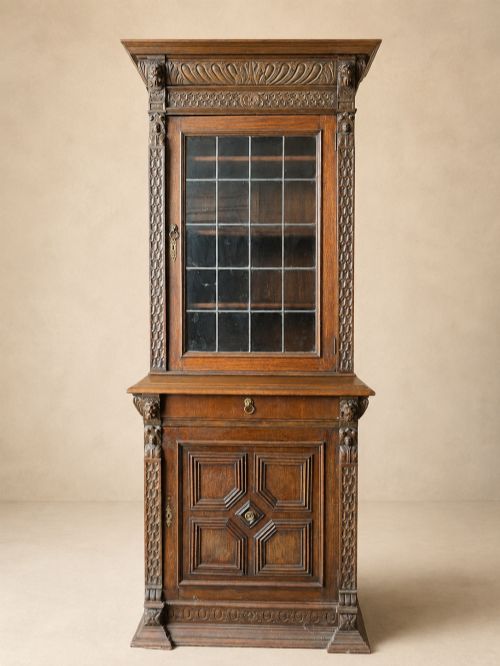
Most examples rely on oak or mahogany as the principal structural timber, shaped into styles that range from plain upright glazed double doors to revival designs such as Jacobean, Chippendale, and Queen Anne. Buyers meet both tall library bookcases with leaded glass panels and compact display cabinets designed to hold books alongside smaller curiosities.
Materials and Technique
Cabinet makers utilised dense hardwoods including oak, mahogany, walnut, and burr walnut, selecting them for stability and grain figure. These timbers were joined using traditional framing techniques to support heavy glass doors and tiered internal shelving.
Carving was applied by hand to panels, friezes, and cornices, incorporating motifs such as linenfold or scrolling foliage. Glass panes were fitted into timber frames or secured with lead cames, occasionally complemented by brass locks and hardware from makers such as Hobbs and Co.
Carved Glass Bookcase Retail Price Guide 2026
Typical asking prices for carved glass bookcase among the pieces listed under this phrase on Sellingantiques today, from the lower quarter to the upper quarter. They describe what is for sale here now, not the wider market.
Listings span the nineteenth and early twentieth centuries, featuring oak, mahogany, walnut, and pine alongside brass and lead.
Judgement of Quality
Quality rests upon the selection of timber and the precision of the joinery rather than mere scale. Superior pieces display finely figured mahogany or quarter-sawn oak, with tight joints and crisply executed hand carving that remains sharp along the edges.
The integration of the glazing defines the standard of the piece, where sound timber framing holds unblemished glass without sagging. Interiors lined with fitted shelves and original hardware demonstrate the care taken during construction.
Gabriel Viardot·Maple and Co·James Winter and Sons·Edwards and Roberts
The Carved Glass Bookcase Glossary
- Glazed door
- A timber frame fitted with panes of glass to protect books and objects while keeping them visible. This element separates display pieces from solid-door cupboards.
- Leaded glass
- Glass panes held together by narrow strips of lead into decorative patterns or geometric designs. This technique appears frequently on Edwardian oak cabinets.
- Linenfold
- A carved wood panel motif resembling folded cloth, popular in revival furniture. It adds texture to the lower doors of bookcases.
- Vitrine
- A glass-fronted cabinet designed primarily for the display of fine objects. The term often applies to pieces with glass on the sides as well as the front.
- Cornice
- The moulded projection that crowns the top of a bookcase. It provides a finished architectural transition to the ceiling height.
Carved Glass Bookcase: Frequently Asked Questions
What is a carved glass bookcase?
A carved glass bookcase is a piece of furniture designed to house books and display objects behind glass doors, featuring hand-carved wooden details.
These pieces combine functional shelving with decorative woodwork, originating predominantly from the nineteenth and early twentieth centuries.
How do I care for timber and glass?
Clean the timber surfaces with a soft, dry cloth and apply occasional high-grade wax to nourish the grain without building up residue.
Keep the glass clear using standard window cleaner applied to a cloth rather than sprayed directly, preventing moisture from seeping into the wooden frames.
How do I distinguish Edwardian from Victorian pieces?
Victorian examples tend to utilise heavier proportions and darker timbers like mahogany and walnut, often featuring bold carved mouldings and deep colour.
Edwardian pieces generally present lighter oak construction, sometimes incorporating satinwood or simpler linear forms alongside leaded glass panels.
Were these cabinets used only for books?
While many were built to house libraries, a significant portion served as display cabinets or music cabinets for sheet music and decorative objects.
Adjustable shelving allowed owners to alternate between storing bound volumes and exhibiting porcelain or bijou items.