



Carved Giltwood Table Lamps
Carved giltwood table lamps bring gilded warmth and classical form into a room, drawing the eye with rich surfaces and carved detail.
Carved Giltwood Table Lamps
Carved giltwood table lamps encompass wired bases transformed from earlier lighting forms alongside pieces made specifically as lamps. Examples originate from the eighteenth century through to the early twentieth century, spanning English, French, Spanish and Italian workshops.
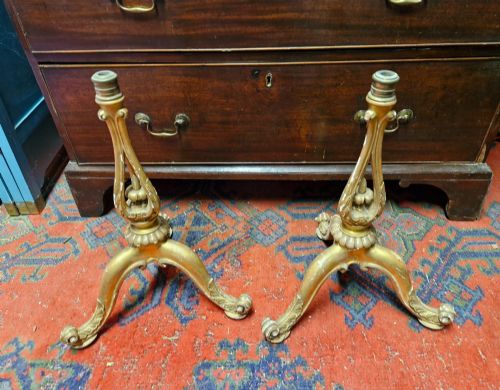
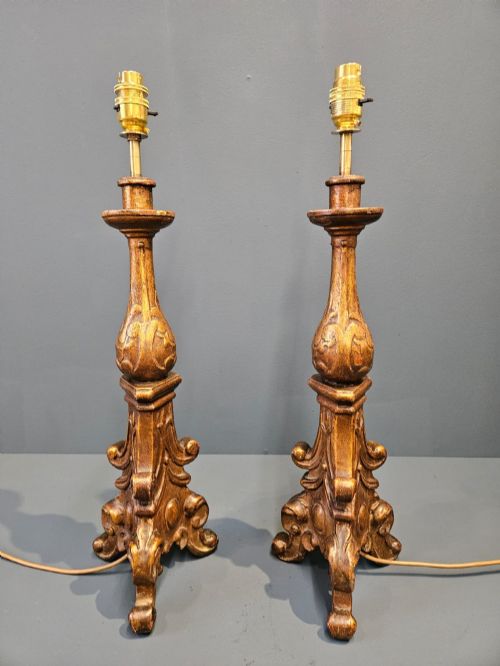
The most common finds on this page are paired lamp bases and converted candlesticks or pricket sticks. These objects display styles from French Rococo and Louis XVI to Italian Baroque and Neoclassical designs.
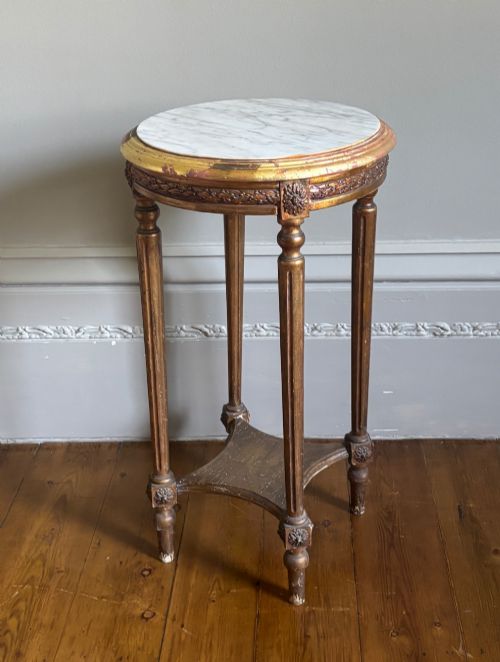
Buyers also encounter related lighting and small furniture forms sharing the same materials, including candelabra, standard lamps and marble-topped occasional tables. These pieces provide cohesive decorative schemes for period interiors.
How they were made
Carved giltwood table lamps rely upon a timber substrate shaped by hand, often layered with gesso to create smooth surfaces for detail. Artisans then apply gold leaf or silver gilt to the prepared form, building a luminous finish.
Many bases incorporate contrasting materials such as marble for stability or brass components for structural joinery. Fabric elements appear on associated shades, while the primary bodies remain defined by wood carving and gilding techniques.
The listings span the eighteenth, nineteenth and early twentieth centuries, incorporating materials such as marble, brass and gold leaf across diverse European styles.
What varies in quality
The depth and crispness of the hand carving dictate the quality of carved giltwood table lamps, separating robust sculptural work from softer execution. Finer pieces retain sharp contours in acanthus leaves, scrolls and figurative elements.
The integrity of the gilding and the preparation layers beneath it determine the longevity of the surface. Superior examples show thoughtful burnishing and natural ageing of the gold leaf rather than heavy-handed modern intervention.
The Carved Giltwood Table Lamps Glossary
- Giltwood
- Timber that has been coated with gold leaf or metal leaf over a prepared gesso ground. This technique creates a rich, reflective surface characteristic of formal antique furniture and lighting.
- Gesso
- A plaster mixture applied to wood surfaces as a base before gilding. It provides a smooth, uniform foundation that allows carvers to achieve fine detail.
- Pricket stick
- A type of candlestick featuring a central spike to secure a candle rather than a socket. These items are frequently adapted into lamp bases.
- Neoclassical
- A decorative style inspired by the classical art and architecture of ancient Greece and Rome. It emphasises symmetry, restraint and classical motifs such as urns and fluting.
- Rococo
- An ornate design style marked by asymmetry, scrollwork and organic shell motifs. It dominates many mid-eighteenth-century decorative objects.
Carved Giltwood Table Lamps: Frequently Asked Questions
How do I wire an antique lamp base?
Professional rewiring ensures safety while preserving the historic structure of the wooden base. Electric flex can be threaded through existing channels or discreetly routed to maintain the piece's integrity.
Consult an electrician experienced with antique lighting to avoid altering original carved elements or damaging antique metal fittings.
Can I mix different styles of giltwood lighting?
Pairing pieces from different continental origins works well if the scale and tone of the gilding share similar qualities. Italian Baroque bases sit comfortably alongside later French Neoclassical examples within a eclectic interior.
Focus on matching heights and proportion rather than strict adherence to a single period or region.
How should I clean gilded surfaces?
Dust giltwood surfaces gently with a soft, dry brush to prevent accumulation without disturbing the delicate gold leaf. Avoid liquid cleaners, abrasives and chemical solvents entirely.
Moisture can penetrate the gesso ground and cause the metallic leaf to flake away from the timber underneath.