




Carved Gilt Clock
A carved gilt clock brings literal shine and sculptural depth to a room, catching the light in a way plain timber never manages.
Carved Gilt Clock
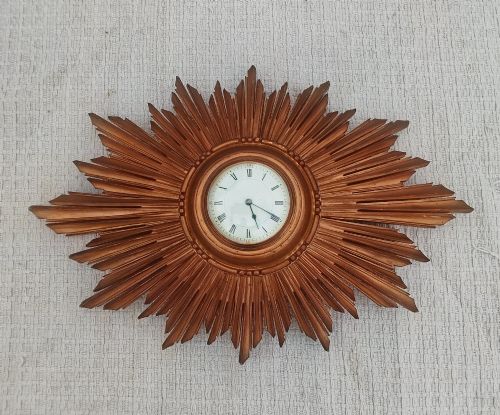
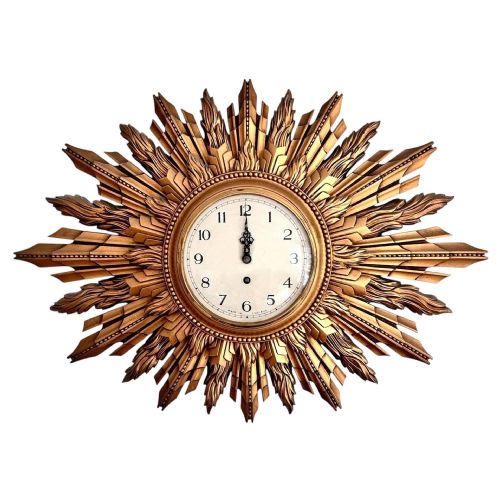
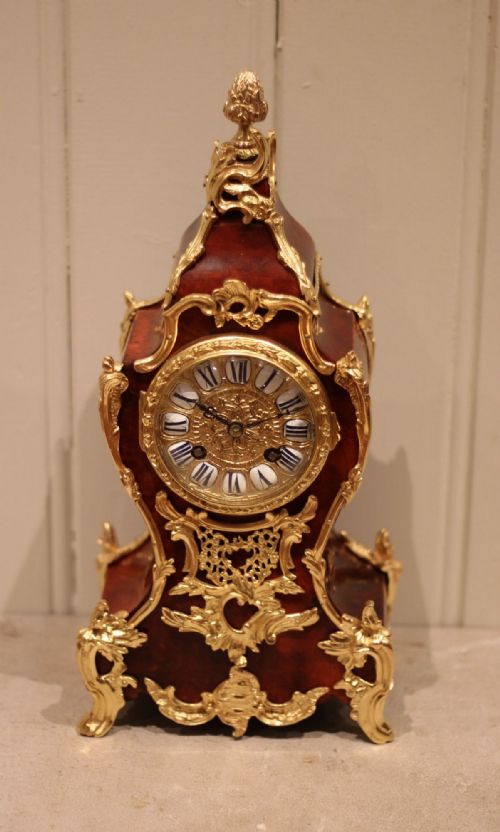
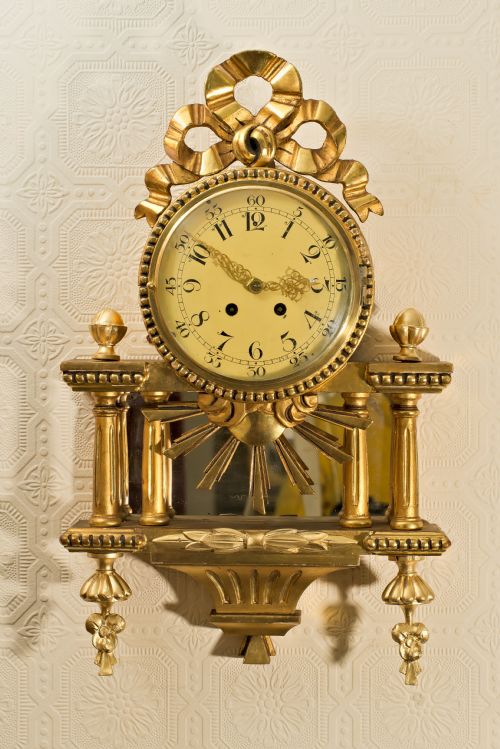
When you search for a carved gilt clock, you encounter timepieces shaped from wood, bronze, or metal, finished in gold leaf, ormolu, or giltwood. These objects span periods from the Georgian era through the nineteenth century and into the Art Deco years, taking forms as diverse as wall-mounted cartel clocks, sunbursts, and substantial mantel designs.
The version you are most likely to meet on this page is the French or English mantel clock or the gilded wall cartel, drawing on styles from French Rococo and Neo-Classical to Victorian and Art Deco. They range from architectural mahogany cases with gilt mounts to exuberant carved wooden frames adorned with scrolls and foliage.
Makers and workshops across Britain, France, and Scandinavia produced these pieces, utilising contrasting materials like white marble, alabaster, tortoiseshell, and glass domes to frame the dial.
How they were made
Carved gilt clocks rely on the interplay between a solid structural base - such as oak, pine, mahogany, or cast bronze - and the applied gold surface. Craftsmen carved intricate wooden frames by hand before applying delicate sheets of gold leaf, or cast bronze components that were subsequently mercury-gilded or fashioned into ormolu.
Clockmakers fitted these housings with brass or metal movements, often incorporating enamel dials with Roman or Arabic numerals. Additional decorative elements, including alabaster bases, glass domes, and brass bezels, were integrated to protect the delicate mechanics and enhance the visual weight of the piece.
Listings feature carved gilt clocks spanning the Georgian era, the nineteenth century, and Art Deco periods, utilising giltwood, ormolu, and brass.
What varies in quality
The distinction between ordinary and exceptional examples rests in the crispness of the carving and the depth of the gilding. Superior pieces display sharp, undercut foliage and figures carved with clear articulation, whereas lesser items rely on softer, moulded composition ornament.
The quality of the internal movement matches the exterior case. Signed French and English movements with intricate brass mechanisms, striking trains, or musical capabilities elevate a clock far above standard production models of the same period.
Smiths·Wetterstrands·Joseph Windmills·Samuel Marti·Perivale·William Webster
The Carved Gilt Clock Glossary
- Cartel clock
- A wall clock housed in an ornate frame, usually made of carved and gilt wood or gilt bronze, popular in French and English interiors.
- Ormolu
- Gilded bronze, where a finely ground gold-mercury amalgam is applied to a bronze base and heated to bond the gold.
- Sunburst clock
- A wall clock featuring carved wooden rays emanating outwards from the central dial, often associated with mid-nineteenth and twentieth-century design.
- Bracket clock
- A portable table clock originally designed to sit on a wall bracket, frequently featuring a swinging handle and glazed side panels.
- Enamel dial
- A clock face made by fusing powdered glass to a metal substrate at high temperatures, usually fired to create a crisp white background for painted numerals.
Carved Gilt Clock: Frequently Asked Questions
Where should I place a carved gilt clock?
These clocks demand a prominent spot where they catch natural light, making mantelpieces, hallway console tables, and living room focal walls ideal locations. Their reflective surfaces brighten darker corners and anchor surrounding decorative objects.
Ensure the wall type can support heavier giltwood or cast bronze wall clocks securely, or place mantel versions on stable, level surfaces away from direct heat sources that might affect the timber or movement.
How do I wind an antique mechanical clock?
Most mechanical clocks require a specialised key inserted into the winding arbors on the dial face to tension the internal springs or lift the weights. Turn the key gently until you feel firm resistance, avoiding over-winding which can damage the mainspring.
Consult the specific movement type, as fusee and spring-driven clocks differ in their winding requirements and frequency, generally needing attention once a week or every eight days.
How do I tell an 18th-century cartel clock from a later revival piece?
Eighteenth-century pieces typically feature hand-carved wooden frames with organic, asymmetrical Rococo flourishes, showing tool marks and minor wear to the gesso and gold leaf beneath. The hand-painted enamel dials and movement signatures offer further clues to the original period of manufacture.
Nineteenth and twentieth-century revival clocks often employ more uniform machine-assisted shaping, heavier modern brass plating, or standardised movement stamps that distinguish them from earlier workshop production.
Do these clocks keep accurate time?
Antique mechanical clocks can keep reliable time when properly serviced, though they rarely match the precision of modern quartz timepieces. Pendulum regulation allows for fine adjustments if the clock runs slightly fast or slow.
Regular professional cleaning and oiling are essential, as dried lubricants inside the brass gear train will cause the movement to stop or lose time over a twenty-four-hour period.