
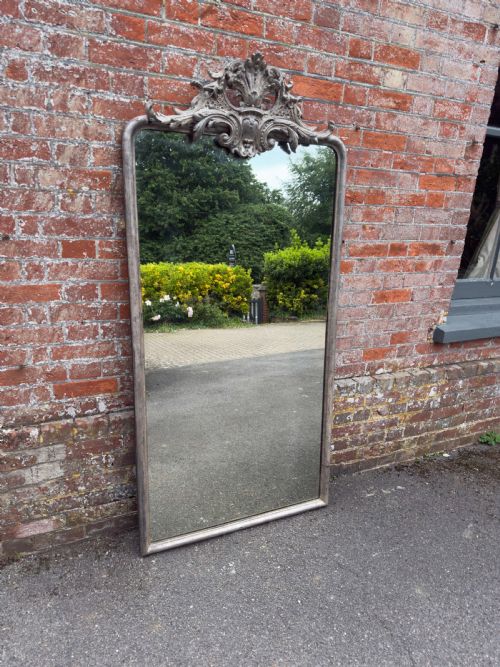


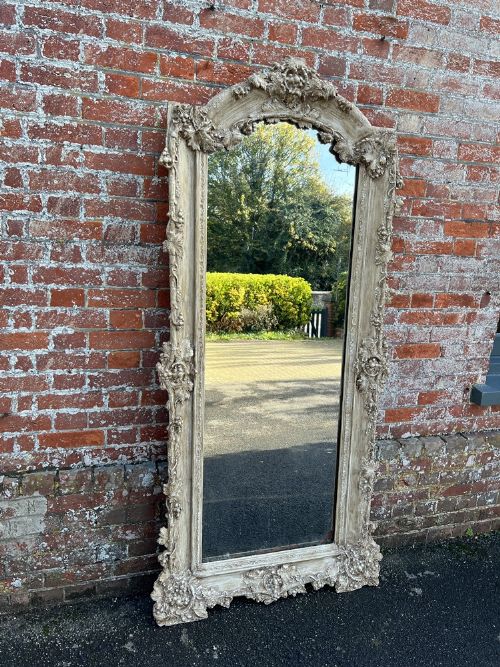


Carved Gesso Dress Mirror
A carved gesso dress mirror brings unmistakable architectural presence to a room, offering grand arched and shaped forms that reflect both light and historic French and Italian design.
Carved Gesso Dress Mirror
A carved gesso dress mirror represents a distinct category of decorative furnishings designed for dressing tables, toilets, and walls. When searching for a carved gesso dress mirror, buyers typically encounter large mid-nineteenth-century French and Italian examples, alongside eighteenth-century Italian pieces and twentieth-century toilet mirrors.
The forms span table mirrors, toilet mirrors, and large wall-hanging mirrors featuring arched and shaped tops. French Chateau, Rococo Revival, and Victorian styles dominate the selection, establishing a clear link to ornate historic interiors.
Most items combine carved wood with applied gesso and reflective glass, finished in gilt, silver leaf, or paint. These objects serve both practical dressing functions and purely decorative roles within a room scheme.
How they were made
Makers built these pieces using solid wood carcasses carved into complex scrollwork, floral motifs, and architectural profiles. Workers then applied layers of gesso - a mixture of plaster of Paris or chalk with glue binder - onto the carved wood base to build up relief details.
The prepared gesso surfaces received meticulous applications of gold leaf, silver leaf, or paint to achieve the desired metallic sheen or coloured finish. Finally, glass plates were fitted into the frames to complete the mirror.
Object types documented in the inventory span wall mirrors, standard mirrors, toilet mirrors, and table mirrors.
What varies in quality
Quality rests in the crispness and depth of the wood carving beneath the gesso, as well as the finesse of the applied ornamentation. Superior examples display sharply defined relief work that retains its structural integrity without heavy restoration or flattening of the plaster layers.
The finish also determines the tier of the piece, distinguishing between standard painted surfaces and delicate, layered applications of genuine gold or silver leaf. Original surface treatments that have aged naturally without clumsy overpainting hold greater visual depth.
The Carved Gesso Dress Mirror Glossary
- Gesso
- A plaster-based mixture applied to wood frames to create a smooth surface for gilding or painting. This material allows artisans to sculpt intricate decorative details before finishing.
- Giltwood
- Wood that has been coated with gold leaf or gold paint. This technique gives frames a brilliant metallic lustre characteristic of luxury furnishings.
- Toilet mirror
- A small mirror designed to sit atop a dressing table or chest of drawers. These portable pieces often include small stands or pivoting frames.
Carved Gesso Dress Mirror: Frequently Asked Questions
Where should I place a dress mirror?
These mirrors suit dressing tables, low chests, or prominent wall locations where their arched and shaped tops can draw the eye. Placing them opposite windows helps maximise natural light distribution across a room.
Larger wall-hanging versions work well above mantels or console tables, while smaller table and toilet variants belong on dedicated dressing furniture.
How do I identify French and Italian styles?
French Chateau and Rococo Revival pieces from the nineteenth century often lean towards grand proportions with painted or gilt finishes and arched profiles. Italian examples from the eighteenth and nineteenth centuries frequently showcase dramatic carved giltwood and pronounced Rococo scrolls.
Observing the specific combination of wood carving, gesso buildup, and finishing leaf helps separate continental traditions.
Are gesso mirrors fragile?
Gesso consists of a chalk or plaster mixture applied over wood, meaning it can chip or crack if subjected to sharp impacts or heavy knocks. Careful handling during movement is essential to preserve the raised decorative relief.
Environmental stability also matters, as extreme shifts in humidity can affect the bond between the wooden base and the gesso layer.
What is the difference between wall and toilet mirrors?
Wall mirrors are built for permanent hanging and generally measure larger in scale, often featuring substantial arched or shaped timber frames. Toilet and table mirrors are smaller formats intended to rest on horizontal surfaces for personal grooming.
Both types share the same carved wood and gesso construction methods seen across the period.