
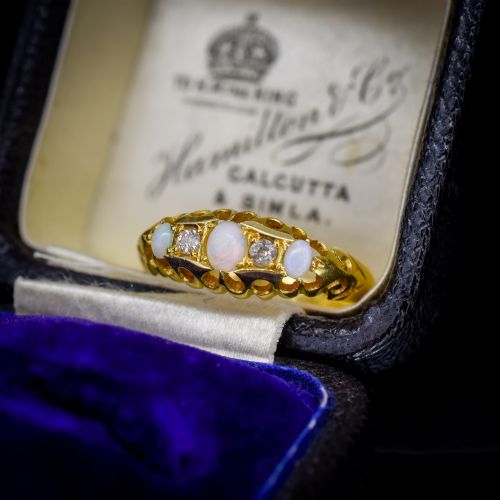
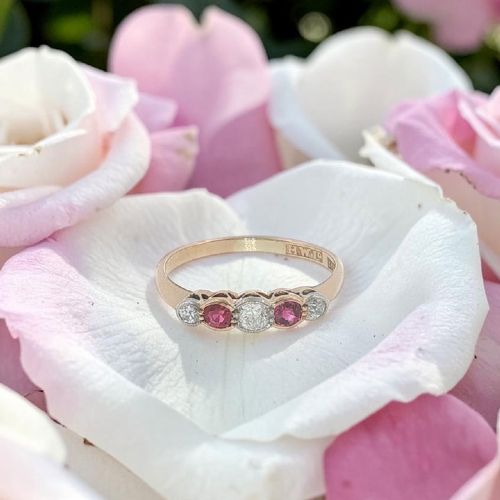
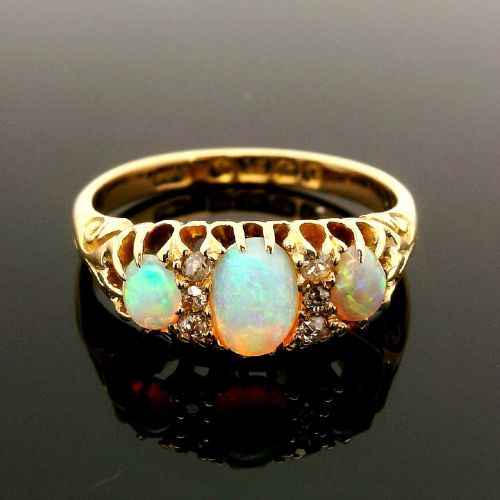
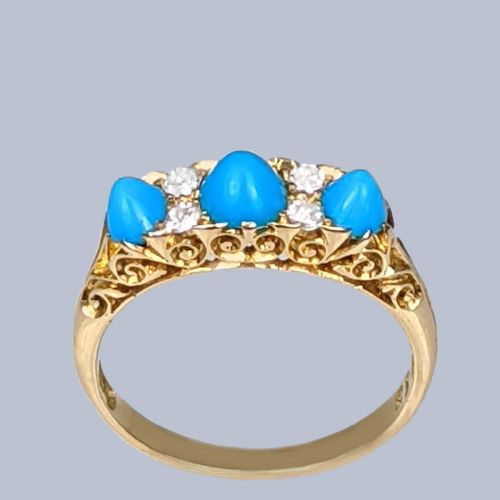
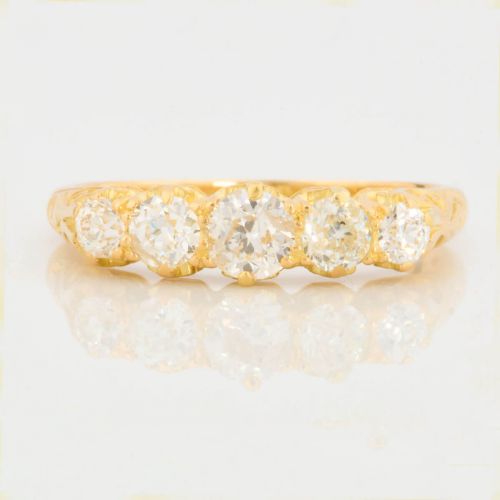
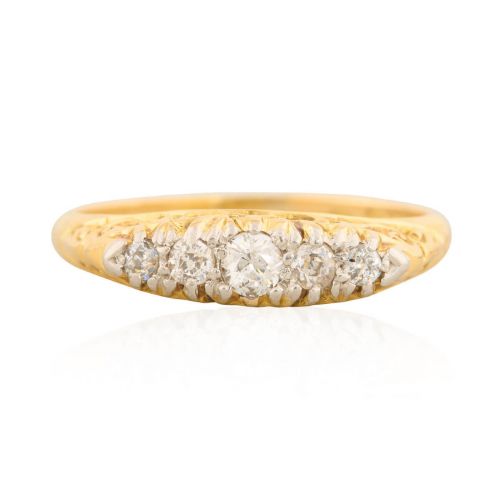
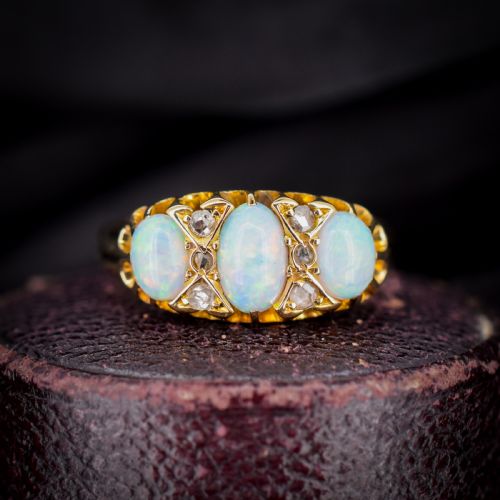
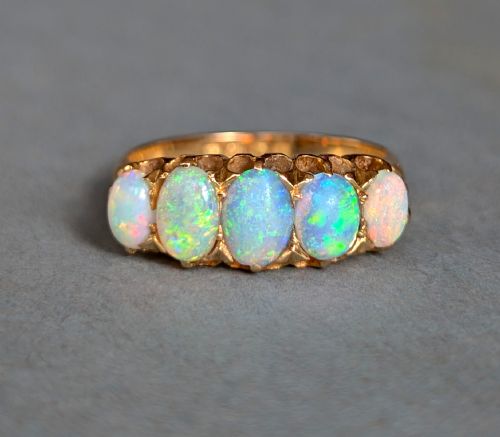


Carved Gallery Diamond Ring
These carved gallery diamond ring pieces are refined jewels that offer a distinct historical profile for daily wear.
Carved Gallery Diamond Ring
The selections on this page centre primarily on 18ct yellow gold, 18ct gold, and platinum rings set with old cut diamonds. Forms range from multi-stone trilogy and five-stone configurations to half eternity bands, reflecting the popular diamond arrangements of their respective periods.
How they were made
The construction of these rings relies on durable noble metals such as 18ct yellow gold and platinum, which provide both the strength required for secure settings and the malleability needed for intricate gallery work. Goldsmiths shaped and pierced the metal manually to support the stones while reducing weight.
Diamonds used in these pieces are predominantly old cuts, shaped by hand to follow the natural contours of the rough stone rather than modern symmetrical standards. These stones are securely flush-set, claw-set, or channel-set into the metal mounts, often complemented by hand-engraved details along the shoulders and gallery.
Early diamond cutters aimed to save as much weight as possible, resulting in charmingly plump stones that look wonderfully cosy in their heavy gold mounts.
What varies in quality
The distinction between standard and exceptional pieces lies in the crispness of the hand-carved gallery work and the symmetry of the metal piercing. Finer examples display precise, balanced ornamentation that remains sharp and well-defined without softening from wear or over-polishing.
Stone selection and setting execution further differentiate the range, where well-matched old cut diamonds with high clarity and integrated proportions create a more cohesive visual harmony. The robustness of the underlying gold or platinum structure ensures the longevity of the intricate openwork.
The Carved Gallery Diamond Ring Glossary
- Old Cut
- A historic diamond cutting style characterised by a smaller table, higher crown, and open culet. These stones catch candle or gas light with a softer, broader sparkle than modern brilliant cuts.
- Trilogy Ring
- A finger ornament featuring three principal stones, traditionally symbolising the past, present, and future. They appear frequently in turn of the century and Victorian jewellery.
- Platinum
- A dense, durable white metal utilised in fine jewellery manufacture for its strength in secure stone settings. It allows for delicate prongs and fine millegrain edges without risking structural failure.
- Half Eternity Ring
- A band set with a row of gemstones extending halfway across the top arc of the hoop. This design offers the visual appeal of a full eternity ring with greater comfort on the palm side.
Carved Gallery Diamond Ring: Frequently Asked Questions
How do I care for an old cut diamond?
Old cut diamonds benefit from gentle cleaning with warm water, mild dish soap, and a soft-bristled brush to remove everyday oils. Avoid harsh ultrasonic cleaners which can loosen older hand-set mountings.
Store the ring in an individual fabric-lined compartment to prevent the metal and stones from scratching against other items in your collection.
Are these rings suitable for daily wear?
These pieces are constructed from durable metals like 18ct gold and platinum, making them suitable for regular wear when treated with reasonable care. However, the intricate metalwork of the gallery should be inspected periodically by a professional.
It is advisable to remove the ring during heavy manual labour, gardening, or weightlifting to protect the delicate openwork and claw settings from impact.
How can I tell the period of a ring?
The period of a ring is identified through a combination of stone cutting styles, metal purity hallmarks, and the specific fabrication techniques used in the gallery and shank. Old cut diamonds and hand-carved platinum or yellow gold work typically point towards the Victorian, Edwardian, or turn of the century eras.
Comparing the mounting style and any maker's marks against historical jewellery records helps narrow down the exact decade of manufacture.