


Carved Fruitwood Treen
Carved fruitwood treen objects are tactile domestic wooden items shaped by hand across the eighteenth and nineteenth centuries for everyday use.
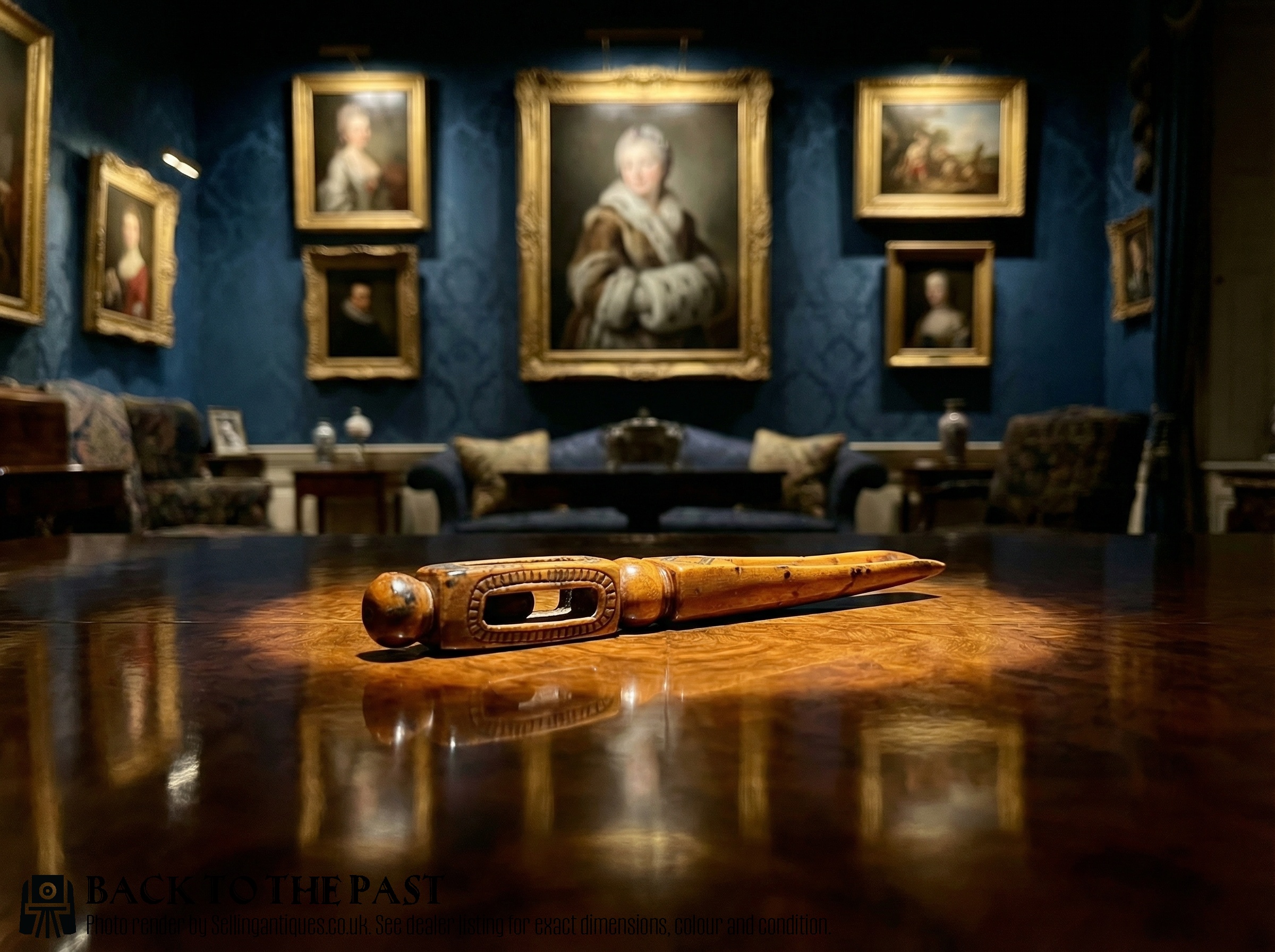
Carved Fruitwood Treen
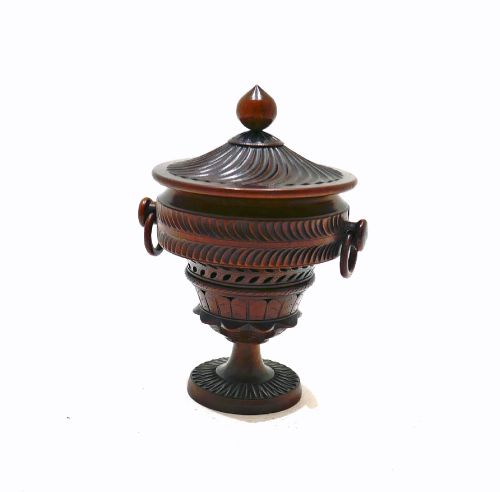
Carved fruitwood treen encompasses a wide variety of small domestic wooden objects made across the seventeenth, eighteenth, and nineteenth centuries. Buyers encounter utilitarian and decorative forms ranging from kitchenware and tableware to personal items created for daily use.
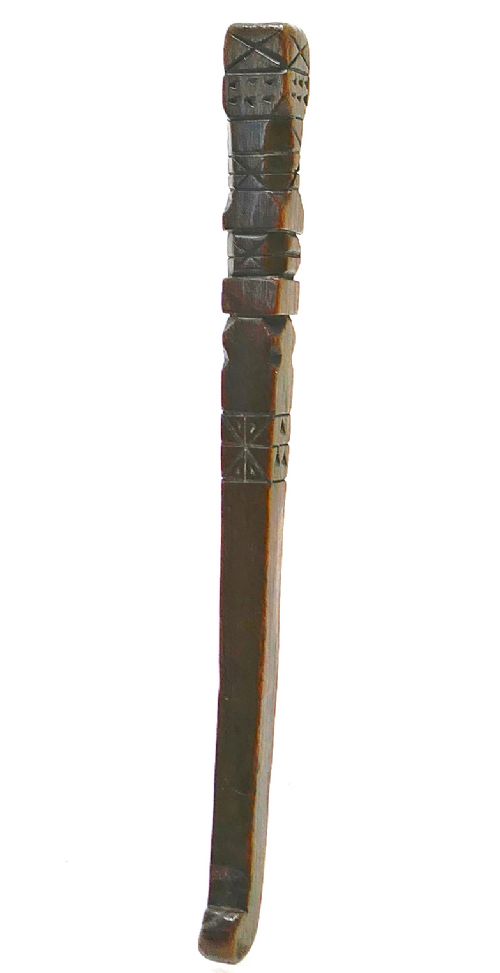
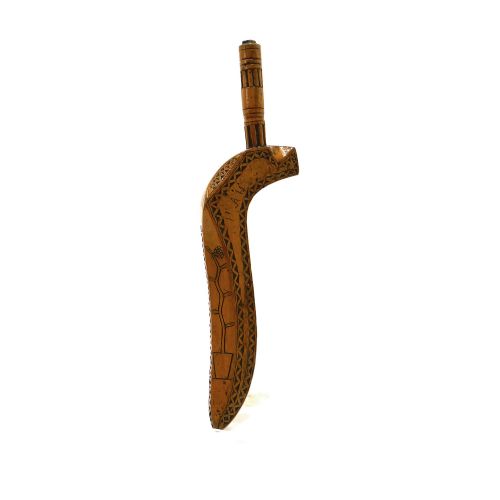
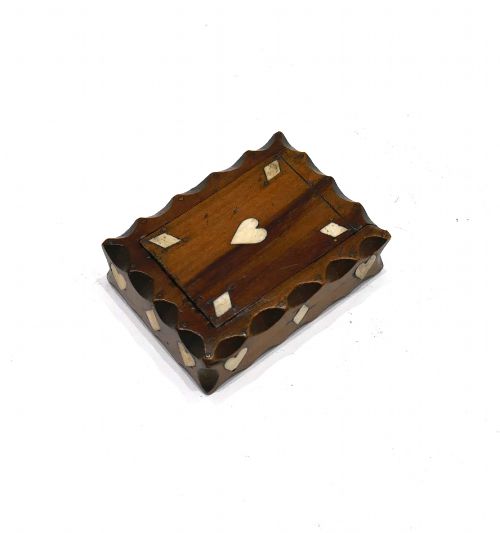
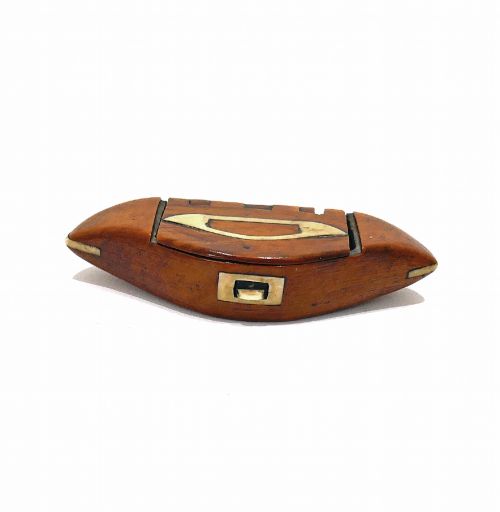
The selection on this page centres heavily on nineteenth-century pieces, alongside eighteenth-century examples and occasional seventeenth-century items. Common forms include snuff boxes, nutcrackers, knitting sheaths, lovespoons, and page turners.
Makers shaped these items within English, Welsh, Cumbrian, Swiss, and Continental traditions. Folk art styles dominate, showing vernacular carving methods passed down through generations.
What varies in quality in carved fruitwood treen
Quality rests upon the crispness of the carving and the complexity of the decorative technique employed. Pieces featuring detailed chip carving, punchwork, or precise bone inlay require greater skill than plain utility items.
The harmony of the timber grain and the preservation of the original surface patination distinguish finer examples. Wear that softens sharp edges without obscuring the maker's handwork indicates genuine age and careful handling.
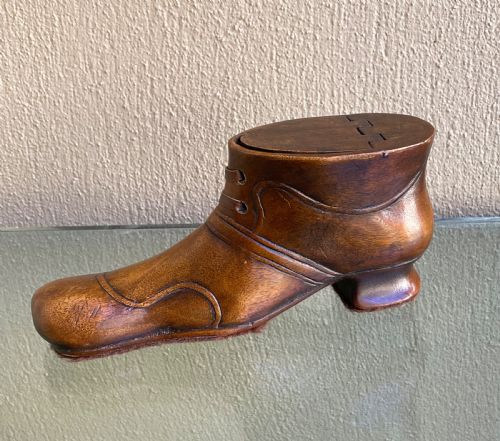
An anonymous eighteenth-century carver shaped a piece of fruitwood into a tiny wooden shoe specifically designed for holding snuff.
The Carved Fruitwood Treen Glossary
- Treen
- Small handmade wooden objects for the home. The term derives from the old English word for tree.
- Knitting sheath
- A small carved wooden case tucked into a belt or apron to hold a knitting needle steady. They frequently display regional folk art carving.
- Lovespoon
- A decorated wooden spoon carved as a token of affection. These often incorporate symbolic motifs such as hearts and chains.
- Springerle board
- A wooden mould carved with intaglio patterns used for impressing biscuits. German and Dutch makers produced these for festival baking.
- Nutcracker
- A mechanical lever device carved in wood. Makers often shaped these into figural forms like animals or shoes.
Carved Fruitwood Treen: Frequently Asked Questions
What is carved fruitwood treen?
Carved fruitwood treen comprises small, functional wooden domestic items shaped by hand. These objects served practical purposes in the kitchen, dairy, and parlour.
Craftsmen utilised dense local hardwoods to produce items ranging from snuff boxes and nutcrackers to spoons and knitting sheaths. Each piece reflects regional folk art traditions.
How were these wooden items used?
People utilised these wooden pieces for everyday domestic tasks and personal convenience. Snuff boxes held tobacco, while knitting sheaths supported textile work.
Other items performed kitchen duties such as coring apples, crushing spices with mortars, or serving broth and cheese. Many objects also functioned as personal gifts or decorative tokens.
How do I date carved treen?
Dating relies on identifying the style of carving, the tool marks, and the specific object type. Eighteenth-century pieces often display simpler utilitarian forms, while nineteenth-century items frequently feature elaborate folk art decoration.
Secondary materials provide further clues. The presence of specific bone inlay patterns or dated inscriptions helps narrow the period of manufacture.
How do I care for fruitwood treen?
Maintain these wooden objects by keeping them away from direct heat sources and sudden humidity changes. Stable environmental conditions prevent the timber from warping or splitting.
Clean surfaces gently with a dry or barely damp cloth. Avoid harsh modern polishes that can damage the historic patinated finish.