


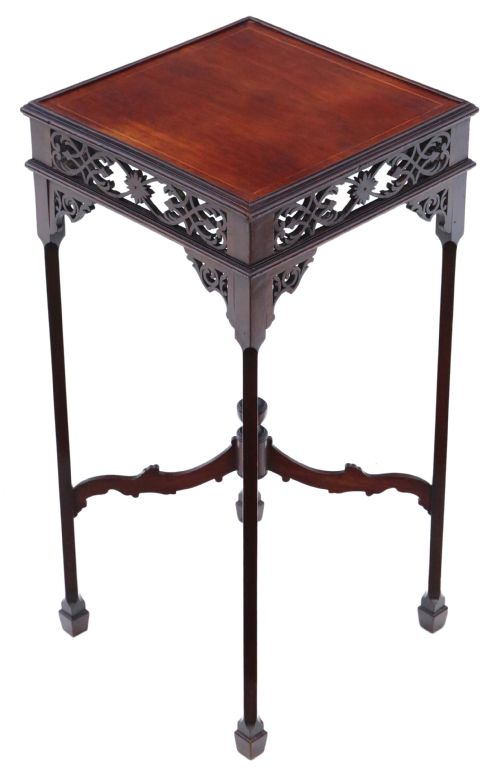

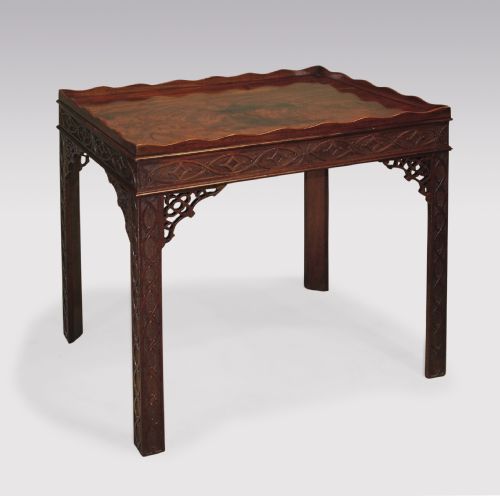

Carved Fretwork Gallery Table
A carved fretwork gallery table brings intricate pierced wooden railings and rich timber surfaces into a room, offering both decorative elegance and practical display space.
Carved Fretwork Gallery Table
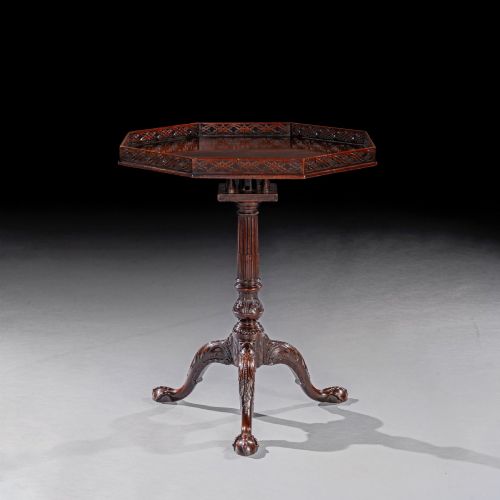
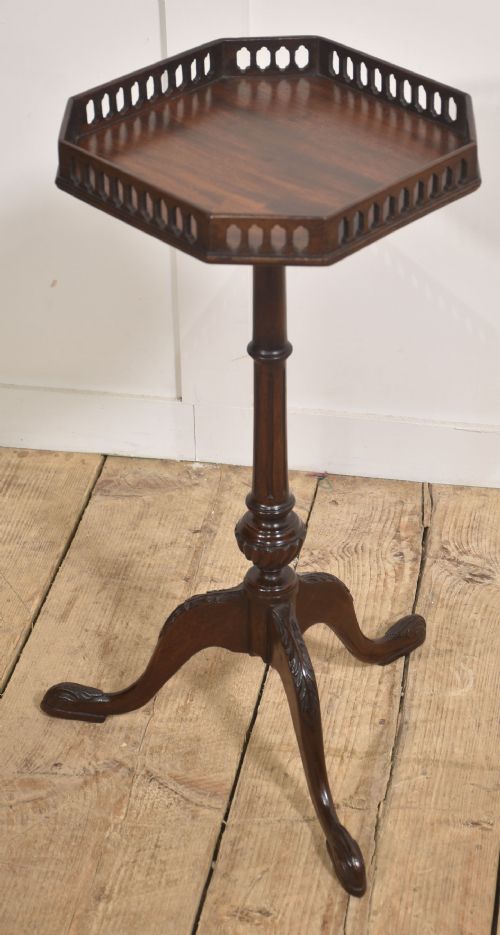
When you search for a carved fretwork gallery table, you are looking at small occasional furniture featuring pierced wooden railings around the top surface, originating from periods such as the eighteenth century, the Victorian era, and the Edwardian years.
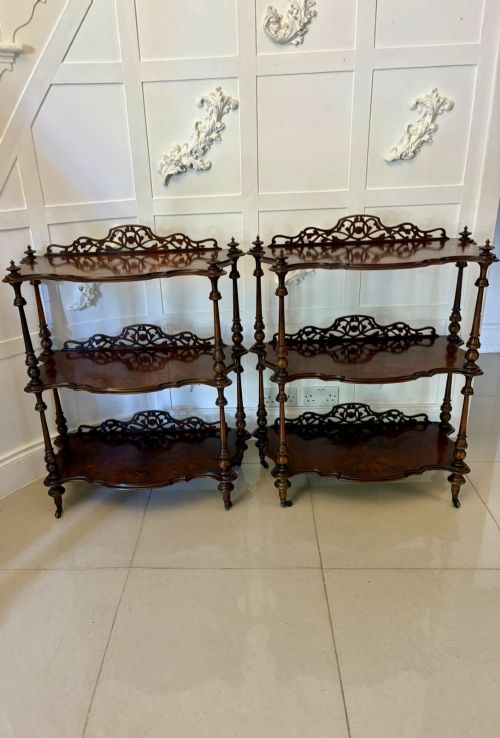
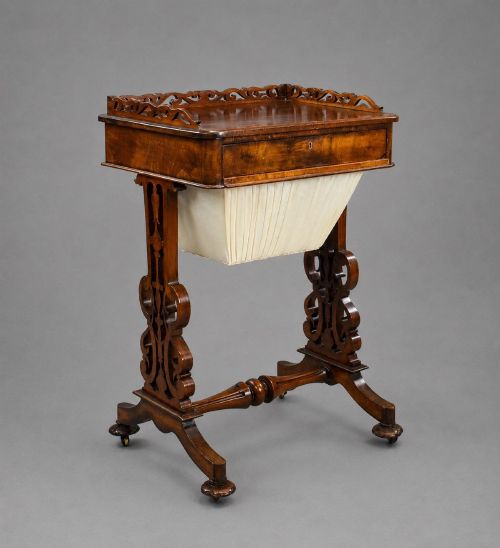
The pieces listed on this page appear in various forms including side tables, silver tables, occasional wine tables, desks, and whatnots, showing how versatile the raised gallery edge proved for different domestic uses over the centuries.
You are most likely to meet mahogany examples spanning Georgian, Victorian, and Chippendale revival styles, often standing on tripod bases, pedestals, or four-legged supports with detailed fretwork details.
Materials and construction
Cabinet makers relied heavily on solid and veneered mahogany, along with occasional use of burr walnut, oak, brass fittings, and fabric or leather inserts to build these tables.
The defining gallery feature required careful hand-piercing of wood to create intricate fretwork patterns, which were then fitted precisely around the perimeter of the tabletop.
Materials across these listings include mahogany, burr walnut, oak, and brass, spanning the eighteenth century through to the Edwardian period.
Judging the work
The distinction between ordinary and superior pieces lies in the crispness and depth of the hand-carved fretwork and the selection of figured timber veneers like burr walnut or dense mahogany.
Proportion and structural joinery separate standard production from master craftsmanship, particularly where delicate gallery rails meet the main table surface.
The Carved Fretwork Gallery Table Glossary
- Gallery
- A low railing or pierced border surrounding the edge of a tabletop or shelf. This feature was originally designed to prevent items like silver or glassware from sliding off.
- Fretwork
- Ornamental perforated woodwork created by piercing designs through a thin board. It forms the decorative openwork pattern characteristic of Chinese Chippendale and revival pieces.
- Tripod Table
- A small standalone table supported by a central pillar resting on three legs. These often feature tilting mechanisms or fixed tops.
- Torchere
- A tall, slender stand designed to hold a light, candle, or decorative plant. Examples in the evidence include sturdy oak constructions from the early twentieth century.
- Whatnot
- A piece of open shelving furniture used for displaying ornaments and small objects. Victorian versions often incorporated multiple tiers and fine timber figuring.
Carved Fretwork Gallery Table: Frequently Asked Questions
What is a gallery table?
A gallery table is a small surface finished with a raised pierced border or railing around the edge.
Cabinet makers added these borders to keep precious items secure while enhancing the decorative silhouette of the piece.
How were these tables used?
These pieces served multiple domestic purposes as tea tables, silver display surfaces, occasional wine tables, and small writing desks.
Their compact size allowed them to be easily moved around reception rooms and parlours as needed.
What timber was most popular?
Mahogany served as the predominant wood across eighteenth-century, Victorian, and Edwardian examples.
Craftsmen also utilised burr walnut and oak to achieve rich grain patterns and varied colour tones.
How do I spot Chippendale style?
Chippendale and Chinese Chippendale styles display intricate fretwork, carved legs, and architectural proportions inspired by mid-eighteenth-century design manuals.
Revival pieces from the Victorian and Edwardian periods often replicated these elaborate motifs with high manufacturing standards.