


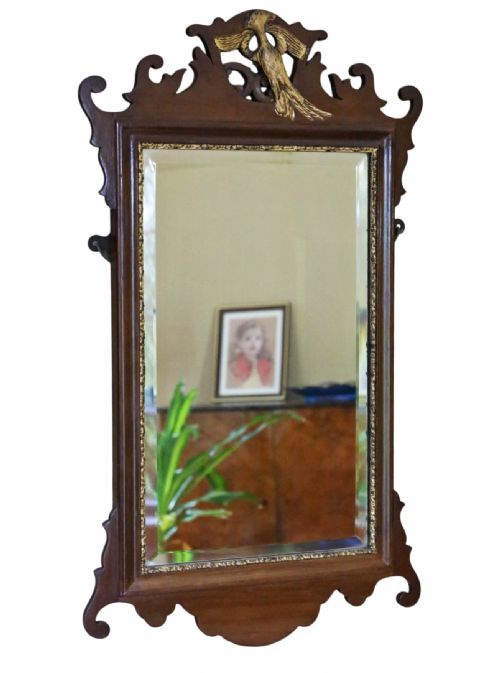


Carved Fretwork Crest Mirror
A carved fretwork crest mirror brings architectural line and fine timber grain to a room, offering the scrollwork and symmetry prized in formal interiors.
Carved Fretwork Crest Mirror
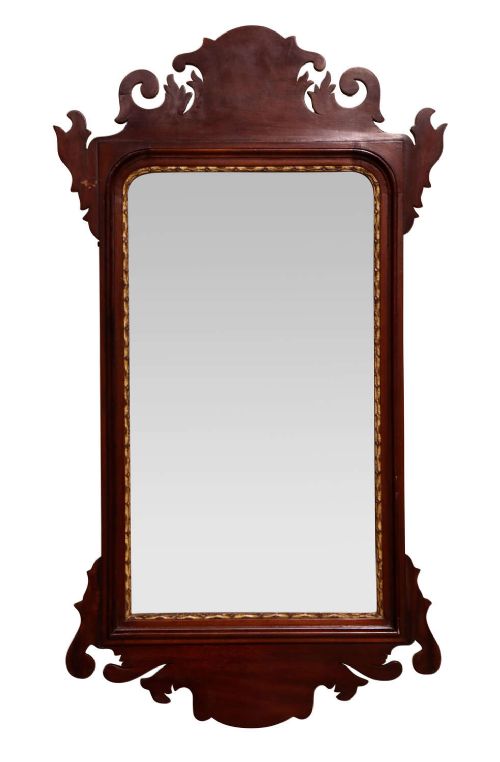
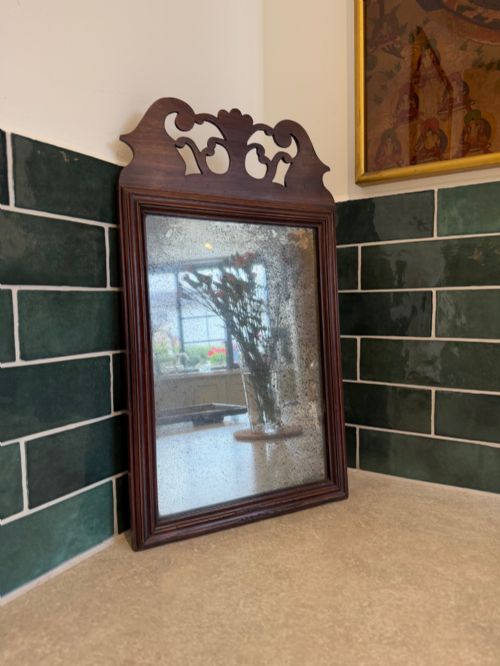
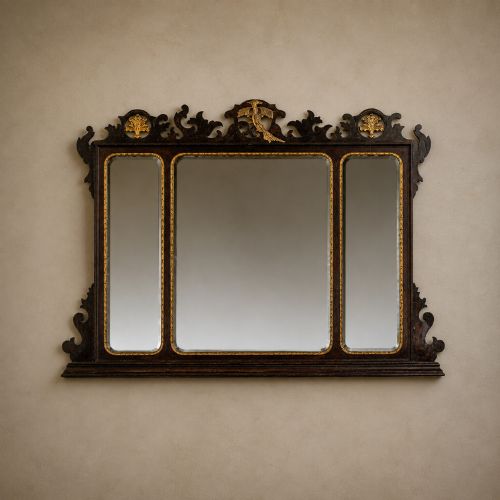
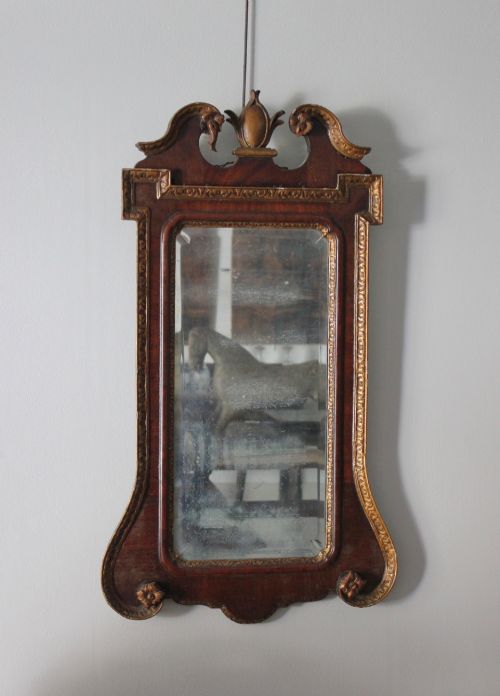
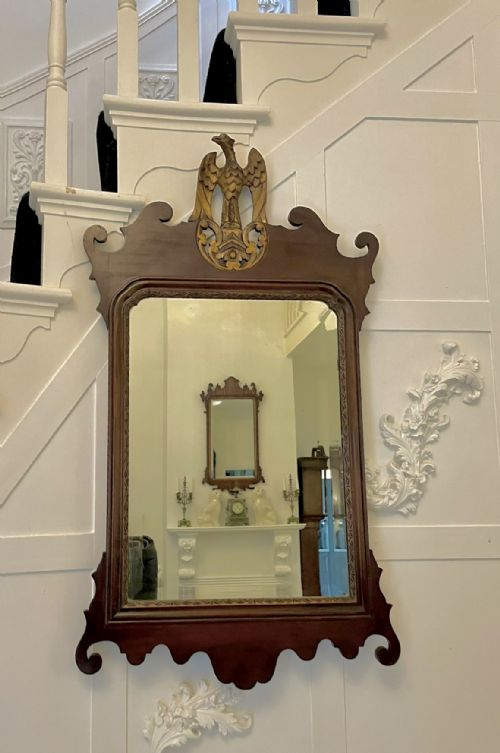
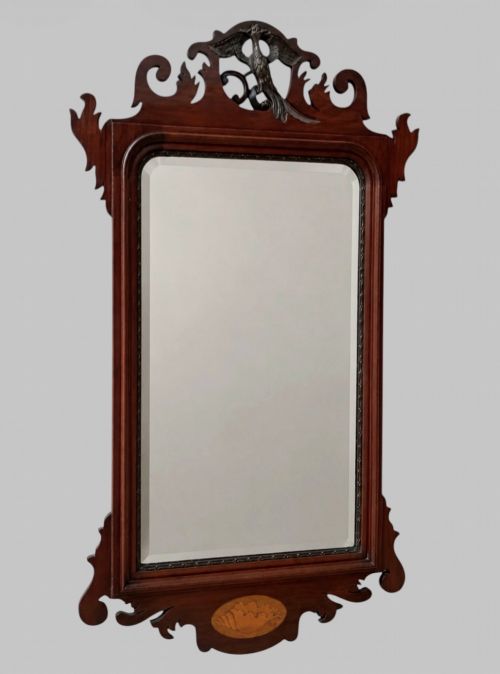
A carved fretwork crest mirror is a hanging wall glass defined by pierced wooden frames and scrolled crestings. When searching for a carved fretwork crest mirror, buyers encounter both authentic Georgian examples and later revival pieces.
The selections span wall mirrors and larger overmantel forms, originating from the eighteenth century through to the Edwardian period and the early twentieth century. Walnut and mahogany dominate the offerings, often accented with parcel gilt details.
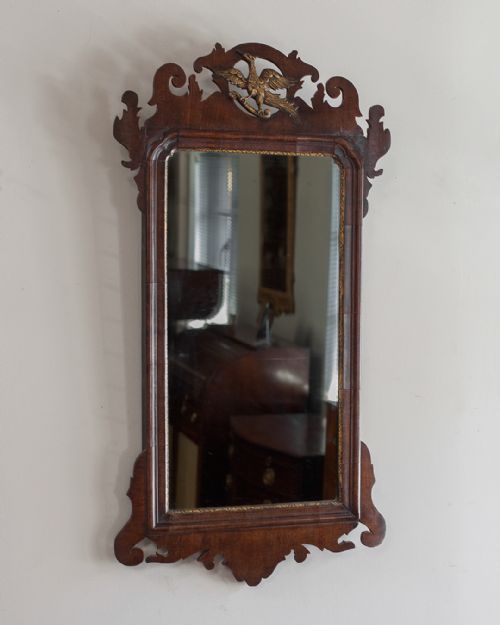
Georgian and George II or III periods represent the foundation of this form, while Victorian and Edwardian revivals reproduce the classic pierced silhouettes and Ho-Ho bird motifs.
How they were made
Cabinetmakers constructed these frames using mahogany and walnut, frequently selecting veneers like burr walnut or adding parcel gilt highlights to the carved details. Timber was shaped using fretsaws to pierce intricate scrollwork patterns along the crest and apron.
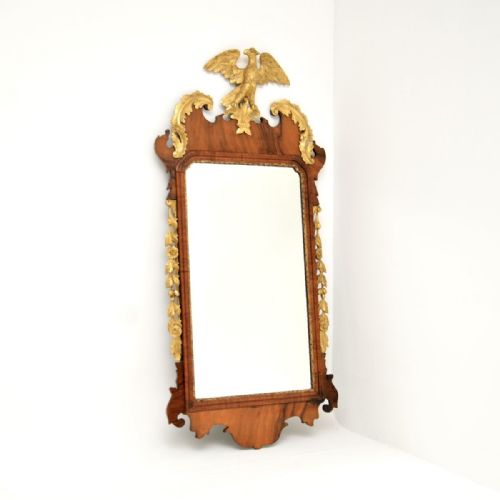
Glass plates were set into the rebated backs, sometimes utilising Vauxhall mirror plates with bevelled edges. Gilding was applied using gold leaf over gesso grounds on carved wooden elements such as crest birds and side pendants.
Several mirrors feature wooden birds perched atop the scrollwork, keeping a silent, carved watch over the room.
What varies in quality
Quality rests in the crispness of the fretsawn edges and the depth of the hand carving within the crest and ears. Finer pieces demonstrate careful timber selection, such as richly figured mahogany or burr walnut veneers that align symmetrically.
The preservation of original gilding and the untouched patination of the wood separate superior examples from heavily restored or later replacement components.
The Carved Fretwork Crest Mirror Glossary
- Fretwork
- Pierced decorative woodwork created by cutting patterns through thin boards with a fretsaw. This technique defines the silhouette of the frame.
- Parcel Gilt
- Partially gilded surfaces where gold leaf is applied only to specific carved details while leaving the underlying wood visible. This contrasts the warm timber grain against bright gold.
- Vauxhall Plate
- Historical mirror glass featuring a distinct bevel along the perimeter. These plates often show slight age foxing.
- Ho-Ho Bird
- A stylized Chinese phoenix motif commonly carved onto the crests of mid-eighteenth-century mirrors. It perches at the apex of the scrollwork.
- Overmantel Mirror
- A wide wall glass designed to hang specifically above a fireplace mantel. These pieces frequently incorporate triptych plates and elaborate crestings.
Carved Fretwork Crest Mirror: Frequently Asked Questions
Where should I hang a fretwork mirror?
These mirrors suit spaces above mantelpieces, console tables or living room walls where their pierced frames can catch the light. They function well as focal points in traditional rooms.
Ensure the wall anchor supports the weight of the timber frame and glass plate securely.
How do I identify a Georgian original?
Examine the construction behind the frame, looking for aged pine backboards, old fixings, and hand-cut joinery. Timbers should show natural oxidation and shrinkage consistent with age.
Revival pieces from the Victorian or Edwardian eras often use machine-cut elements and modern backing screws.
What is a Ho-Ho bird crest?
The Ho-Ho bird is a mythical phoenix figure carved at the top centre of the mirror frame. It reflects the mid-eighteenth-century taste for Chinese decorative motifs.
This cresting element anchors the symmetrical scrollwork of the fret-cut design.
Are these mirrors fragile?
The pierced wooden fretsawn sections require gentle handling during moving or cleaning. The thin scrollwork ears are particularly susceptible to impact if struck.
Dust them carefully with a soft brush rather than pressing down with cloths.