
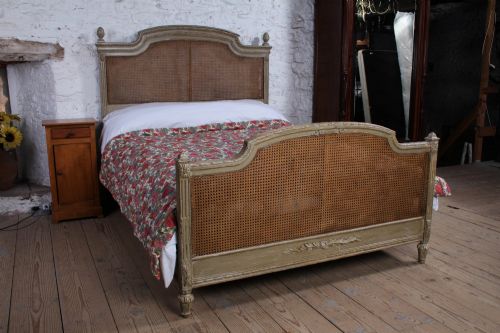


Carved French Cane Bedstead
A carved French cane bedstead brings architectural presence and lightness to a bedroom through woven natural panels and classical timber frames.
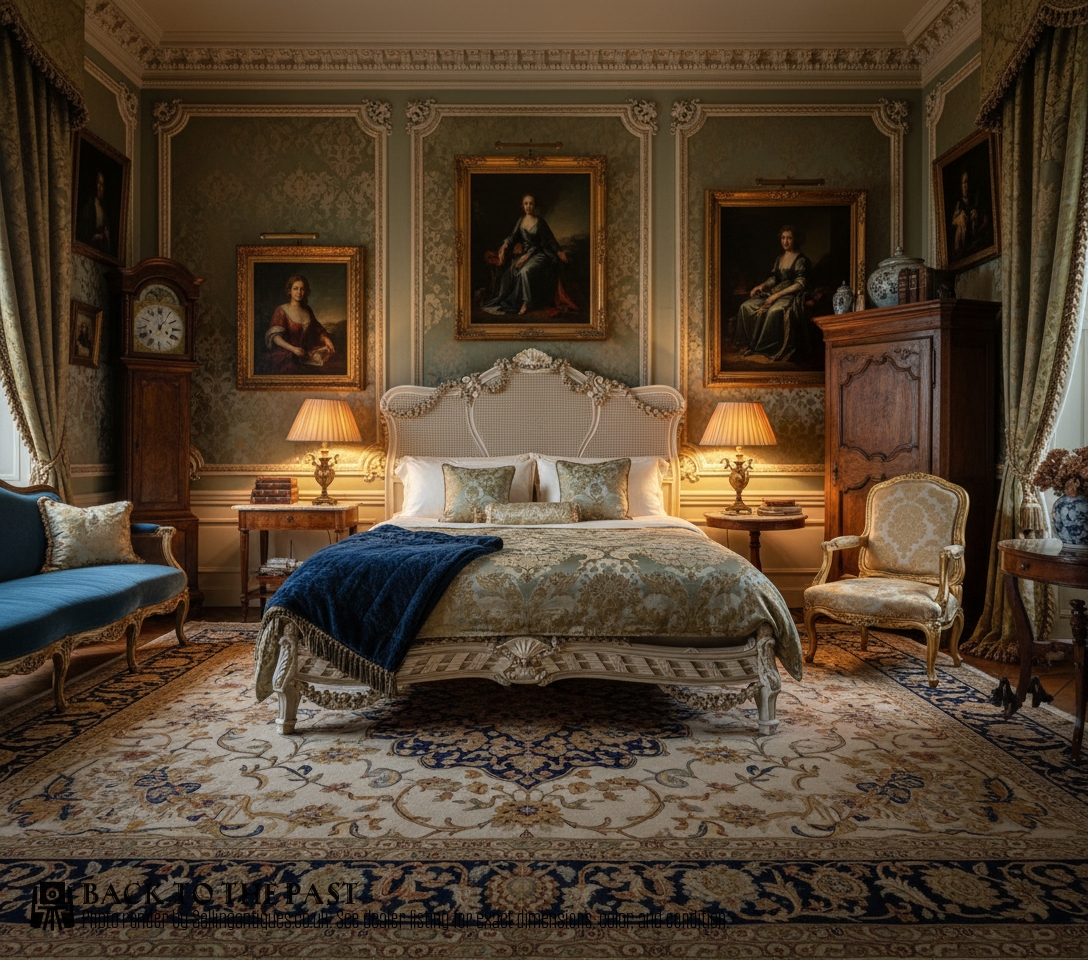
Carved French Cane Bedstead
A carved French cane bedstead is a sleeping platform defined by woven natural cane or rattan panels set within a carved wooden frame. These pieces originate from the early twentieth century, spanning the nineteen hundreds to the nineteen twenties.
Buyers browsing this selection will frequently encounter Louis XVI style designs, French chateau pieces, and neoclassical revivals. Forms range from double and king size frames to expansive super king versions accompanied by matching bedside furniture and chairs.
The aesthetic relies on a balance between substantial carved woodwork and the translucent texture of caning. Painted finishes, polychrome details, and gold leaf treatments frequently appear alongside natural beech and carved wood structures.
Materials and construction methods
Makers utilised beech and solid timber for the structural framework, carving crisp neoclassical motifs directly into the wood. Skilled artisans shaped headboards and footboards to emulate the classical architectural lines of the Louis XVI period.
Natural cane and rattan were woven by hand into intricate mesh patterns to form breathable headboard and footboard inserts. This technique provided both structural integrity and a light, decorative screen that softened the mass of the timber frame.
Finishing techniques involved layered paint, hand painted portrait panels, and applied gold leaf over carved wooden mouldings. These decorative surfaces created distinct tactile contrasts against the organic texture of the woven cane.
Design influences across the available selection are strictly rooted in the Louis XVI style, French chateau aesthetics, and neoclassical revivalism.
Assessing quality in French cane furniture
The refinement of the timber carving sets the finest examples apart from simpler production. Crisp, deep relief work on the wooden frame indicates superior hand craftsmanship compared to shallow or mechanised moulding.
The integrity and tightness of the hand woven cane panels dictate durability and visual polish. Even tension across the rattan strands and the absence of fraying demonstrate high standards of execution.
The sophistication of the surface finish contributes significantly to the character of the piece. Subtle polychrome painting or carefully distressed gold leaf requires greater artisan skill than uniform, flat modern paint applications.
The Carved French Cane Bedstead Glossary
- Louis XVI Style
- A design movement characterised by straight lines, classical symmetry, and rectilinear geometry. It contrasts sharply with the earlier curved flourishes of the rococo period.
- Cane
- Woven material made from the peeled bark of rattan palms. It offers flexibility and strength while maintaining an open, airy visual profile.
- Polychrome
- Decoration employing several colours on a single surface. It often appears on hand painted panels featuring floral or figurative subjects.
- Rattan
- A climbing palm with strong, pliable stems utilised for basketry and furniture weaving. The processed outer skin forms the traditional cane webbing.
- Gold Leaf
- Very thin sheets of beaten gold applied to wooden surfaces for ornamentation. This finish accentuates carved details and classical mouldings.
Carved French Cane Bedstead: Frequently Asked Questions
How do I fit a modern mattress?
Many vintage French bed frames were built to historical sizing conventions that differ from modern standards. Custom slat systems or bespoke mattresses are often utilised to ensure a proper fit within the antique wooden rails.
Checking the internal width and length measurements before purchase prevents compatibility issues. Adjusting the internal support ledgers allows standard modern mattresses to rest securely without damaging the antique side rails.
How do I clean cane panels?
Natural cane requires gentle maintenance to prevent the organic fibres from drying out and snapping. A soft brush attachment on a vacuum removes dust from the woven interstices without causing abrasion.
Occasional wiping with a slightly damp cloth keeps the rattan hydrated, followed by thorough drying. Harsh chemical cleaners and excessive moisture should be strictly avoided to preserve the integrity of the natural material.
Are these beds structurally sound?
Period wooden beds were constructed using traditional joinery methods designed to support everyday domestic use. Modern reinforcement hardware is sometimes concealed within the rails to provide additional stability for contemporary weights.
Regularly checking and tightening the bed bolts maintains structural rigidity over years of use. Solid beech frames respond well to professional tightening if movement develops at the joints.
How do I date a piece?
Stylistic markers and construction techniques provide clear indicators of age within the early twentieth century. Pieces from this era frequently combine Louis XVI neoclassical revival forms with machine milled timbers and hand woven cane.
Examining the type of paint finish, wear patterns on the wood, and the gauge of the rattan helps narrow the production window. Comparing the carving depth against documented examples from nineteen hundred to nineteen twenty offers further chronological clarity.