
Carved French Armchair Pair
A carved french armchair pair brings historical seating traditions into contemporary interiors through balanced proportions and ornate wooden frames.
Carved French Armchair Pair
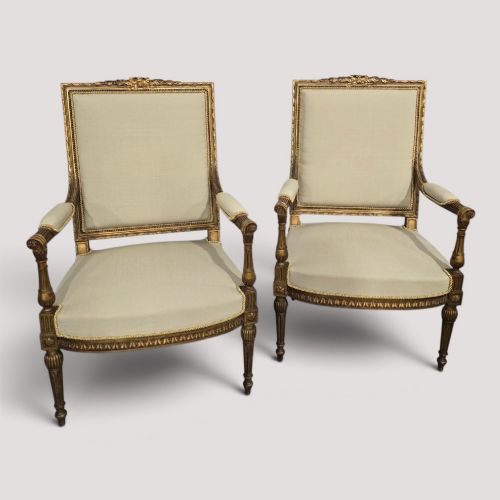
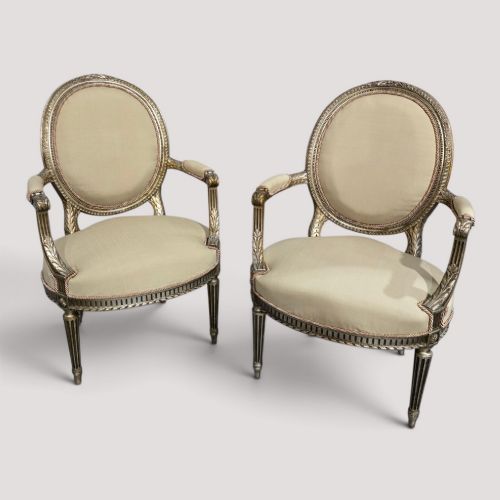
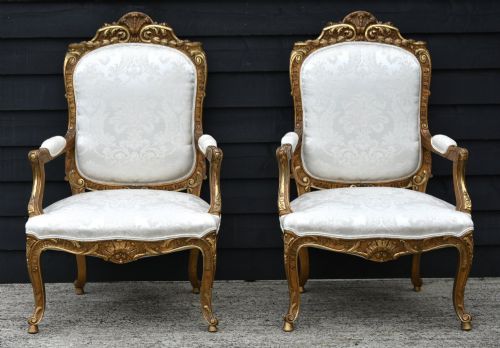
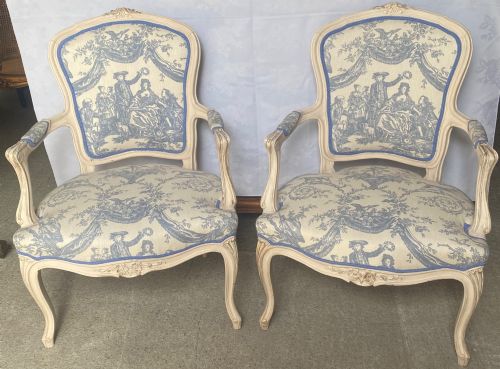
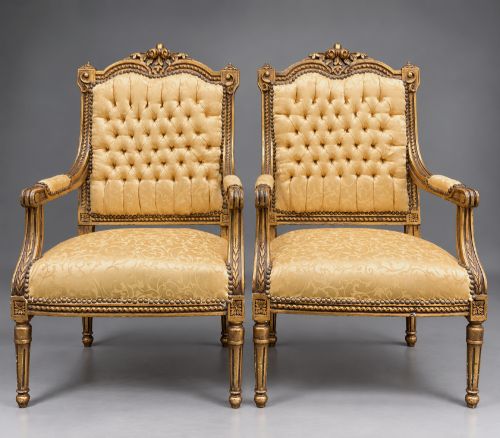
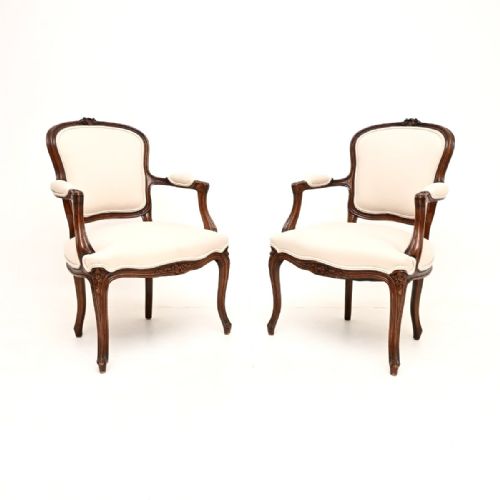
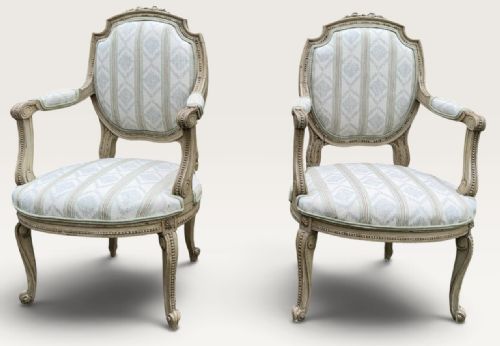
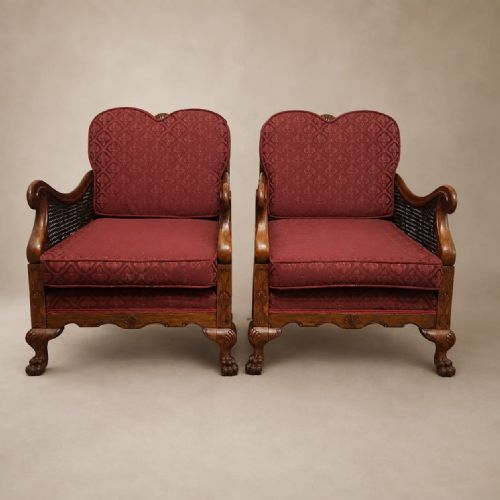
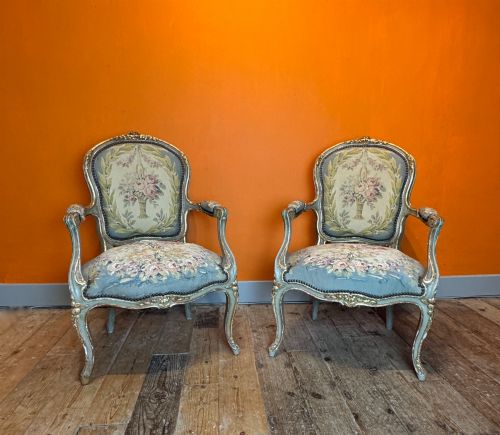
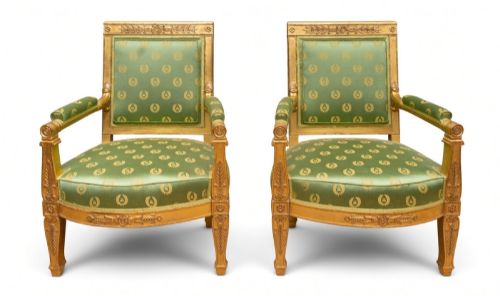
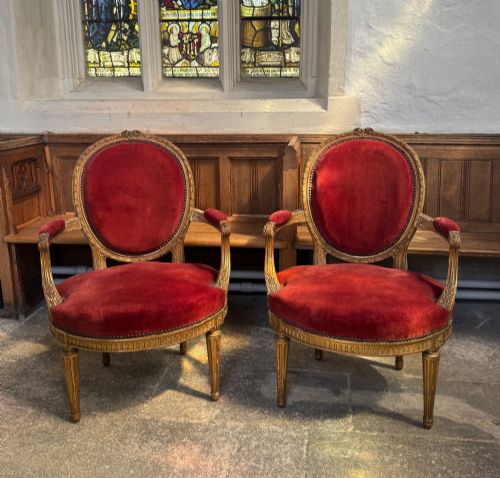
A carved french armchair pair comprises matched seating units originating primarily from continental design traditions spanning the eighteenth, nineteenth, and early twentieth centuries. These matching seats often reflect distinct decorative movements such as Louis XV, Louis XVI, Baroque, and Renaissance revivals.
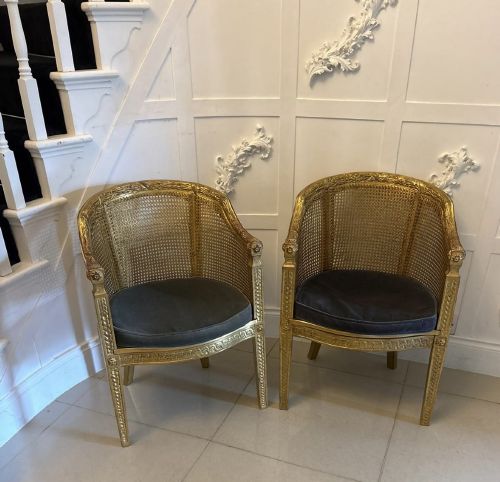
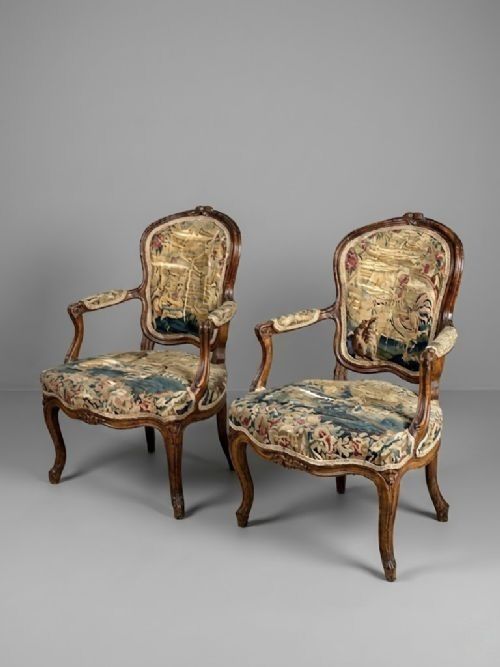
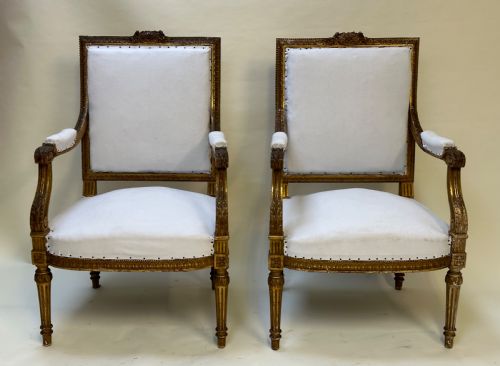
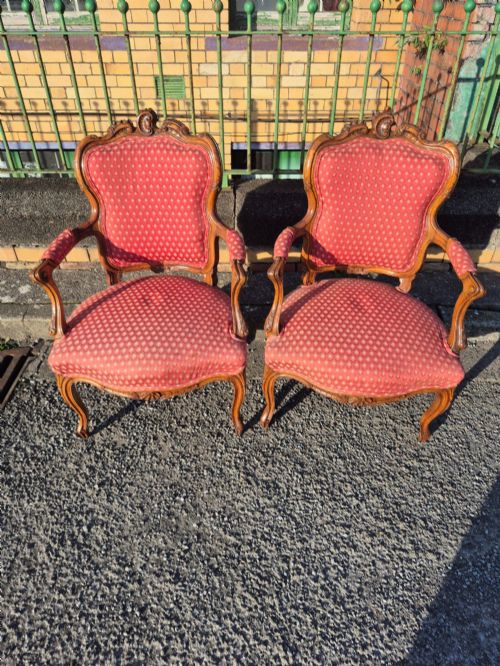
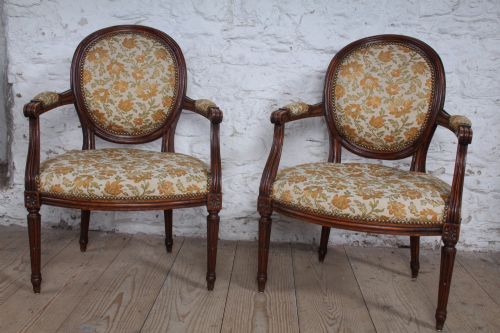
Buyers encountering this selection will frequently meet walnut and giltwood frames adorned with elaborate floral or scroll carvings, upholstered in textiles ranging from antique needlepoint to contemporary silk and velvet.
The inventory demonstrates a strong representation of nineteenth-century revival pieces alongside genuine eighteenth-century examples, typically configured as open-armed fauteuils or enclosed bergeres.
Distinguishing quality factors
The distinction between standard examples and the finest pieces lies in the crispness and depth of the hand-carved ornamentation across the crest rails, arms, and cabriole legs. Superior items display harmonious proportions and fluid lines that demonstrate exceptional wood-working skill.
Material selection and upholstery execution also dictate the standing of a pair, where original period textiles or meticulous hand-stitched needlepoint elevate the historical integrity of the seating.
The documented pieces span the eighteenth, nineteenth, and early twentieth centuries, encompassing Louis XV, Louis XVI, Baroque, and Renaissance revival movements.
Jacob-Desmalter
The Carved French Armchair Pair Glossary
- Fauteuil
- An open-armed upholstered armchair with exposed wooden framing characteristic of French domestic design. These seats typically feature padded armrests and a wide proportion designed for formal reception rooms.
- Bergere
- A closed, upholstered armchair featuring padded sides and a built-in upholstered back, often incorporating a loose seat cushion. This form provides a more enclosed and comfortable seating experience than the open fauteuil.
- Giltwood
- Timber treated with a thin layer of gold leaf applied over a prepared gesso ground. This technique creates a luminous metallic finish seen on formal eighteenth and nineteenth-century seating.
- Caning
- A woven lattice pattern utilising split rattan or cane, frequently applied to the backrests or sides of lighter seating forms. It offers structural support while maintaining a visually light profile.
- Needlepoint
- Hand-stitched embroidery executed on canvas mesh using wool or silk threads to produce pictorial or floral patterns. This textile often appears on period upholstery as a durable decorative surface.
Carved French Armchair Pair: Frequently Asked Questions
How do I identify a true period pair?
Authenticating a period pair involves examining the tool marks on the timber frame, the consistency of the joinery, and the ageing patterns of the wood and finish. Genuine older pieces display hand-carving irregularities that distinguish them from later mechanical reproductions.
Matching dimensions and symmetry between the two chairs confirm they were constructed as a cohesive set rather than assembled later from disparate single seats.
What is the difference between Louis XV and Louis XVI styles?
Louis XV seating is characterised by asymmetrical curved lines, cabriole legs, and naturalistic organic motifs like floral sprays and scrolling foliage. The overall aesthetic emphasises fluidity and movement.
In contrast, Louis XVI design reflects a return to classical symmetry, featuring straight fluted legs, geometric shapes, and architectural details such as medallions and acanthus leaves.
Where should I place these armchairs in my home?
These armchairs function effectively as focal points in drawing rooms, studies, or large bedrooms where their decorative frames can be viewed from multiple angles. Pairing them across from a fireplace or flanking a central table creates a balanced arrangement.
Due to their distinctive historical character, they also serve as contrasting accent pieces within modern or minimalist interior schemes.