


Carved Frame Leather Armchairs
Carved frame leather armchairs combine robust timber frames with supple hides, offering substantial seating for libraries and studies.
Carved Frame Leather Armchairs
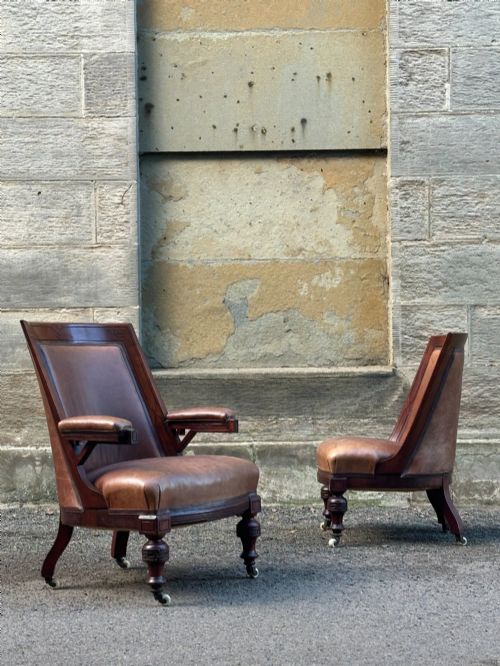
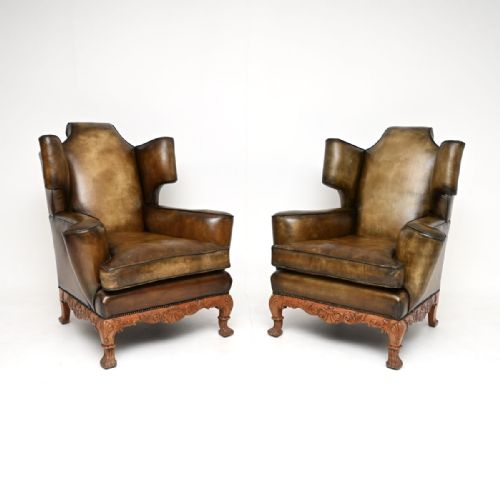
Carved frame leather armchairs encompass seating designed with exposed wooden structures and upholstered leather components. These pieces primarily appear as library chairs, desk chairs, and wingbacks spanning the Victorian era, the nineteenth century, and earlier periods including the year 1700.
Buyers encountering these carved frame leather armchairs will notice distinct timber choices and upholstery treatments that reflect their specific period of origin. The forms serve functional roles in studies and libraries while displaying notable decorative wood carving.
How they were made
Makers construct these armchairs using hardwoods such as mahogany, oak, walnut, and general hardwoods for the structural frames. These timbers receive detailed hand carving along the legs, arms, and crest rails, depending on the prevailing style.
Leather provides the upholstery for the seats, backs, and armrests, frequently secured or accented with brass studs or buttoning details. The combination of dense timber frames and durable animal hide ensures structural longevity and firm support.
Pieces on this page span the seventeenth, eighteenth, nineteenth, and early twentieth centuries.
What varies in quality
The standard of carved frame leather armchairs depends upon the crispness and depth of the timber carving. Finer examples display masterly hand-chiselled details along the mahogany or oak frames rather than shallow or mechanical shaping.
The grade of the leather and the execution of the upholstery techniques, including buttoning and brass stud placement, determine the refinement of the piece. Well-proportioned frames with balanced cabriole legs or X-frame geometries distinguish superior workshops from standard production.
Cooper and Holt·Gillows
The Carved Frame Leather Armchairs Glossary
- Wingback
- An armchair with side panels, or wings, attached to the backrest designed to shield the sitter from drafts. These forms frequently appear in leather upholstery.
- Cabriole leg
- A furniture leg that curves out and then narrows inward, typically ending in an ornamental foot. This shape derives from ancient animal forms.
- X-framed
- A chair construction featuring intersecting diagonal stretchers or legs forming an X shape. This configuration provides distinct structural support.
- Buttoned
- An upholstery technique where depressions are formed in the leather by pulling tines or twine through to the frame and securing them with buttons. This creates a tufted surface.
Carved Frame Leather Armchairs: Frequently Asked Questions
What rooms suit carved frame leather armchairs?
These armchairs fit naturally into studies, libraries, and home offices where traditional seating is required. Their robust timber construction and leather upholstery provide a formal aesthetic.
They also function effectively as reading chairs in living spaces or quiet corners. The substantial frames demand adequate floor space to be appreciated fully.
How do I care for antique leather?
Antique leather requires regular dusting with a dry or slightly damp cloth to prevent particulate accumulation. Conditioning treatments help maintain the suppleness of the hide over time.
Keep these armchairs away from direct sunlight and heat sources to prevent the leather from drying out and cracking. Proper environmental humidity preserves both the hide and the wooden frame.
What is a library armchair?
A library armchair is a sturdy seating form designed for prolonged reading and study use. They frequently feature padded leather armrests and supportive back heights.
These chairs often incorporate mahogany or oak frames with upholstered seats to withstand daily use. Their aesthetic leans toward traditional and scholarly interiors.
How can I tell the period?
Dating relies on identifying the timber species, carving styles, and structural joinery methods used in the frame. Distinct motifs point towards specific revivals or original eras like the Victorian period.
Upholstery styles, such as buttoning or the presence of brass studs, offer further clues to the manufacturing decade. Comparing these elements with documented examples clarifies the timeline.