

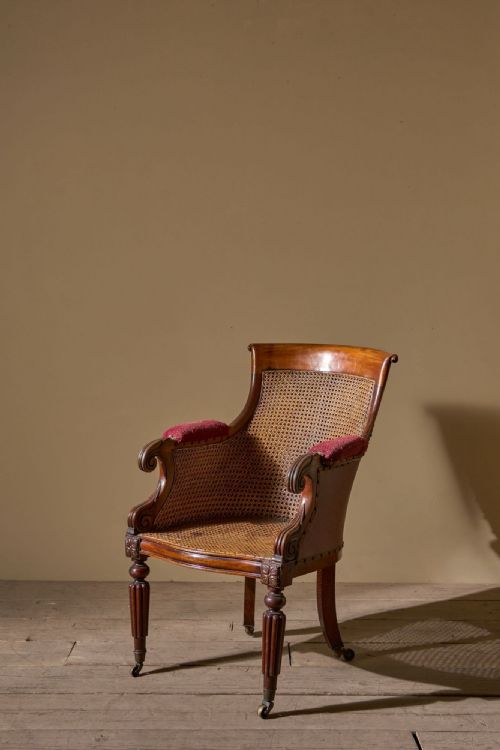
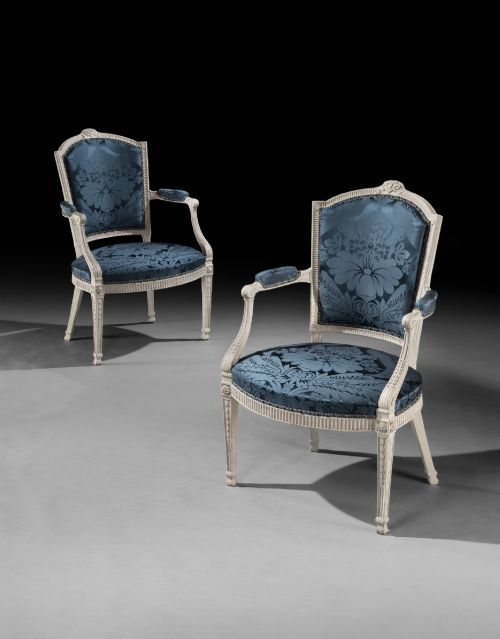
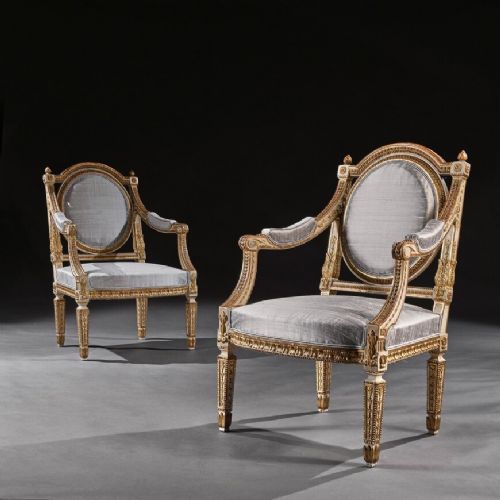
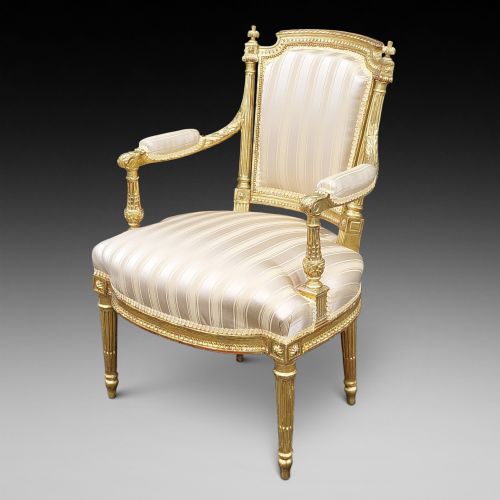


Carved Fluted Leg Armchairs
These carved fluted leg armchairs bring classical proportion and refined seating to a room, drawing on eighteenth-century French and English design traditions.
Carved Fluted Leg Armchairs
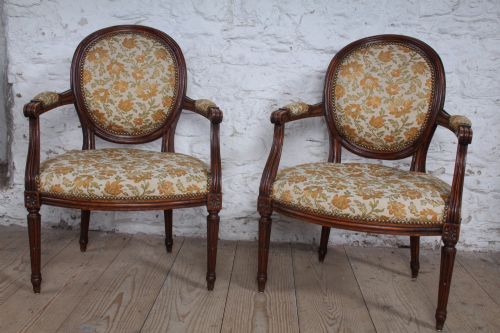
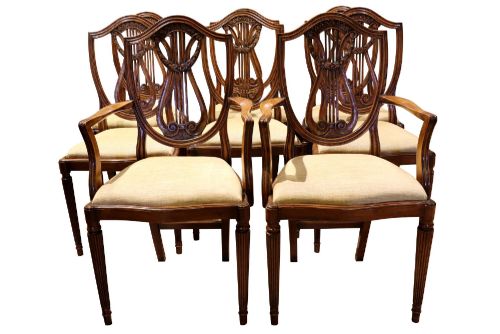
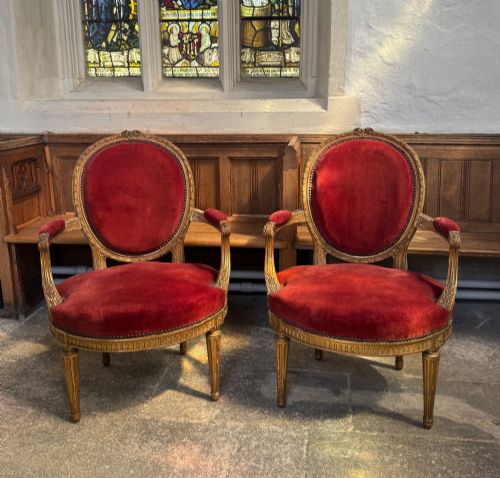
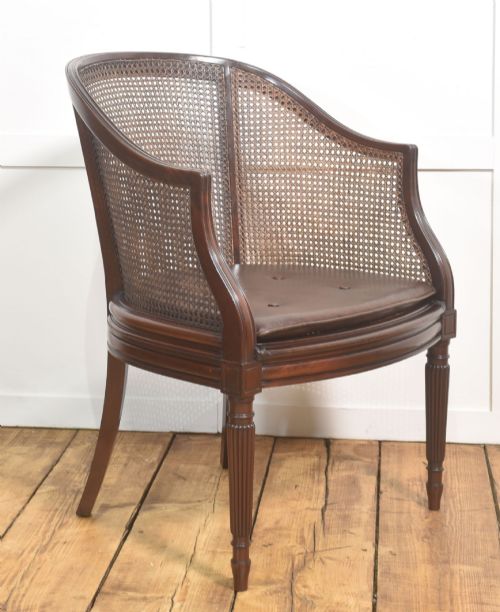
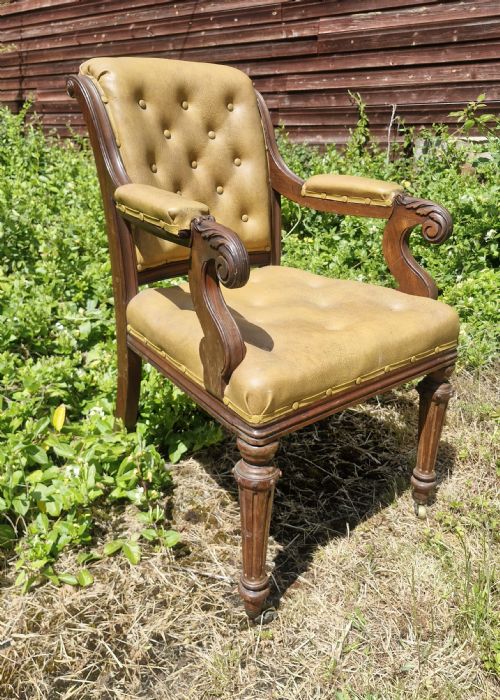
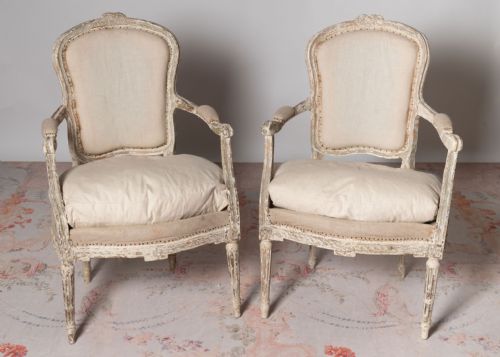
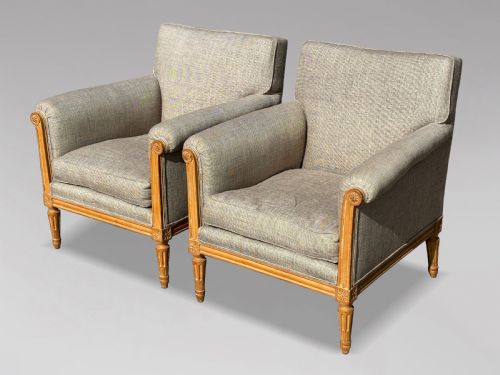
Carved fluted leg armchairs encompass seating forms created across the eighteenth, nineteenth, and early twentieth centuries, drawing heavily upon Louis XVI, Hepplewhite, and George III neoclassical styles. These chairs feature characteristic vertical channeling along the wooden supports beneath the seat, echoing classical architectural columns.
The pieces appearing on this page span French salon chairs, English library and dining chairs, and various revival pieces from the Victorian and Edwardian eras. Buyers encounter pairs and larger sets alongside single armchairs, often upholstered in damask, fabric, or cane.
French pieces frequently adopt the giltwood or painted finishes of the Louis XVI repertoire, while English examples turn towards mahogany, walnut, and regional painted woods. The combination of carved uprights and a fluted underframe unites domestic seating with formal neoclassical vocabulary.
How they were made
Cabinetmakers shaped the structural frames of these chairs from hardwoods including mahogany, beech, and walnut, employing traditional joinery to secure the legs, seat rails, and arm supports. The distinctive fluting on the legs was achieved through hand-carving or specialised scratch stocks, cutting vertical concave grooves into the timber before assembly.
Surfaces received various treatments depending on the intended formality, ranging from plain polished mahogany and carved walnut to gessoed giltwood and layered paint finishes. Upholstery techniques progressed from horsehair stuffing held by webbing and tacks to later sprung bases, covered in textiles such as damask, silk, or woven cane panels.
The documented periods range from the eighteenth century through Victorian and Edwardian revivals up to the 1930s.
What varies in quality
The refinement of the wood carving dictates much of the distinction between pieces, where crisp, deep cutting along the flutes and acanthus motifs separates skilled artisan work from softer, mechanical execution. The choice of primary timber also plays a role, with dense, well-figured mahogany and properly seasoned walnut providing superior structural integrity compared to secondary softwoods.
Proportion and architectural balance determine the visual success of the chair, distinguishing well-rendered neoclassical revivals from heavier, less disciplined interpretations. Preserved original finishes, whether delicate giltwood or historic painted surfaces, carry greater authority than later over-painting or stripped timber.
The Carved Fluted Leg Armchairs Glossary
- Fluting
- A series of shallow, parallel vertical grooves cut into the surface of a furniture leg or column. This decorative detail derives from classical architecture and defines the typical underframe of Louis XVI and neoclassical seating.
- Fauteuil
- An open-framed upholstered armchair with exposed wooden arms originating in France. These chairs typically feature padded armrests and structural woodwork shaped in the prevailing style of the period.
- Bergère
- An enclosed upholstered armchair featuring solid upholstered sides and a padded back, often incorporating cane panels. They provide a deeper, more substantial seat than standard open armchairs.
- Giltwood
- Wood that has been coated with a thin layer of gold leaf over a prepared gesso ground. This finish appears frequently on formal French salon chairs and decorative revival pieces.
- Neoclassical
- A design movement spanning the eighteenth and nineteenth centuries that revived classical Greek and Roman motifs. It emphasises symmetry, straight lines, and architectural details such as fluted legs.
Carved Fluted Leg Armchairs: Frequently Asked Questions
What periods do these armchairs come from?
The listings span pieces manufactured during the eighteenth, nineteenth, and early twentieth centuries, alongside various later revival eras. Makers during the Victorian and Edwardian periods frequently revisited earlier neoclassical designs.
French and English workshops produced these variations across distinct decades, incorporating stylistic shifts from George III and Louis XVI idioms into later domestic furniture.
Are these chairs suitable for daily use?
Many of these pieces function well in modern interiors as occasional seating, reading chairs, or desk companions. Their sturdy hardwood frames and upholstered seats offer practical comfort.
Historic seating often benefits from careful placement away from direct heat sources and strong sunlight to protect fragile fabrics, gilt surfaces, and dry timbers.
How do I distinguish French styles from English ones?
French armchairs often utilise giltwood, painted finishes, and beech or walnut frames following Louis XVI proportions, frequently taking the form of open fauteuils or enclosed bergères. English counterparts commonly employ mahogany or satinwood with stricter rectilinear geometry.
Regional details in the carving and the choice of underframe timber help separate continental salon seating from British library and dining chairs of parallel eras.
What does a fluted leg indicate?
A fluted leg indicates adherence to classical architectural design, specifically the Doric or Ionic column traditions adapted for furniture. This decorative channeling signals a neoclassical influence.
Cabinetmakers utilised this feature to add vertical emphasis and elegance to the support structure of chairs, distinguishing them from plain turned or cabriole legs.