


Carved Floral Stand
A carved floral stand brings solid craftsmanship and natural motifs indoors, holding plants or displays with quiet poise.
Carved Floral Stand
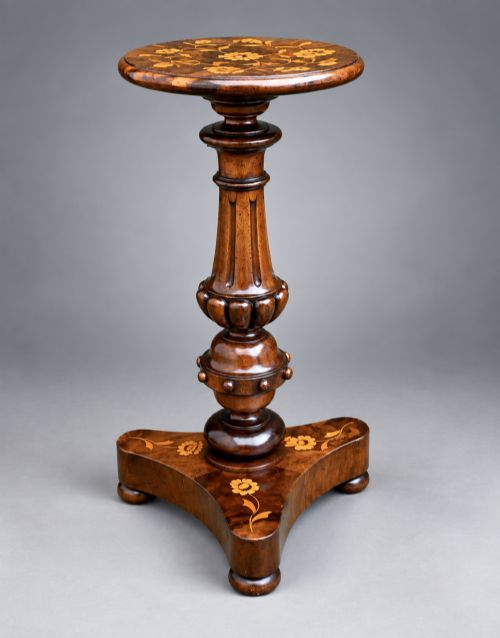
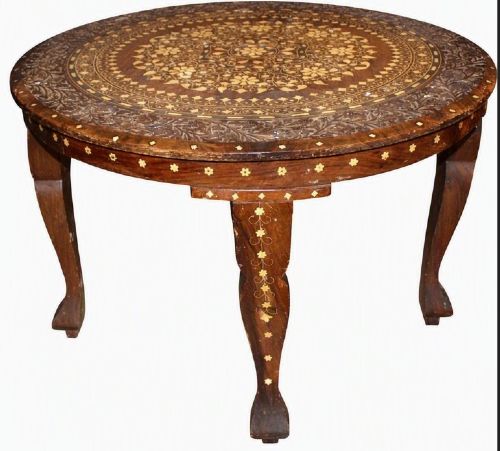
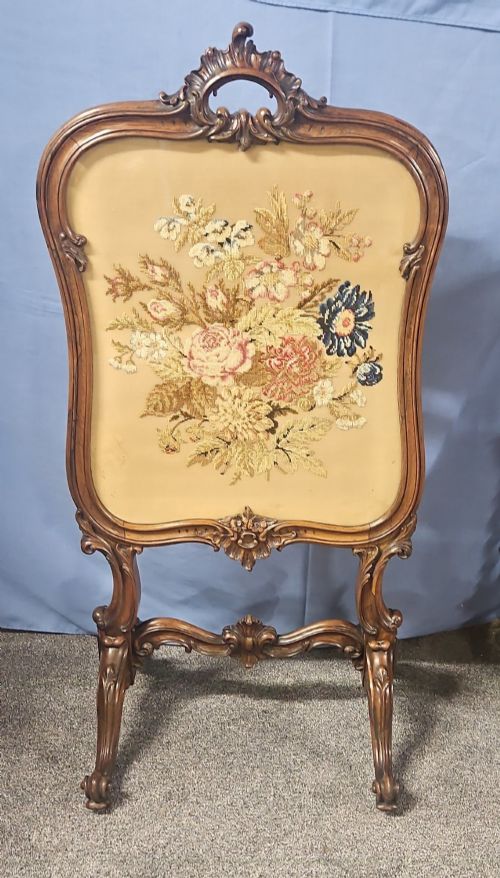
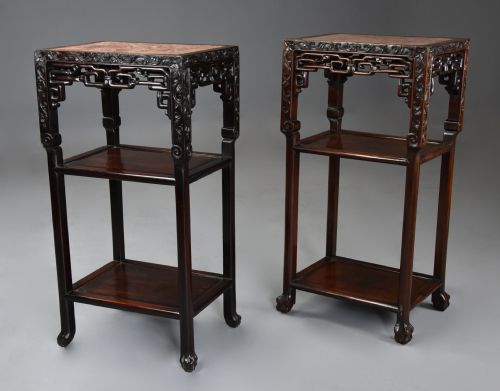
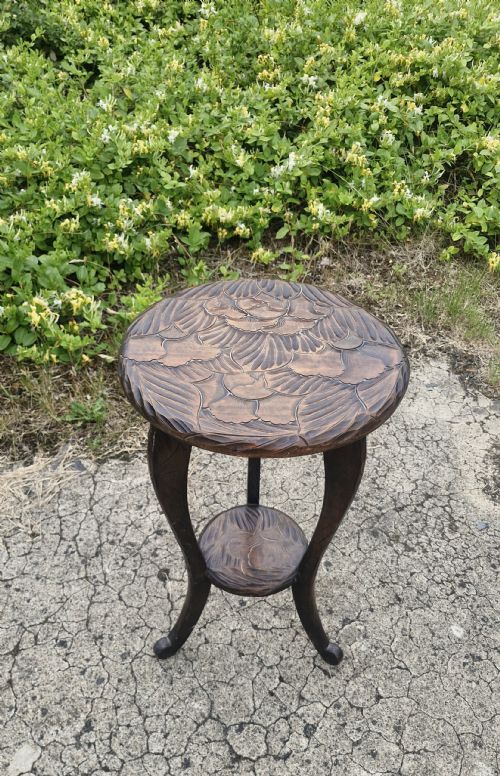
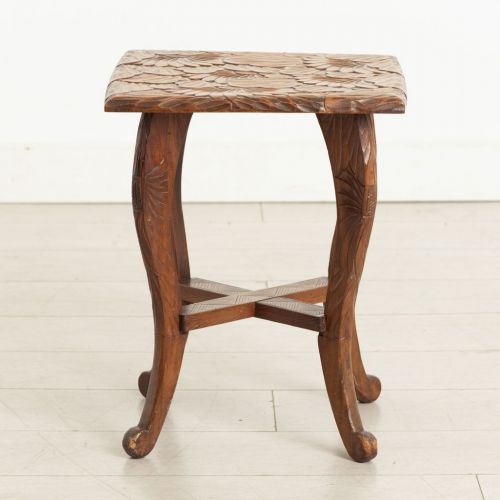
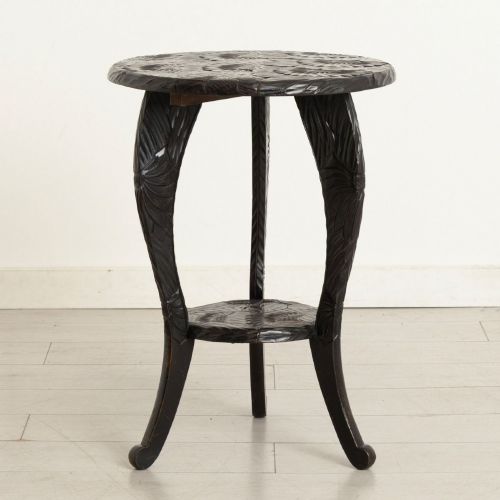
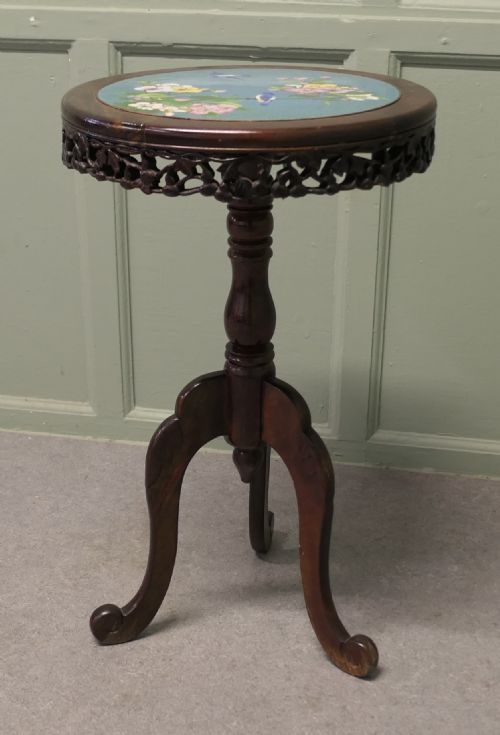
A carved floral stand encompasses diverse display tables and plant pedestals originating from the nineteenth and early twentieth centuries. These pieces emerge in styles ranging from Victorian and Edwardian to Anglo-Indian, Chinese Export, and Arts and Crafts. Buyers encounter occasional tables, jardiniere stands, and vase pedestals designed to elevate greenery or ornaments within a room.
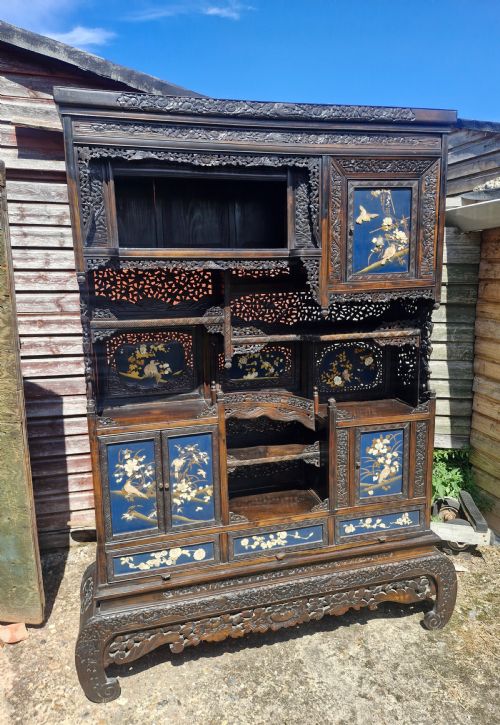
The selection on this page relies heavily on timber supports, often featuring circular or square tops designed for domestic display. Pieces span English oak and walnut alongside imported hardwoods like mahogany, rosewood, and hongmu. Many items reflect distinct regional carving traditions from Britain, India, and East Asia.
The most frequent examples combine sturdy wooden frames with intricate surface decoration, such as floral motifs or inlaid bone and marble. These stands served practical roles in period homes as focal points for floral arrangements and lamps. Their enduring appeal lies in their capacity to combine functional support with sculptural detail.
Materials and Techniques
Maker workshops utilised dense hardwoods like oak, walnut, mahogany, and exotic oriental woods to build stable frames capable of bearing heavy stone tops or planted vessels. Joinery relied on traditional methods, ensuring structural integrity across multi-tiered occasional tables and tripod bases. Timber surfaces were frequently hand-carved with deep relief foliage, floral patterns, or geometric borders.
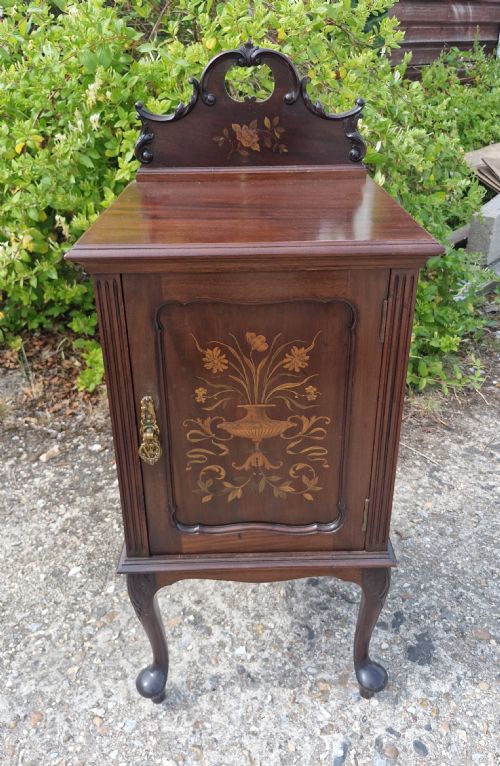
Inlaid elements introduced contrasting textures and tones, utilising bone, mother-of-pearl, and marble inserts fitted flush into wooden tops. Lacquer, ebonising, and polishing protected the grain while enhancing the visual depth of the carved motifs. These combined techniques demonstrate the diverse workshop traditions across British and international production.
Several stands feature cunning tilt-top mechanisms designed to tuck flat against walls when floor space ran short.
Judging Quality
Quality rests in the crispness of the hand-carving and the selection of timber used for the structure. Superior pieces display deep, undercut relief work where floral details retain sharp edges rather than a softened profile. The integration of inset materials, such as fitted marble tops or precise bone inlay, indicates a higher standard of workshop execution.
Stability and proportion separate standard utility items from finer examples of period furniture. Well-balanced tripod or pedestal bases distribute weight evenly, maintaining rigidity despite narrow footprints. The harmony between the turned or carved supports and the upper surface dictates the overall visual success of the stand.
Liberty & Co·Liberty of London
The Carved Floral Stand Glossary
- Jardiniere stand
- A tall pedestal or small table specifically designed to support an ornamental flower pot or plant bowl. These pieces often incorporate water-resistant surfaces like marble tops.
- Hongmu
- A dense, dark traditional Chinese hardwood prized by cabinet makers for its strength and rich natural colour. It frequently appears in export plant stands and vase pedestals.
- Occasional table
- A small, versatile table intended to be moved around a room as needed for lamps, drinks, or decorative displays. They form a large portion of domestic nineteenth-century seating accessories.
- Tripod base
- A three-legged support structure commonly found on tilt-top tables and plant stands to ensure stability on uneven floor surfaces. This configuration prevents rocking.
- Inlay
- A decorative technique where contrasting materials like bone, mother-of-pearl, or lighter woods are embedded into shallow recesses in the primary surface. This creates flat, patterned ornamentation.
Carved Floral Stand: Frequently Asked Questions
What is a floral stand used for?
These stands primarily served to elevate potted plants, vases, and decorative ornaments above floor level to catch the light. In period interiors, they acted as focal points in drawing rooms and hallways.
Today, they adapt easily to modern living spaces as plant pedestals, lamp tables, or independent display surfaces for ceramics.
How do I identify the period of a stand?
Dating relies on observing the combination of timber, carving style, and construction methods used in the frame. Victorian and Edwardian pieces often show heavier proportions and dark finishes, while earlier nineteenth-century examples display distinct regional carving.
Matching the stylistic markers, such as Arts and Crafts simplicity or Chinoiserie lacquer, helps narrow down the decade of manufacture.
Where should I place a plant stand?
Position these stands near natural light sources where plants or decorative objects can be showcased effectively without blocking room traffic. Their compact footprints suit corners, landings, and beside seating areas.
Ensure the floor surface is level, particularly with tripod designs, to maintain stability for heavier marble-topped variants.
How do I care for antique hardwood furniture?
Maintain the wood by dusting regularly with a soft cloth and applying appropriate beeswax or polish sparingly to preserve the finish. Avoid placing stands in direct sunlight or near heat sources to prevent timber splitting.
Marble and stone inserts benefit from simple wiping with a damp cloth, avoiding harsh chemical cleaners that might etch the polished surface.