


Carved Floral Ottoman
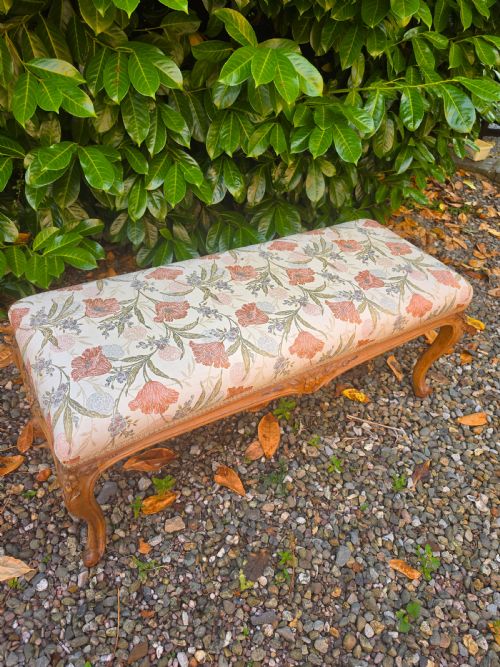
A carved floral ottoman brings grounded Victorian comfort and rich floral textiles directly to your floor.
Carved Floral Ottoman
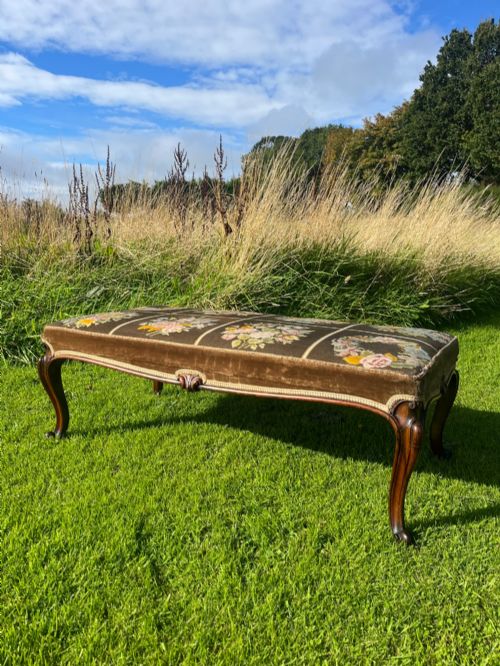
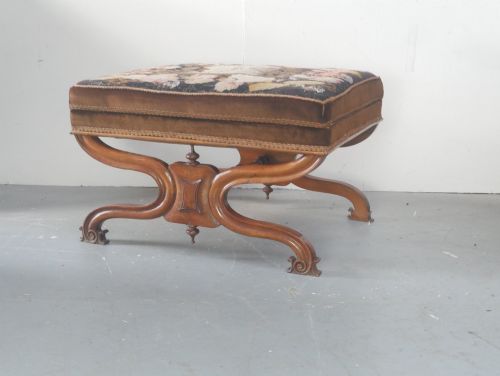
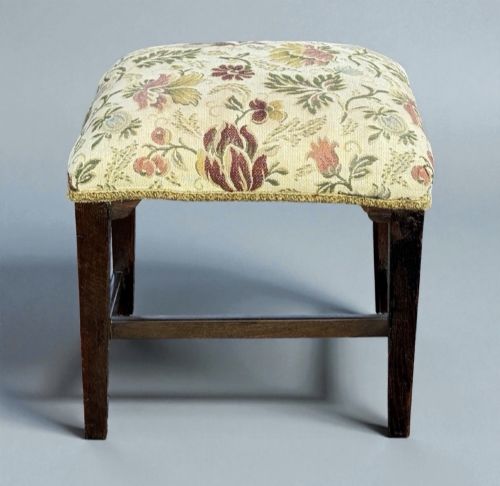
When you search for a carved floral ottoman, you are looking at footstools, stools, and low seating pieces designed to support tired feet or provide compact extra seats. The pieces on this page span the Victorian era, the Edwardian period, and the nineteenth century, drawing on earlier design influences like the Queen Anne and Georgian styles.
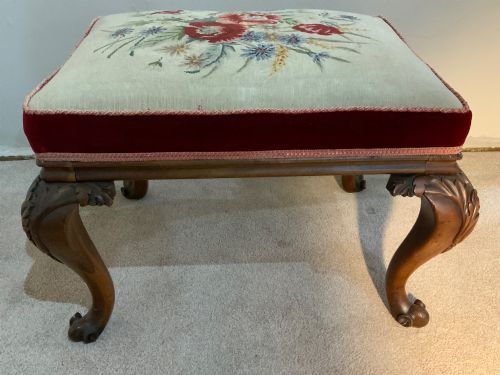
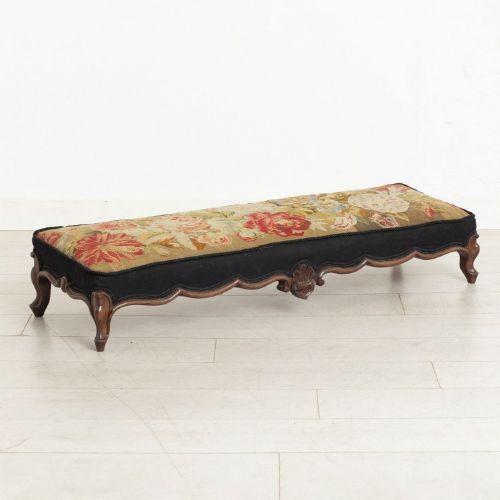
You will most commonly meet walnut and mahogany frames supporting upholstered tops finished in tapestry, needlework, velvet, and wool. These low forms range from small dressing stools and fireside footstools to large Scottish Baronial and George IV rosewood ottoman stools.
The decorative vocabulary relies heavily on carved woodwork paired with floral textile work, creating a functional furnishing that doubles as a tactile textile display. Whether French, English, or Anglo-Indian in origin, these items demonstrate how nineteenth-century and early twentieth-century makers combined sturdy timber frames with intricate soft furnishings.
Distinguishing quality in craftsmanship
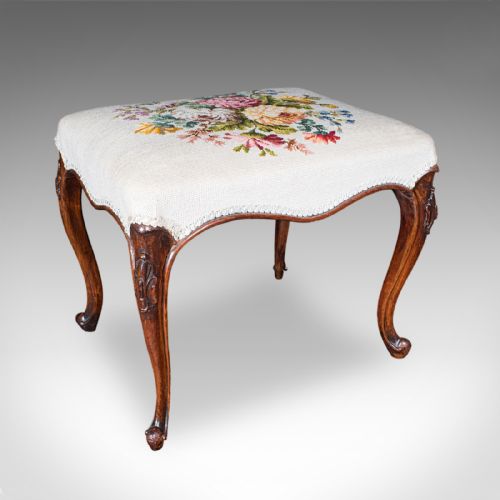
The difference between standard utility seating and finer examples rests in the depth and precision of the timber carving on the frame. Superior items exhibit crisply shaped cabriole legs, balanced proportions, and dense hardwoods like rosewood or well-figured walnut rather than plain secondary woods.
Upholstery execution and textile preservation further separate the tiers, with hand-stitched needlework and tapestry tops representing a higher grade of craftsmanship than machine-woven replacements. The integration of original fabric, sturdy joinery, and substantial scale marks the upper range of these historical stools.
Some nineteenth-century footstools were built with lift-out seats, hiding secret spots where Victorians could tuck away their embroidery threads.
Whytock and Reid
The Carved Floral Ottoman Glossary
- Cabriole leg
- A furniture leg that curves outward at the knee and tapers inward toward an ankle or foot, imitating an animal's leg. This popular shape appears frequently on Victorian and revival-style walnut stools.
- Needlepoint
- A type of canvas work embroidery stitched with yarn, frequently used for the floral top covers of nineteenth-century footstools. It provides a durable and colourful decorative surface.
- Scottish Baronial
- A nineteenth-century architectural and design style influenced by medieval Scottish castles. Stools from this tradition tend to be larger, heavier, and more robustly timbered.
- Rosewood
- A heavy, dark-grained tropical hardwood prized for its rich colour and smooth finish. Makers utilised it for high-status nineteenth-century ottomans and footstools.
- Ottoman
- A low, upholstered seat or footstool without a back or arms. Historical examples often feature lift-out internal compartments or generous padded surfaces.
Carved Floral Ottoman: Frequently Asked Questions
What is a carved floral ottoman used for?
These pieces were originally designed to rest feet beside a fireside or serve as low dressing stools in Victorian and Edwardian chambers. Their compact dimensions made them easy to move around formal sitting rooms.
Today, they function well as occasional seating, decorative footrests, or tactile accents in traditional and contemporary interiors alike.
How do I identify the period of an ottoman?
Dating relies on examining the primary timber, the style of the carved woodwork, and the type of upholstery construction. Victorian pieces frequently feature walnut or rosewood frames with cabriole legs, while early twentieth-century examples show simpler mahogany framing.
Revival styles also offer clues, as nineteenth-century makers frequently reinterpreted eighteenth-century Queen Anne and Georgian aesthetics in their carved motifs.
Are the tapestry tops usually original?
Many surviving stools retain their period needlepoint or tapestry covers, though wool and textile elements are vulnerable to heavy wear over generations. Surviving original fabric adds historical context to the piece.
When needlework has been replaced, makers often used period-appropriate wool and tapestry techniques to maintain the nineteenth-century aesthetic.
How should I care for wooden frames and fabric?
Keep wooden frames clean using dry or slightly damp cloths suited to antique walnut and mahogany, avoiding harsh chemical polishes. Protect the textile tops from direct sunlight to prevent fading in delicate wool and velvet fibres.
Gentle vacuuming with a soft brush attachment helps preserve needlepoint and tapestry seats without pulling the vintage stitching.