
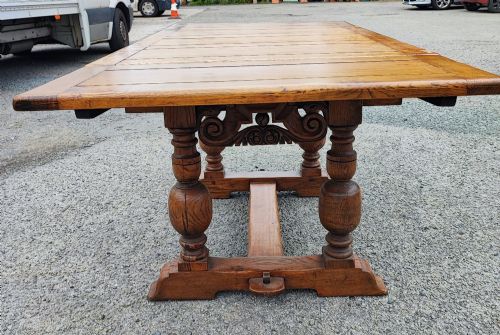
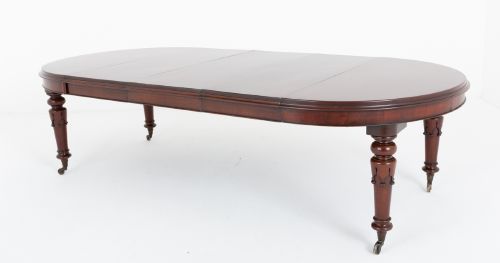
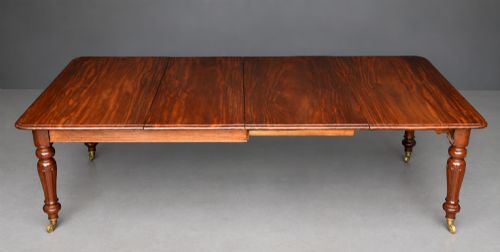
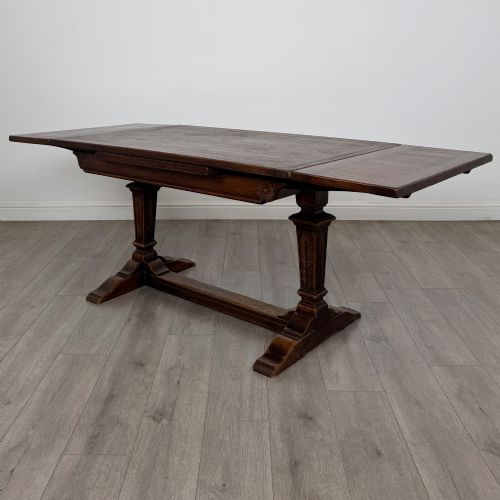
Carved Extension Dining Table
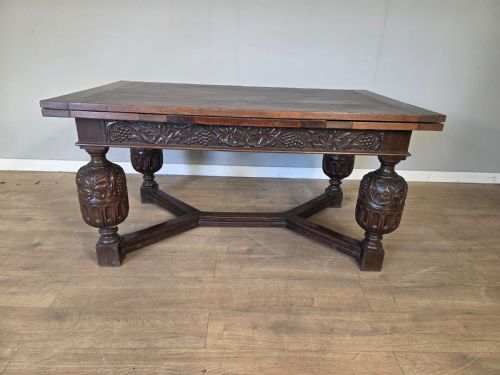
A carved extension dining table brings versatility and historical presence to the dining room through mechanical leaves and robust timber construction.
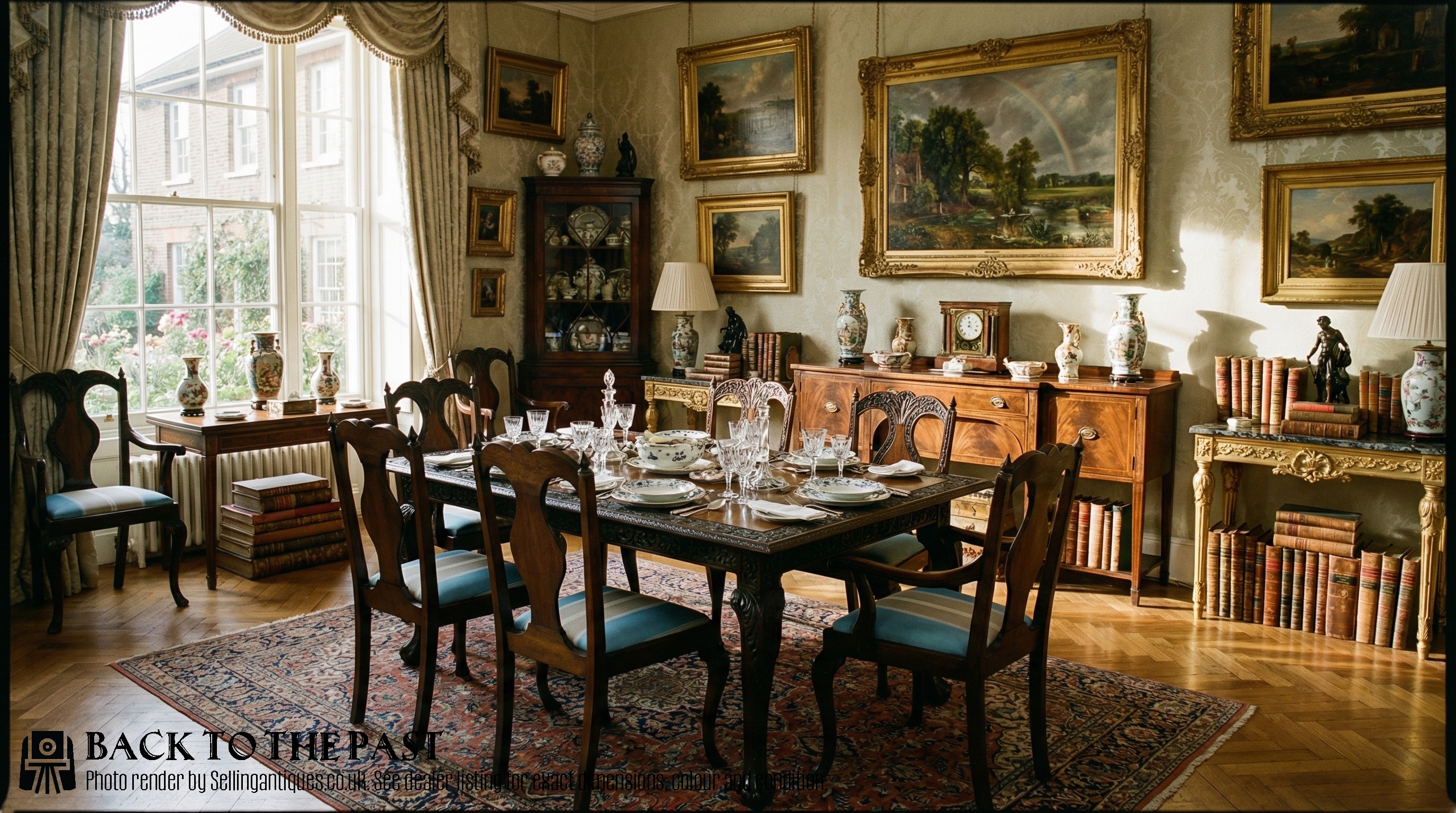
Carved Extension Dining Table
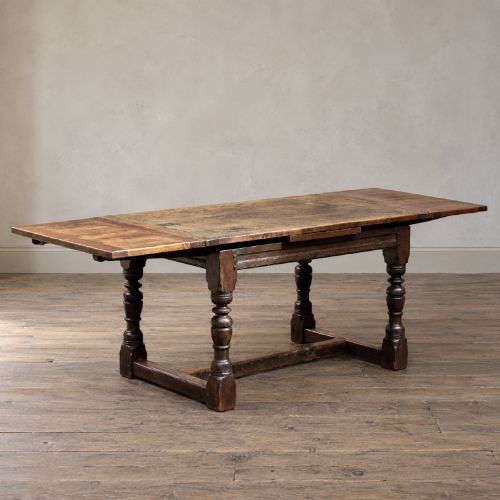
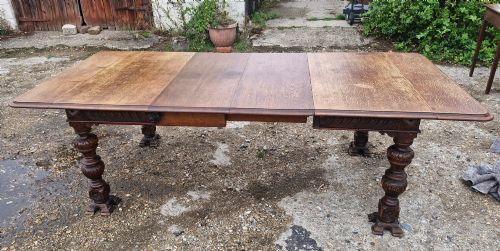
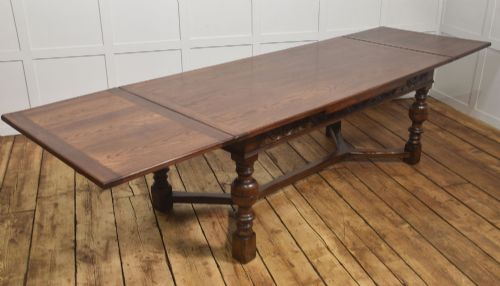
A carved extension dining table provides flexible seating capacity by means of draw-leaf mechanisms, drop leaves, or wind-out systems integrated into solid wood frames. These tables serve daily family meals as well as larger gatherings without demanding permanent floor space.
The versions most commonly found here are constructed from oak and mahogany, spanning periods from the seventeenth century through the Edwardian era and the early twentieth century. Styles range from heavy Jacobean and Elizabethan revivals to restrained Victorian and Regency pedestal designs.
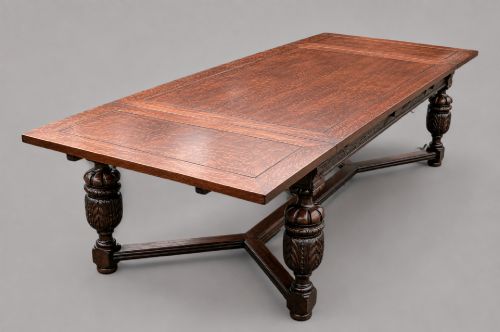
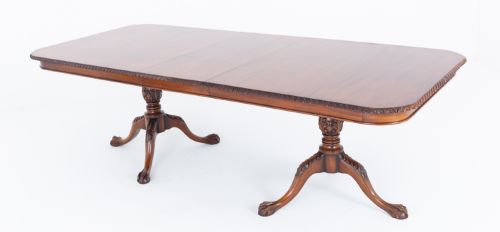
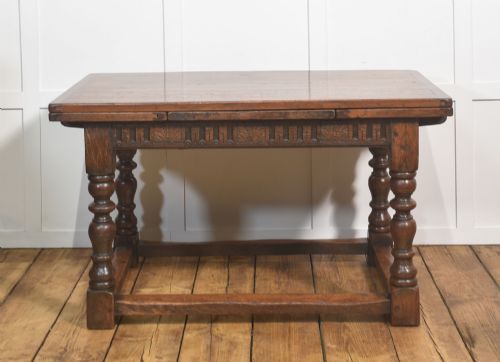
Buyers encounter both refectory-style farmhouse tables with pull-out extensions and circular or oval dining surfaces supported by carved legs, split bases, or pedestals. Each format uses distinct mechanical approaches to lengthen the top surface when required.
How they were made
Makers relied primarily on oak and mahogany, selecting dense hardwoods capable of supporting heavy leaves and frequent mechanical movement. Solid timbers formed the primary structure, often enhanced by secondary woods and decorative elements such as brass fittings or wood inlay.
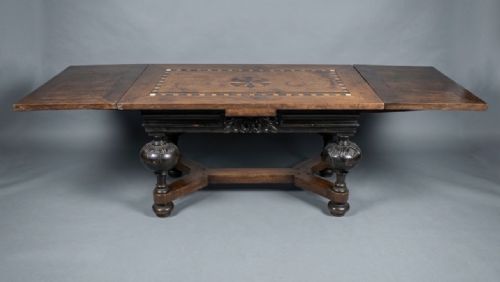
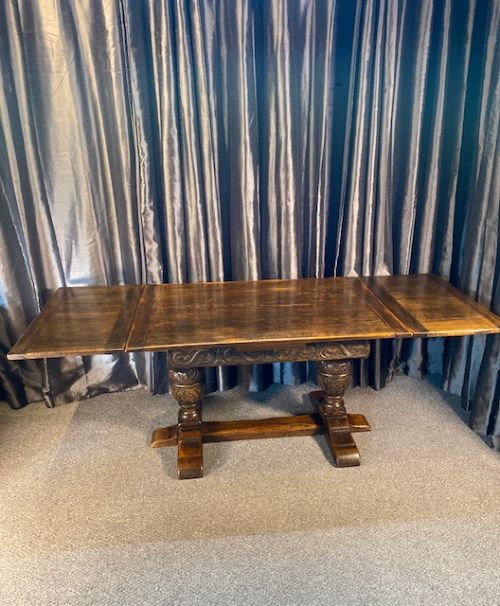
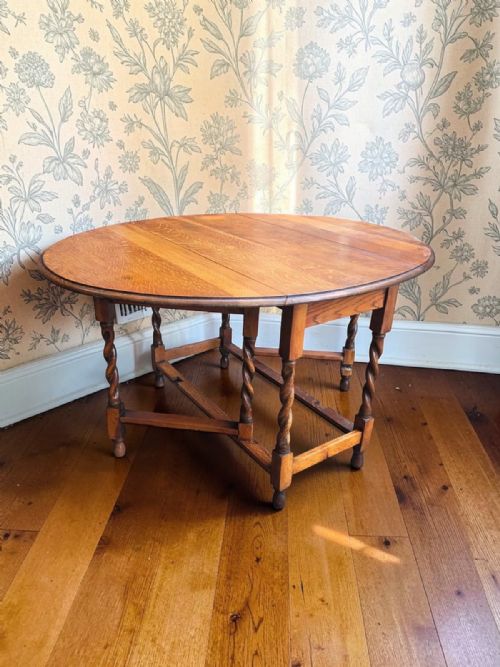
Joinery techniques included traditional draw-leaf sliders, gateleg folding actions, and internal mechanical wind-out screws operated by a handle. Carving was executed by hand directly onto the timber framework, particularly along aprons, borders, and bulbous or barley-twist legs.
Surface finishing involved hand-applied polish, wax, or oil to protect the wood grain while highlighting natural figuring and parquetry patterns. Structural stability depended upon tightly fitted tenons and robust undercarriages designed to bear weight when the table reached its fully extended length.
Listings feature oak and mahogany construction across periods spanning the seventeenth century to the 1930s.
What varies in quality
Quality rests upon the integrity of the extending mechanism and how smoothly the leaves operate within the primary frame. Tables that slide or wind without sticking or sagging at the joints demonstrate superior engineering and careful initial fitting.
The depth, crispness, and hand-carved detail of the woodwork separate standard production items from finer examples. Deeply articulated moulding, balanced proportions, and careful timber selection across both the main top and the extension leaves define the upper tier of craftsmanship.
The Carved Extension Dining Table Glossary
- Draw leaf
- A table design featuring two concealed leaves beneath the main top that pull out from each end to extend the surface. This mechanism allows the primary surface to lengthen while keeping the main boards stable.
- Wind out
- An extending dining table mechanism operated by a removable handle that turns an internal screw thread to separate the table halves. This system allows multiple extra leaves to be inserted into the centre.
- Gateleg
- A table with hinged drop leaves supported by legs that swing outward like a gate to hold the flaps in place. This construction provides a large dining surface that folds down compactly.
- Refectory
- A long, narrow dining table traditionally used in communal dining halls and adapted in later centuries for domestic use. These tables typically feature sturdy stretcher bases and heavy timber tops.
- Parquetry
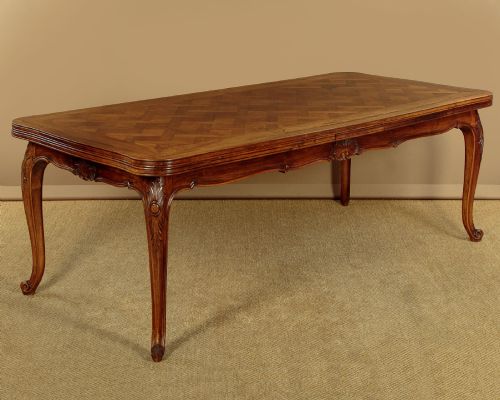
- A geometric mosaic of wood pieces used for decorative surfacing on tables and furniture. This technique creates contrasting patterns across the tabletop using various grain directions.
Carved Extension Dining Table: Frequently Asked Questions
How do draw leaf tables work?
Draw leaf tables use two hidden extension panels stored directly beneath the main tabletop. When pulled outward, these side leaves slide smoothly into place on interior runners, raising slightly to meet the level of the primary surface.
This design allows a compact dining table to lengthen quickly without requiring separate loose leaves to be stored elsewhere in the room.
What is a wind out mechanism?
A wind out mechanism relies on an internal metal screw thread connected to a detachable crank handle. Turning the handle drives the two halves of the table apart, creating a gap in the centre where additional wooden leaves are dropped in.
This nineteenth-century engineering solution allowed large tables to accommodate dozens of guests while maintaining a rigid central base when closed.
How do I care for an antique oak table?
Antique oak surfaces benefit from regular dusting with a dry, soft cloth and occasional applications of traditional beeswax to nourish the timber. Avoiding direct sunlight and placing the table away from intense heat sources prevents the solid wood from drying out or splitting.
Using mats beneath hot dishes and wiping up liquid spills promptly protects the hand-finished polish and preserves the historical patina.
How can I tell the period of a dining table?
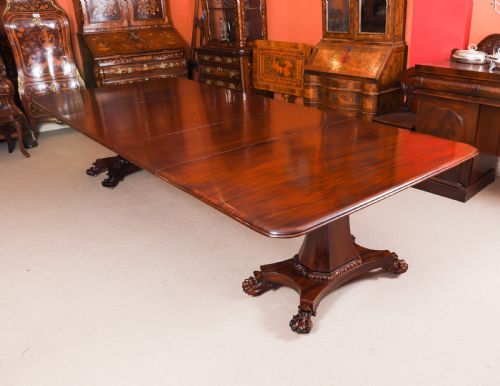
Dating an extending table involves examining the timber species, the construction of the underframe, and the style of the carving. Seventeenth and early twentieth-century pieces often feature heavy oak frames with Jacobean or Elizabethan revival motifs, whereas nineteenth-century examples frequently utilise mahogany with pedestal or wind-out systems.
Tool marks, joint construction, and the specific mechanical hardware inside the apron provide further clues to the manufacturing era.