

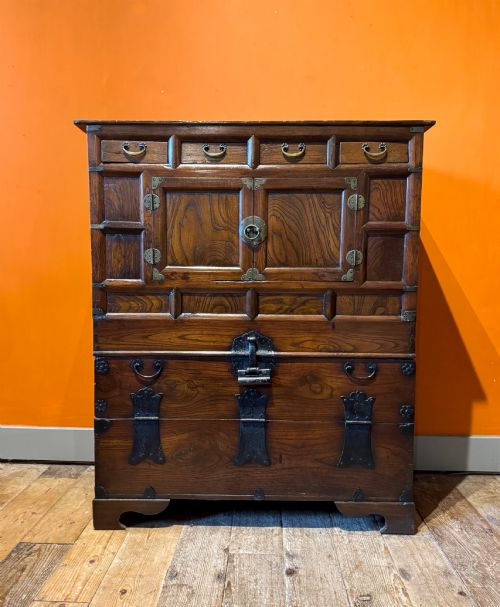
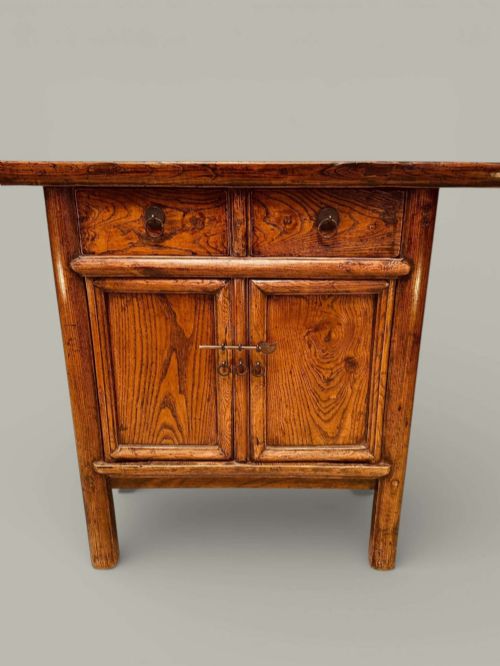
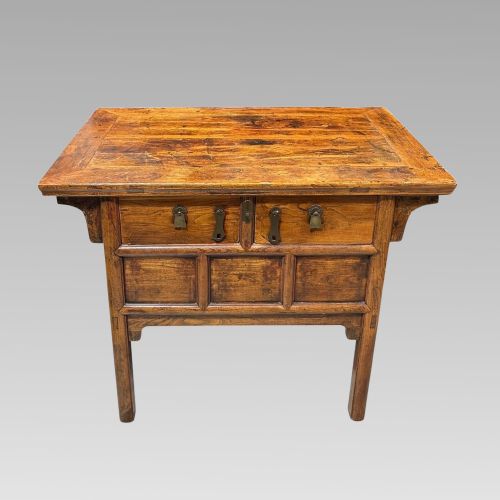
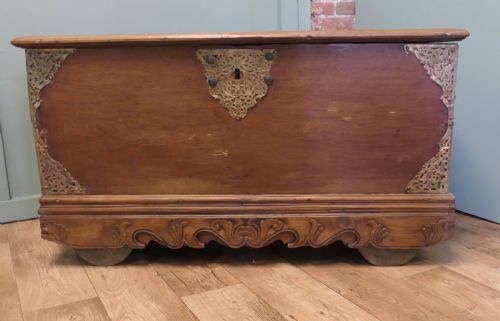
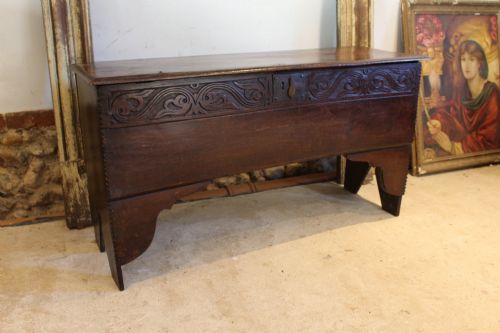
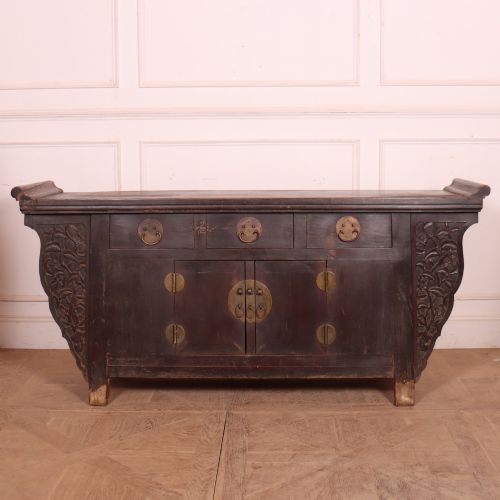
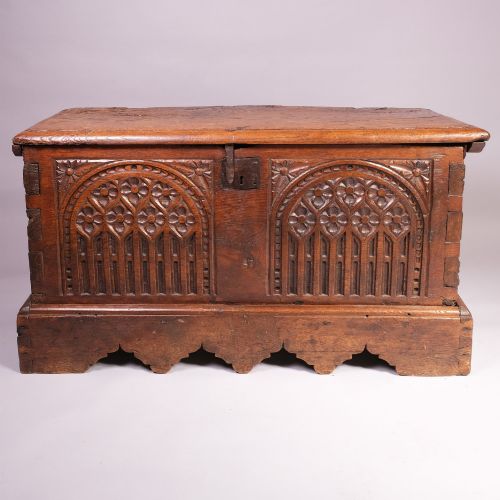


Carved Elm Coffer
A carved elm coffer offers honest storage with a warm, distinctive grain.
Carved Elm Coffer
A carved elm coffer brings sturdy utility and rich grain figures into a domestic space, functioning as a traditional storage trunk or chest. When exploring a carved elm coffer, buyers encounter robust vernacular items shaped by centuries of practical domestic use.
The selections span distinct regional traditions, ranging from British country workshops to East Asian cabinet makers. Pieces include heavy plank constructions alongside refined panelled examples fitted with brass or iron hardware.
Dating ranges from pre-sixteenth century Gothic specimens through eighteenth-century vernacular items up to nineteenth-century and early twentieth-century examples. The most common manifestations on this page combine substantial timber carcasses with simple carving or panel detailing.
How they were made
Construction relies heavily on native timbers, predominantly solid elm paired with oak for structural frames, sometimes enhanced by burr elm veneers to create striking figure patterns. Blacksmiths forged the functional iron and brass hinges, lock plates, and carrying handles that secure the heavy lids.
Joinery methods reflect traditional vernacular carpentry, utilising sturdy plank assembly, pegged joints, and simple surface carving rather than complex modern adhesives. Selected pieces incorporate contrasting lacquer finishes or detailed relief carving suited to regional aesthetic standards.
Carved Elm Coffer Retail Price Guide 2026
Typical asking prices for carved elm coffer among the pieces listed under this phrase on Sellingantiques today, from the lower quarter to the upper quarter. They describe what is for sale here now, not the wider market.
What varies in quality
Quality rests primarily in the integrity of the timber selection, particularly the vibrancy of the elm grain and the crispness of any hand-carved decoration. Finer pieces retain their original ironwork or brass mountings, whereas lesser examples often display later replacement hardware.
Proportion and structural balance also dictate value, with well-balanced vernacular proportions outperforming awkward or clumsily altered carcasses. The survival of an honest patina accumulated over centuries separates ordinary storage boxes from exceptional examples.
The Carved Elm Coffer Glossary
- Coffer
- A large wooden chest traditionally used for storing valuables, documents, or textiles. These sturdy boxes often feature hinged lids and reinforced metal strapping.
- Elm
- A durable hardwood noted for its interlocking grain pattern and resistance to splitting. Cabinet makers prize it for both structural framing and decorative panels.
- Vernacular
- Architecture or furniture built by local craftsmen using traditional regional methods and materials. These pieces prioritise practical utility over high-style metropolitan fashion.
- Burr elm
- A growth deformity in elm trees that produces a swirling, mottled grain pattern. Craftsmen slice this timber into veneers to create highly decorative furniture panels.
- Gothic
- A medieval design style characterised by pointed arches, heavy timber construction, and geometric tracery carving. Surviving domestic examples from this tradition are exceptionally scarce.
Carved Elm Coffer: Frequently Asked Questions
What is a carved elm coffer used for?
These robust chests served historic households as secure receptacles for storing valuable documents, heavy blankets, and personal provisions.
Today, they function as practical living room coffee tables, hallway storage benches, or striking focal points in traditional interiors.
How do I identify the period of an elm coffer?
Dating relies on examining construction marks, tool traces, joint types, and the style of any carved ornamentation on the panels.
Early pieces often display hand-split boards and primitive iron strap hinges, while later examples show more refined machine-sawn timber and precise dovetailing.
How do I care for antique elm furniture?
Protect the timber by keeping it away from direct heat sources and sudden humidity shifts that can cause the wood to warp or split.
Apply a traditional beeswax polish occasionally to nourish the dry surface and maintain the natural lustre of the grain.
Are all these coffers of British origin?
The selection encompasses both British vernacular workshops and significant East Asian cabinet-making traditions, including Chinese export pieces.
Regional differences appear in the timber preparation, carving motifs, and the specific style of brass or iron hardware attached to the carcass.