
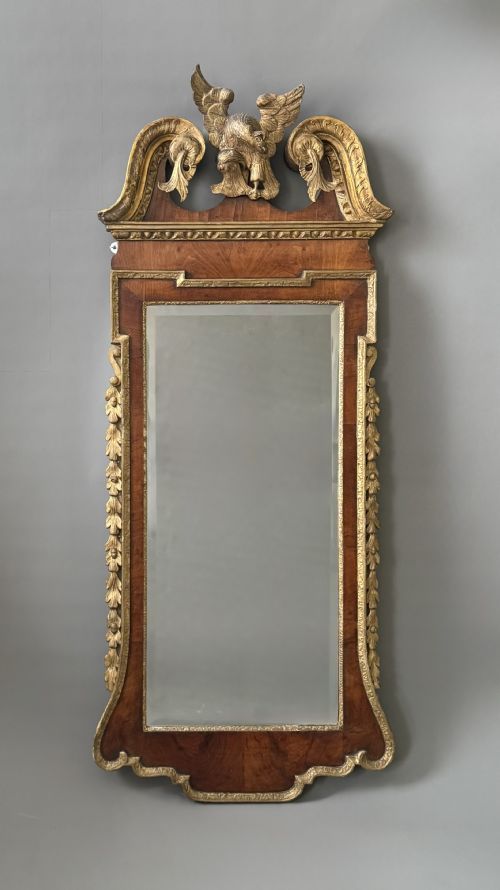
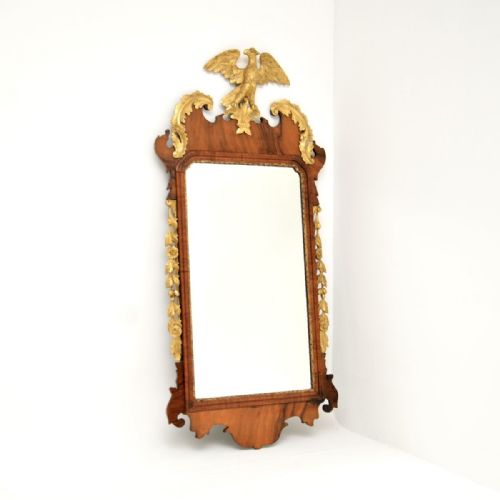
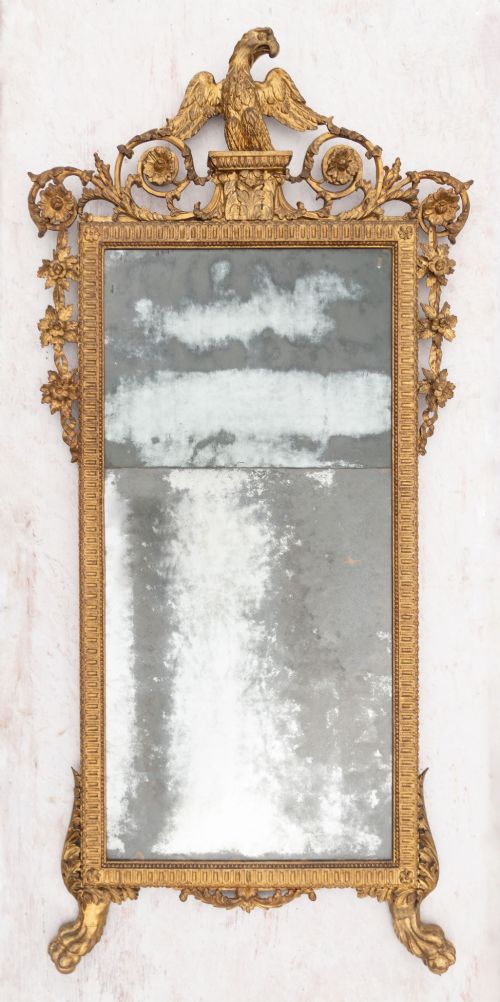

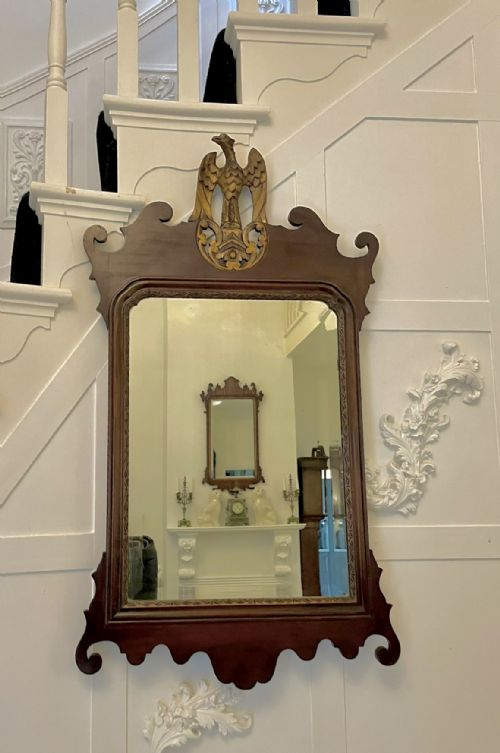


Carved Eagle Pier Mirror
A carved eagle pier mirror commands a room with architectural dignity, offering a focal point forged in giltwood and walnut.
Carved Eagle Pier Mirror
A carved eagle pier mirror stands as a commanding wall furniture piece, traditionally hung between windows on a pier wall. When you search for a carved eagle pier mirror, you encounter imposing wall mirrors and overmantel mirrors spanning multiple centuries. The pieces available here encompass Georgian, Regency, and Victorian iterations alongside revival pieces.
Most examples you meet on this page date from the Georgian and 19th-century periods, utilising traditional woods and heavy gilding. Forms vary from George III giltwood mirrors to walnut fretwork pieces and Edwardian inlaid designs. These objects reflect the changing tastes of their eras while retaining grand architectural proportions.
How they were made
Cabinet makers constructed the primary carcass from timber such as mahogany and walnut, often applying gesso to create crisp relief details before adding gold leaf. Giltwood surfaces required meticulous priming and leafing to achieve a brilliant metallic sheen across the carved mouldings and crests.
Makers integrated mirror glass, occasionally utilising Vauxhall plates, set securely within heavy timber and gesso frames. Brass fittings and intricate fretwork further distinguished the construction of these substantial wall fixtures.
The listings span multiple centuries, incorporating Georgian, Regency, and Victorian periods alongside revival styles.
What varies in quality
The sophistication of the timber carving sets superior examples apart, showing crisp, deep relief rather than flat or softened detailing. A finer piece displays harmonious proportions where the gilded ornamentation and wood grain complement the scale of the glass.
The integrity of the original giltwood and the preservation of early mirror plates dictate the standing of an individual mirror. Subtle distinctions in the joinery and the depth of the parcel-gilt highlights reveal the hand of a more accomplished workshop.
William Kent
The Carved Eagle Pier Mirror Glossary
- Pier mirror
- A tall wall mirror designed specifically to hang on the narrow pier of wall space between two windows. These pieces often amplified natural light in formal rooms.
- Giltwood
- Timber that has been coated in gesso and covered with fine gold leaf. This material creates a brilliant decorative surface characteristic of formal 18th and 19th-century interiors.
- Parcel gilt
- A decorative treatment where portions of a wooden object are highlighted with gold leaf while the underlying wood grain remains visible elsewhere. It provides a striking contrast between natural timber and bright gilding.
- Fretwork
- Openwork ornamentation carved or cut in thin wood, commonly seen in geometric or scrolling patterns on mirror frames. This technique adds delicate texture without increasing heavy bulk.
- Vauxhall mirror
- A type of antique mirror plate produced at the Vauxhall glasshouse, known for its thick bevels and high clarity. These plates are prized by collectors for their historical authenticity.
Carved Eagle Pier Mirror: Frequently Asked Questions
What is a pier mirror?
A pier mirror is a large vertical glass designed to hang between windows, anchoring the architectural space of a grand room. They served both to reflect natural daylight and to balance the heavy furniture placed below them.
Historically, these mirrors became central decorative elements in Georgian and Regency drawing rooms. Their placement required sturdy wall fixings to support the considerable weight of timber and glass.
How do I date a mirror?
Dating relies on examining the timber species, the construction of the frame joints, and the characteristics of the glass plate. Georgian pieces often feature distinct mahogany or walnut framing techniques that evolved into the revival styles of the 19th century.
Looking closely at the backboards, fixings, and gilding application reveals the period of manufacture. Secondary woods and fastener types provide reliable clues for establishing an approximate date.
Where should I hang one?
These mirrors suit principal reception rooms, grand hallways, or above a substantial fireplace mantel. Their vertical proportions work best on high walls where they can command the surrounding space.
Ensure the wall construction can bear the weight of heavy giltwood and timber frames. Positioning them opposite windows maximises the reflection of light within the interior.
What is parcel gilt?
Parcel gilt refers to furniture where only specific carved details are highlighted with gold leaf. This technique leaves the underlying mahogany or walnut exposed to provide a balanced visual contrast.
Cabinet makers utilised this method to accentuate crests, mouldings, and decorative motifs without entirely covering the warm grain of the timber. It adds refinement to formal wall mirrors.