



Carved Eagle Desk
These carved eagle desk accessories and related items are commanding works of craft that bring striking naturalistic form to a workspace.
Carved Eagle Desk
A carved eagle desk item typically appears as a functional object or accessory designed for the library or study, drawing on themes from the nineteenth century and Edwardian periods.
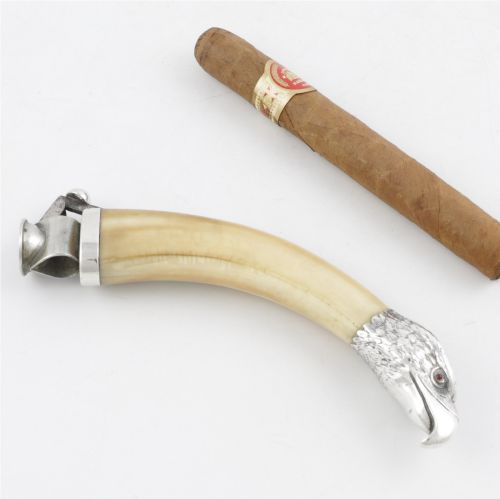
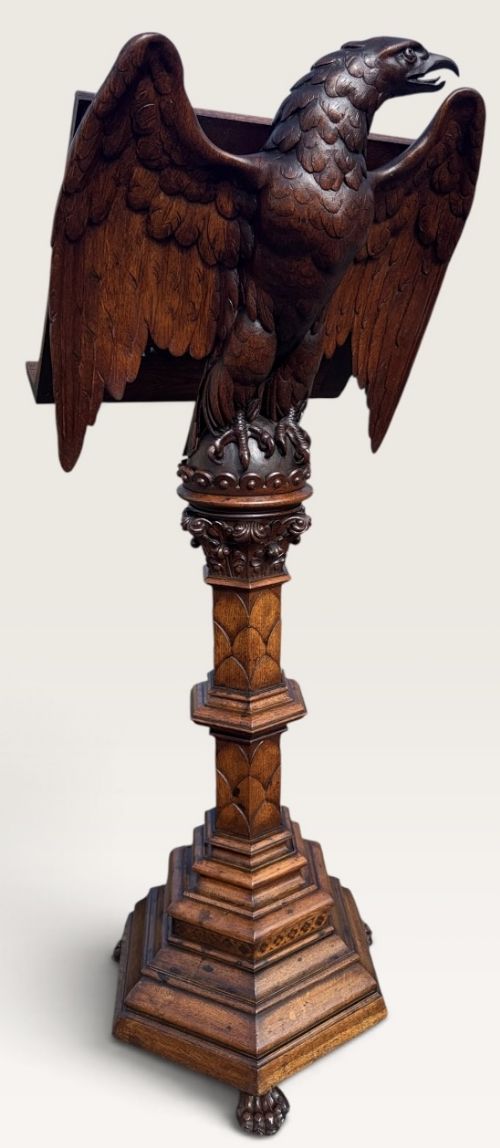
The selections on this page encompass smaller desk accessories like inkstands and cigar cutters alongside larger carved wooden lecterns featuring eagles.
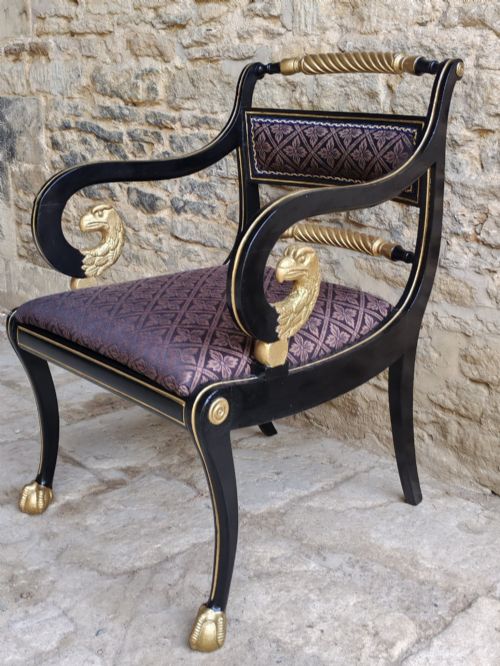
Makers and artisans utilised varied styles including Victorian, Gothic Revival, and Chippendale revival to shape these wooden and bronze pieces.
Materials and construction methods
Makers shaped these items primarily from solid timbers like oak, walnut, and mahogany, often applying detailed hand-carving techniques to render the plumage and form of the bird.
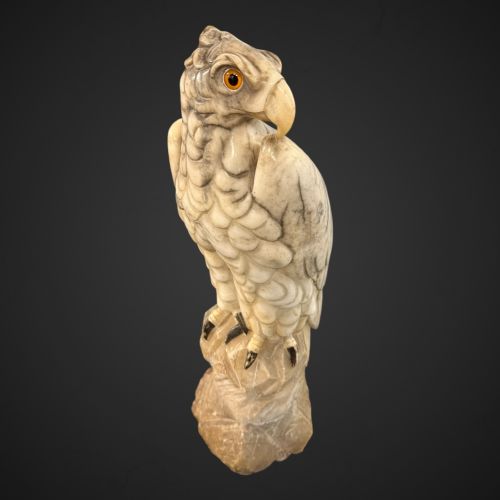
Metals such as brass and gilded bronze appear frequently in the construction of lamps and inkwells, sometimes paired with stone elements like Carrara marble.
Smaller desk items integrate specialised materials like silver and glass, combining mixed media to achieve durable and ornate office accessories.
Carved Eagle Desk Retail Price Guide 2026
Typical asking prices for carved eagle desk among the pieces listed under this phrase on Sellingantiques today, from the lower quarter to the upper quarter. They describe what is for sale here now, not the wider market.
An eagle holds a pray figure in its talons on a Black Forest style wooden ink stand.
Evaluating craftsmanship and detail
Quality rests in the depth and precision of the hand-carving, where superior examples display distinct feather texturing and lifelike anatomy in the eagle figures.
The choice of materials dictates the standing of a piece, with solid timbers and heavy cast metals representing a higher standard of production than simpler alternatives.
Coherence of historical style, such as accurate execution of Gothic Revival or Chippendale revival motifs, distinguishes finer workshop outputs.
George Adam Scheid·A. Marionnet·Luigi Frullini
The Carved Eagle Desk Glossary
- Lectern
- A reading desk with a slanted top, often supported by a carved figure such as an eagle. These larger wooden items serve as commanding focal points in a study.
- Inkstand
- A fitted tray or stand holding inkwells and writing implements for a desk. These accessories often incorporate bronze or wooden carved ornamentation.
- Chippendale revival
- A stylistic movement reviving eighteenth-century furniture designs. Pieces in this style feature intricate woodwork and classic proportions.
- Carrara marble
- A type of white or blue-grey marble quarried in Italy. It provides a smooth, veined stone base for sculptural pieces and statues.
- Gothic Revival
- An architectural and decorative style drawing on medieval forms. This aesthetic introduces pointed arches and ornate dark wood carving to furnishings.
Carved Eagle Desk: Frequently Asked Questions
What materials were used?
Makers shaped these items from solid woods such as oak, mahogany, and walnut, alongside metals including brass and gilded bronze. Some pieces also incorporate Carrara marble, leather, and glass.
These diverse materials reflect the range of functional objects created for the desk, from carved wooden lecterns to metal inkwells.
How were lecterns used?
Lecterns served as elevated stands for holding books or manuscripts at a comfortable reading angle. Their sturdy wooden forms positioned text for study in libraries and offices.
Carved eagle supports added symbolic weight and striking visual presence to these functional pieces of furniture.
How do I date a piece?
Dating relies on stylistic clues, material choices, and recorded manufacturing periods spanning the nineteenth century through the early twentieth century. Details like Gothic Revival or Chippendale revival motifs help place pieces within specific eras.
Maker attributions and specific revival styles also offer clear indicators of chronological origin.
Are these desk items functional?
Many items retain their original utility as writing desk accessories, holding ink, cigars, or reading materials. Desk stands and cutters were built for daily use in studies.
Other examples function primarily as decorative statues or lamps suited for display on a library table.