

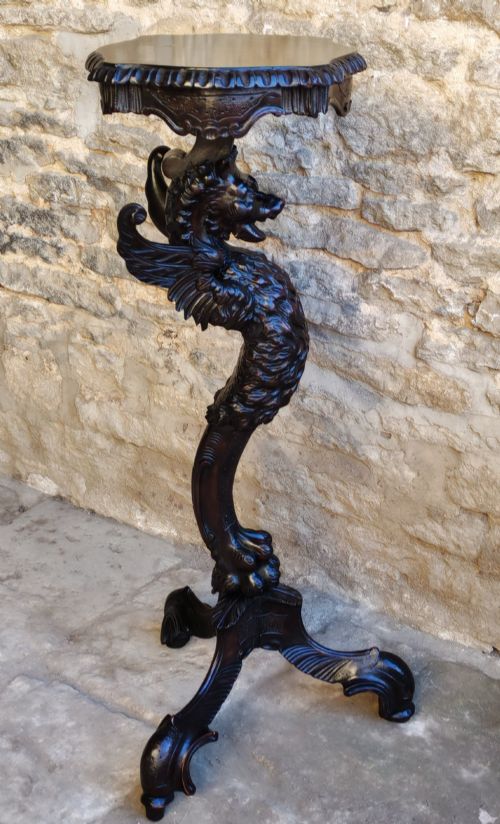
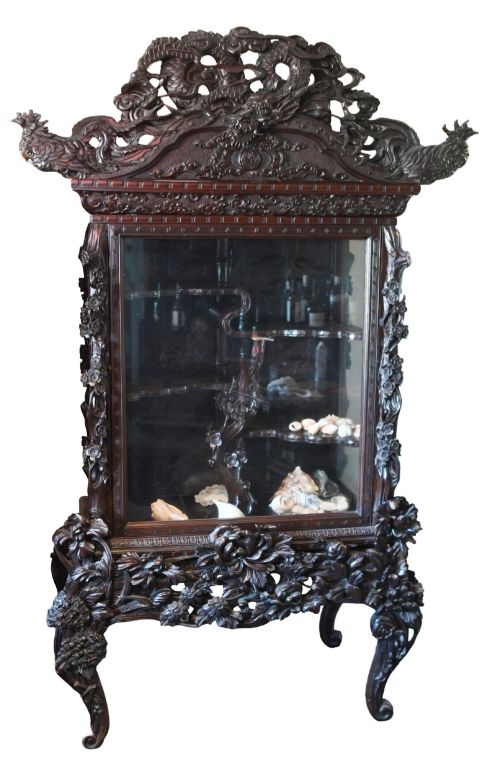
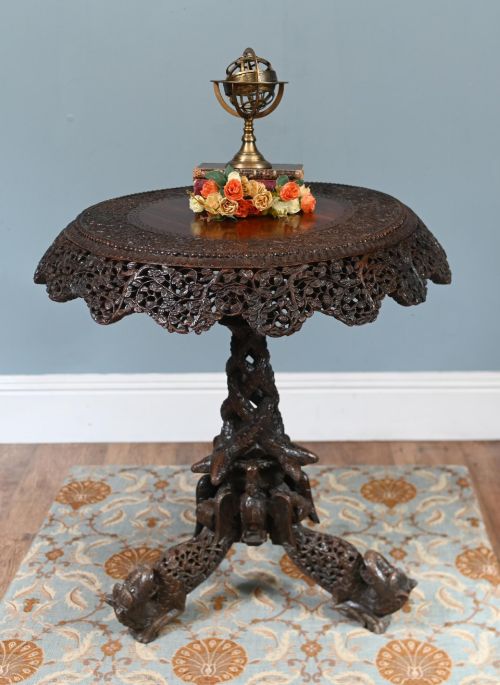
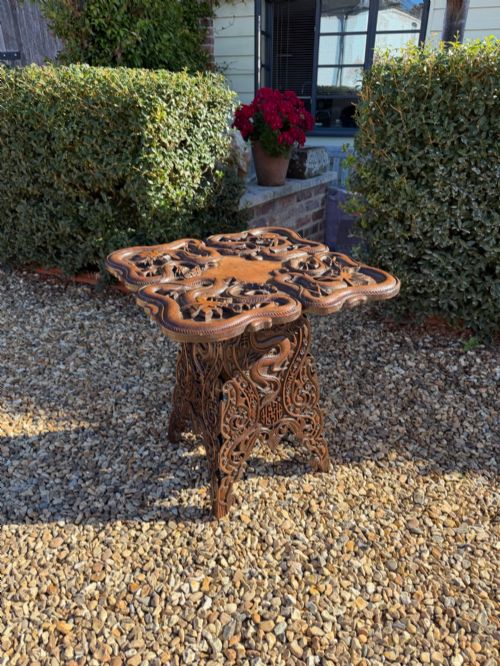




Carved Dragon Furniture
Carved dragon furniture brings vigorous mythic presence into a room through deeply sculptured timber forms.
Carved Dragon Furniture
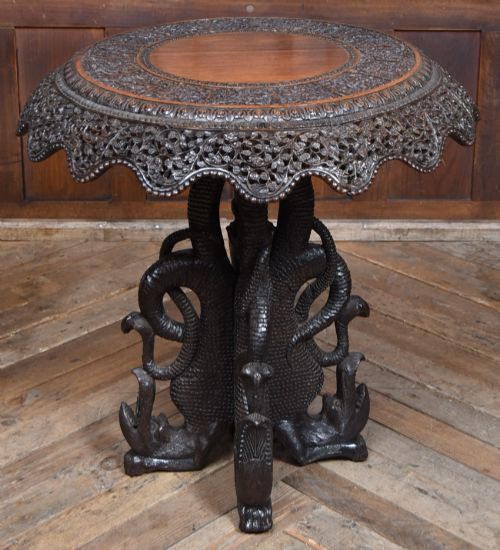
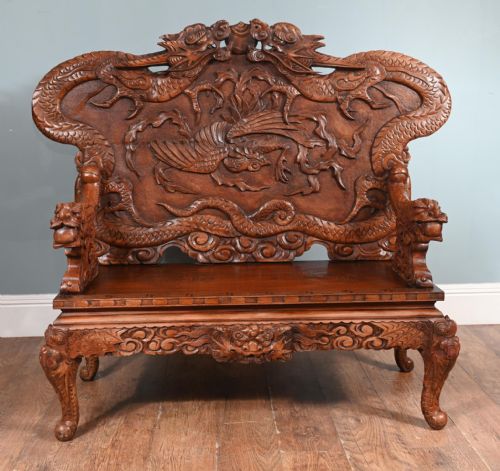
When you search for carved dragon furniture, you encounter robust seating, display cabinets, and occasional tables shaped by artisans across Asian and European workshops. These pieces span the nineteenth century through the early twentieth century, reflecting diverse regional interpretations of mythical motifs.
You are most likely to meet Chinese Export and Qing Dynasty hardwood tables and benches, alongside Japanese Meiji and Taisho period cabinets. Anglo-Indian and Anglo-Burmese examples also appear, utilising dense tropical timbers to render serpentine creatures in high relief.
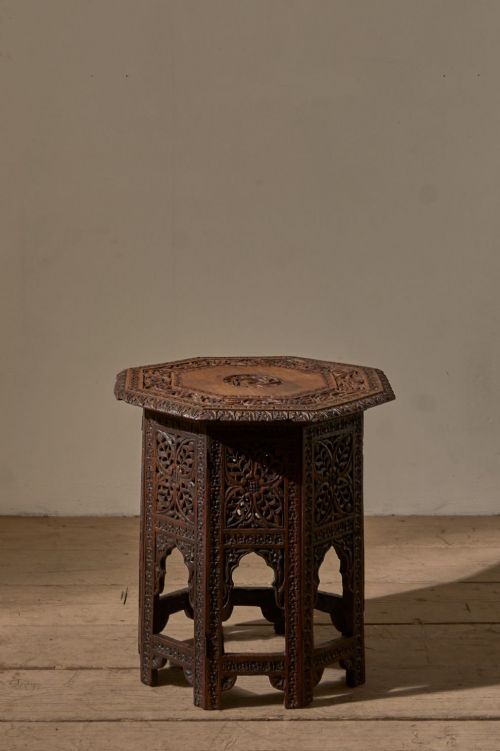
The functional range includes hall benches, display cabinets, plant stands, and occasional tables designed to anchor domestic spaces with dramatic zoomorphic carving. Each item demonstrates the distinct ornamental vocabulary of its specific origin and period.
How they were made
Maker-craftsmen worked with dense tropical hardwoods, walnut, and ebonised timber, selecting materials capable of holding crisp, undercut details without splitting. These woods were often polished, lacquered, or combined with contrasting inserts such as rouge marble and glass.
Carved Dragon Furniture Retail Price Guide 2026
Typical asking prices for carved dragon furniture among the pieces listed under this phrase on Sellingantiques today, from the lower quarter to the upper quarter. They describe what is for sale here now, not the wider market.
Listings combine Chinese Export, Qing Dynasty, Meiji Period, and Aesthetic Movement pieces across hardwood, lacquer, marble, and walnut.
What varies in quality
The distinction between tiers rests on the depth, animation, and anatomical precision of the carving itself. Superior examples display spirited, undercut claws and scales that stand free from the background timber, whereas lesser pieces rely on shallow, flat incisions.
Material selection and structural integrity further separate the range, visible in the choice of dense zitan or padauk over softer woods. Master workshops also ensured that the joinery remained completely rigid beneath heavy marble tops and glazed cabinet doors.
Gabriel Viardot
The Carved Dragon Furniture Glossary
- Hardwood
- Dense, durable timber harvested from broad-leaved deciduous or tropical trees such as rosewood, padauk, and walnut. It provides the necessary strength for intricate sculptural work.
- Ebonised
- Timber treated with chemical stains, dyes, or black finishes to imitate expensive ebony. This technique was popular during the Victorian and Aesthetic periods.
- Jardiniere stand
- A tall, decorative table specifically designed to support a plant pot or flower bowl. These stands frequently feature elevated platforms and carved display surfaces.
- Shodana
- A traditional Japanese multi-tiered display cabinet featuring staggered shelves, cupboards, and sliding doors. They often incorporate elaborate carved panels and ebonised frames.
- Settle
- A wooden bench featuring a high solid back, solid arms, and often a storage box beneath the seat. In these listings, they are heavily ornamented with dragon motifs.
Carved Dragon Furniture: Frequently Asked Questions
What periods do these pieces date from?
The pieces span the nineteenth century and early twentieth century, encompassing Victorian, Meiji, Taisho, and Qing Dynasty eras.
Craftsmen during these decades produced distinctive cabinets, tables, and seating influenced by global trade and cross-cultural design movements.
How were these carved tables used?
Occasional tables and plant stands served as focal points in Victorian and Edwardian reception rooms to display ceramics or floral arrangements.
Larger items like hall benches and card tables provided functional seating and games surfaces in prominent entrance halls.
How do I distinguish Japanese cabinets?
Japanese Meiji and Taisho period cabinets often utilise ebonised finishes, asymmetric shelving arrangements, and refined, flat-relief carving.
They frequently employ the shodana form, contrasting with the heavier, symmetrical hardwood structures typical of Chinese Qing Dynasty furniture.
What materials are commonly found?
Listings show a primary reliance on dense tropical hardwoods such as padauk, walnut, zitan, and rosewood. Lacquer, rouge marble inserts, and glass panes also appear across cabinets and tables.
These materials were chosen both for their structural durability and their ability to accept detailed sculptural work.