



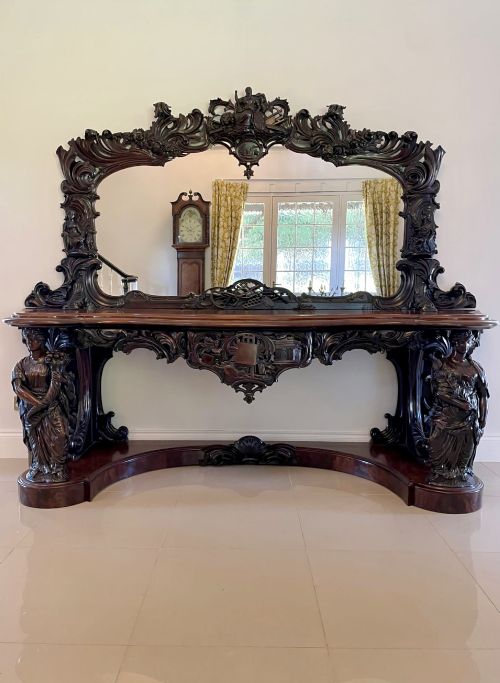

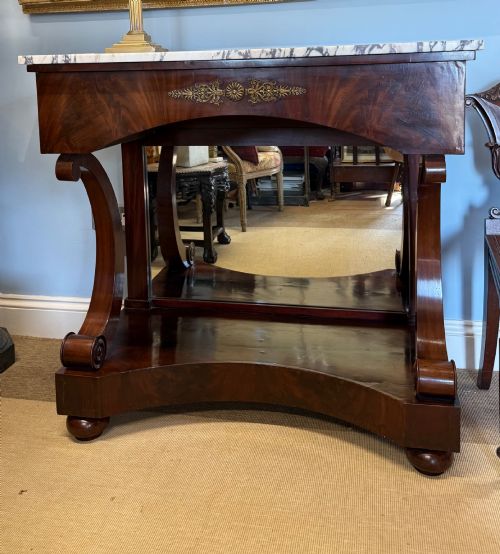


Carved Console and Mirror
A carved console and mirror set brings architectural depth and reflected light into a room, pairing a sturdy wall-anchored table with a matching glass frame.
Carved Console and Mirror
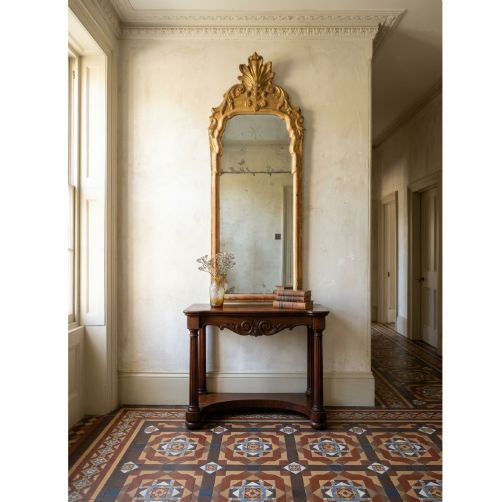
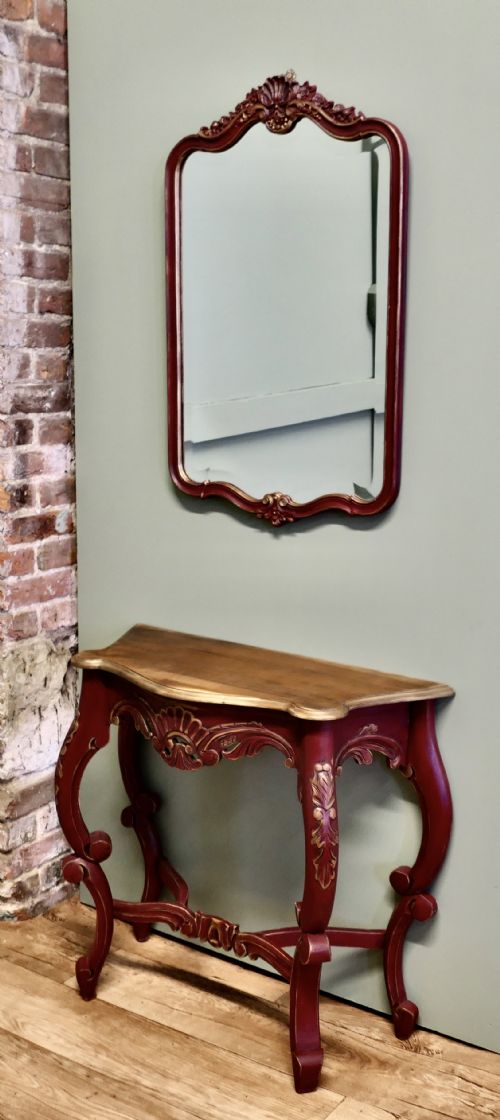
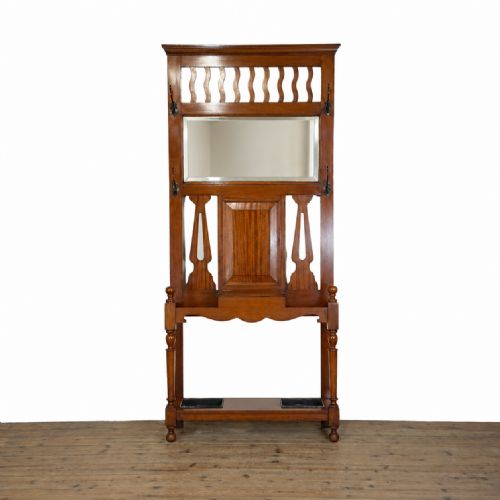
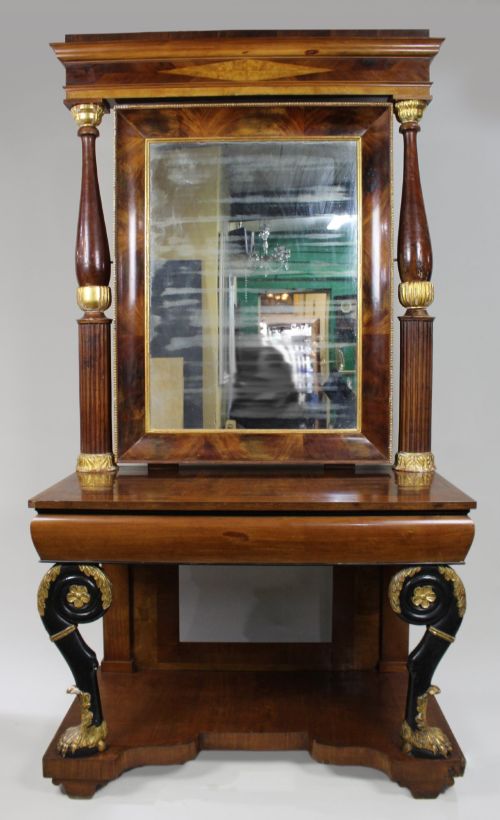
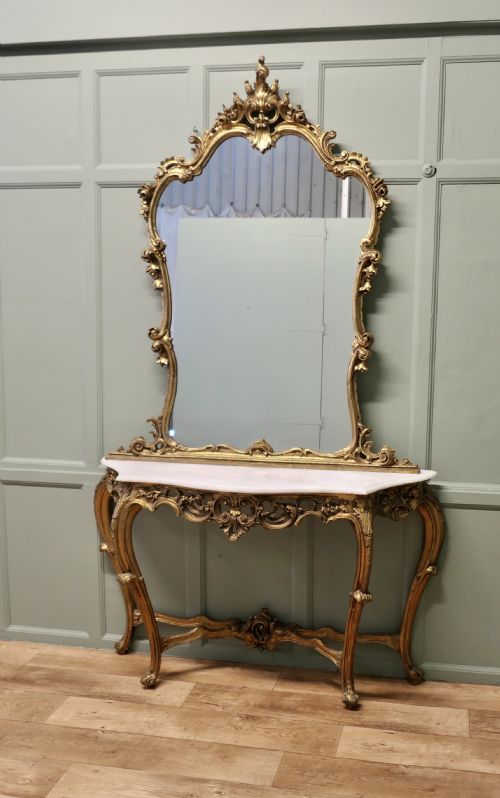
A carved console and mirror combination typically pairs a marble-topped table with a matching vertical wall glass, designed to sit flush against a principal reception room wall. The pairings span several periods, from Regency rosewood designs to Victorian mahogany and giltwood sets.
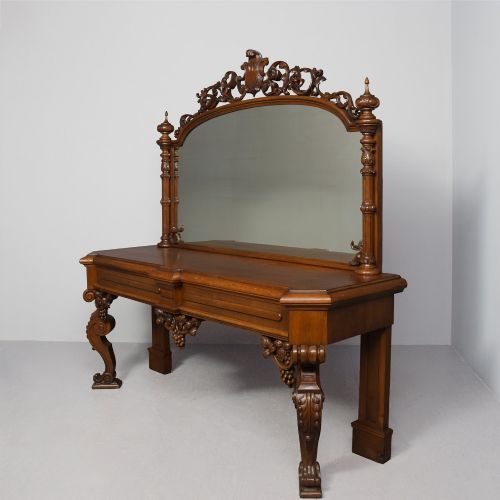
Many examples integrate the table and mirror into a single cohesive unit, often utilising a mirror-back construction where the glass rises directly from the rear of the table. Other versions present separate matching pieces, such as a pier table paired with a tall pier glass for installation between windows.
Materials and construction
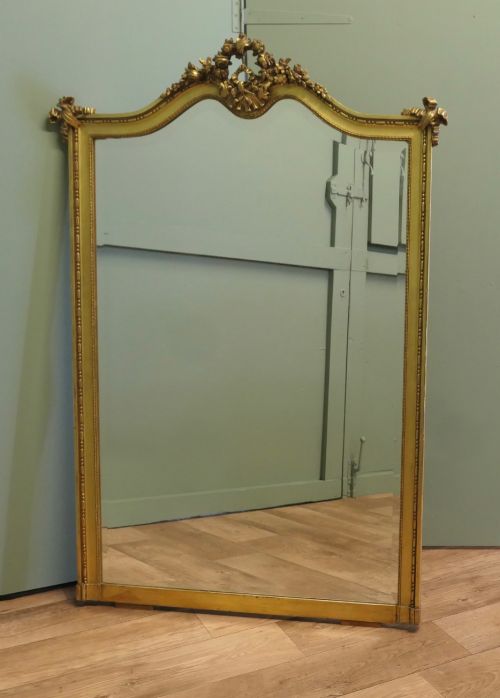
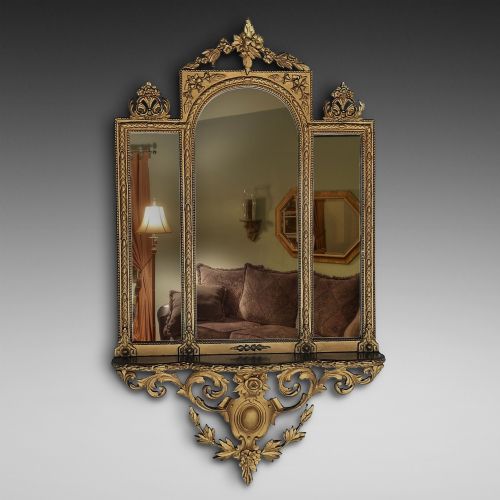
Cabinet makers utilised dense hardwoods such as mahogany and rosewood for the structural framework of the tables, frequently incorporating figured veneers and parcel-gilt detailing. Giltwood and gesso form the ornate frames of the matching mirrors, carved with floral or scroll motifs.
Heavy marble slabs, particularly white carrara and figured varieties, provide the durable tops for the console tables, while silvered mirror glass is set within the wooden frames to bounce light across the interior.
Carved Console and Mirror Retail Price Guide 2026
Typical asking prices for carved console and mirror among the pieces listed under this phrase on Sellingantiques today, from the lower quarter to the upper quarter. They describe what is for sale here now, not the wider market.
Listings feature items from the Regency, Victorian, and Edwardian periods, constructed in mahogany, rosewood, oak, and giltwood with marble tops.
Distinctions in craftsmanship
The standard of a carved console and mirror depends largely on the depth and crispness of the hand-carving on the wood or gesso, where sharper, more expressive detailing separates ambitious cabinet work from simpler production. The choice of timber also dictates quality, with highly figured flame mahogany or richly grained rosewood marking out superior examples.
Proportion and integration define the better pieces, particularly in mirror-back forms where the table base and the upright glass frame share a unified design language. The selection of thick, well-figured marble slabs rather than thin stone further distinguishes high-end commissions.
The Carved Console and Mirror Glossary
- Console table
- A table designed to be fixed against a wall, often supported by front legs or brackets while relying on wall attachment for stability.
- Pier glass
- A tall wall mirror specifically scaled to hang on the narrow pier of wall space situated between two windows.
- Giltwood
- Timber that has been coated with a thin layer of gold leaf over a prepared gesso and bole ground.
- Gesso
- A plaster-like mixture applied to wood surfaces as a smooth base for gilding or painting.
- Parcel-gilt
- Partially gilded, where selected portions of a wooden or painted surface are highlighted in gold leaf.
Carved Console and Mirror: Frequently Asked Questions
Where should I place a console and mirror set?
These sets suit entrance halls, drawing rooms or dining rooms where they anchor a wall space and create a focal point. They traditionally sit between windows or opposite a doorway to maximise reflected light.
Ensure the wall construction can support the weight of the table and any attached mirror back, particularly with heavy marble and hardwood models.
How do I care for the marble top?
Wipe the marble surface regularly with a soft, damp cloth and neutral soap to prevent staining from moisture or acidic substances. Avoid placing drinks or wet items directly on unsealed stone.
Apply a specialist marble wax occasionally to maintain the sheen and protect the polished surface from everyday wear.
Are the table and mirror always original partners?
Many surviving sets were manufactured as matching pairs or integrated units, particularly those featuring identical wood veneers and carved motifs. Some examples bring together a table and mirror from the same period that share similar stylistic traits.
Examining the construction joints, backing boards and wear patterns helps confirm whether the two components share a common origin.
How do I identify a Regency period piece?
Regency items often display classical architectural influences, incorporating rosewood veneers, brass inlay, and parcel-gilt details. The carved motifs tend to reference ancient Greek and Roman designs.
Look for heavy figured marble tops and restrained, elegant proportions that distinguish early nineteenth-century cabinet work from later revivals.