
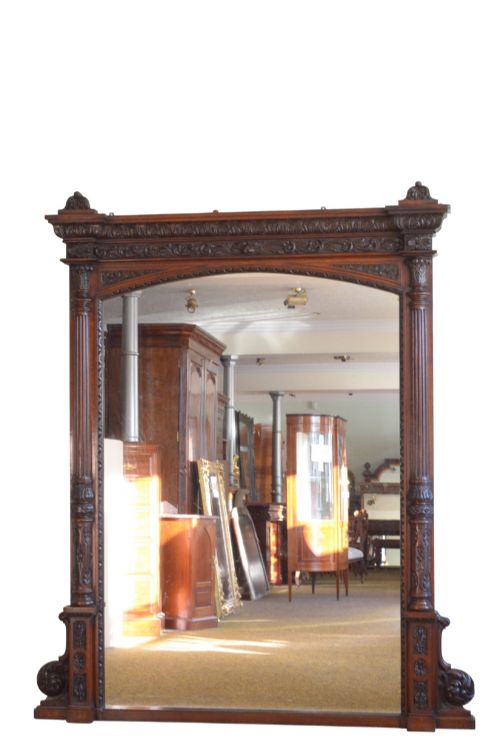
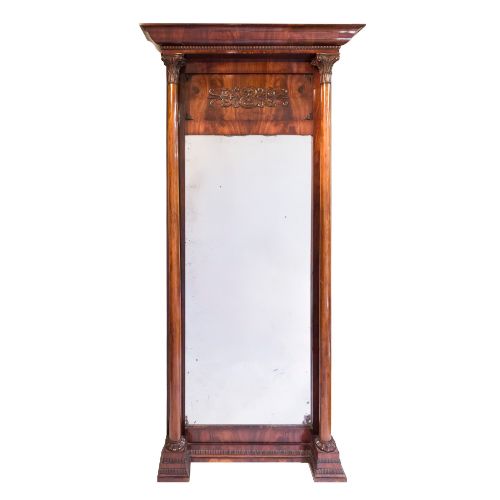


Carved Column Pier Mirror
A carved column pier mirror brings architectural presence and reflected light to a room, historically designed to hang on the wall space between windows.
Carved Column Pier Mirror
A carved column pier mirror is a tall, vertical wall glass designed specifically to sit on the narrow stretch of wall between two windows, reflecting natural light deeper into the interior. These pieces frequently appear in styles such as Regency, French Empire Revival, and Victorian Gothic Revival, reflecting the architectural tastes of their respective periods.
The format ranges from compact English examples in mahogany and oak to larger French frames shaped in painted wood and gesso. On this page, you will encounter wall mirrors, pier mirrors, and overmantle formats spanning the late eighteenth century through to the nineteenth century.
Origin and period heavily dictate the character of each piece, whether it takes the form of an austere George IV mahogany frame or a grand, gilded Neoclassical design. Buyers seek these mirrors both for their historical utility and for the distinct vertical emphasis they bring to domestic interiors.
Materials and construction methods
Makers built these frames using solid timbers such as mahogany, oak, and ebonised wood, alongside softer woods prepared for gilding or painting. Giltwood and gesso surfaces required careful application of chalk and glue layers before gold leaf was laid down, often burnished with agate to achieve a brilliant metallic sheen.
The characteristic architectural columns flanking the glass were frequently turned on a lathe and embellished with carved details like acanthus leaves or Egyptian Revival motifs. Mirror glass itself was secured within the rebate, with older examples occasionally retaining their original mercury plate displaying characteristic age spots.
Materials documented across the pieces include giltwood, gesso, mahogany, oak, ebonised wood, and painted finishes.
Distinctions in craftsmanship
Quality in a carved column pier mirror lies in the crispness of the architectural carving and the depth of the gilding or timber finishing. Superior examples display sharply defined acanthus foliage on the frieze and cleanly turned columns that remain firmly integrated into the overall frame structure.
The integrity of the plate glass and the retention of original surface treatments further separate standard pieces from exceptional ones. Finer items demonstrate harmonious proportions where the column width and frame mouldings complement the scale of the central mirror glass without feeling heavy.
The Carved Column Pier Mirror Glossary
- Pier glass
- A tall mirror intended to be hung on the pier, which is the wall space situated between two windows. This placement maximised the illumination of dimly lit Georgian and Victorian reception rooms.
- Gesso
- A plaster-like mixture applied to wooden frames as a preparatory base for gilding or paint. Its smooth surface allowed craftsmen to carve intricate relief details before applying gold leaf.
- Mercury plate
- An older type of mirror glass manufactured using a tin and mercury amalgam backing before the modern chemical silvering process was invented. It often exhibits characteristic dark specking and a soft, mottled reflection.
- Frieze
- The decorative horizontal band forming the upper portion of the mirror frame above the glass. This section frequently hosts carved acanthus leaves or classical motifs.
- Ebonised wood
- Timber treated with stain or polish to imitate expensive ebony. This dark, uniform finish was particularly popular during the nineteenth century for accentuating architectural mouldings.
Carved Column Pier Mirror: Frequently Asked Questions
Where should I hang a pier mirror?
Traditionally, these mirrors were hung on the narrow wall space between two windows to reflect light and brighten darker corners of a room. In modern settings, they work equally well above console tables, mantelpieces, or along hallways where vertical height is needed.
Because of their tall proportions, ensure the wall fixings are secure and properly anchored to support the weight of the timber and glass frame.
How do I identify a Regency pier mirror?
Regency mirrors often feature classical architectural elements such as reeded columns, ball-stud details within the cornice, and crisp water-gilded surfaces. They lean heavily on Neoclassical and Egyptian Revival motifs drawn from ancient archetypes.
Look for fine proportions and carved details like acanthus leaf friezes, which distinguish early nineteenth-century work from later revival pieces.
What is an overmantle mirror?
An overmantle mirror is a wide or tall format specifically designed to sit directly above a fireplace mantelpiece. While pier mirrors focus on vertical wall spaces between windows, overmantle versions often coordinate with the width of the fireplace below.
Both types share similar decorative vocabularies, including column supports and gilded frames, but their original spatial functions differed within the home.
Can I clean original mercury glass?
Original mercury plates should be cleaned with extreme care using only a soft, dry microfibre cloth to remove dust. Avoid commercial glass cleaners or excess moisture, as liquids can seep behind the glass and damage the delicate historical backing.
Accepting the soft specking and foxing of old glass is part of living with antique mirrors, as these blemishes bear witness to their age.