



Carved Colonial Armchair
A carved colonial armchair brings distinct regional craftsmanship and rich dense timbers into a room, offering both historical weight and deep seating comfort.
Carved Colonial Armchair
When you search for a carved colonial armchair, you encounter substantial seating shaped by historic cross-continental exchange, spanning styles like Anglo-Indian, Portuguese Baroque, and broader colonial traditions. These pieces originate from locations such as India, Ceylon, Burma, and the Philippines, reflecting local woodworking skills applied to European furniture forms.
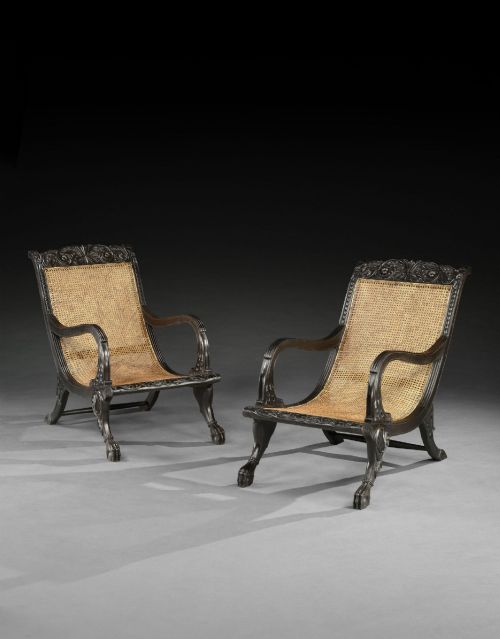
Forms vary from open armchairs and elbow chairs to specialised planters chairs with extended footrests. Each piece connects domestic seating history with the stylistic influences of the Regency period and nineteenth-century design.
How they were made
Construction relies heavily on durable tropical timbers such as teak, padouk, ebony, rosewood, walnut, and general hardwoods, selected for their ability to withstand climate and heavy use. Artisans worked these dense materials using hand tools to create intricate structural frames.
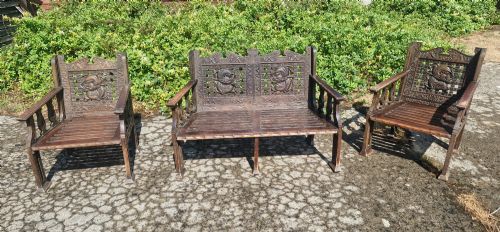
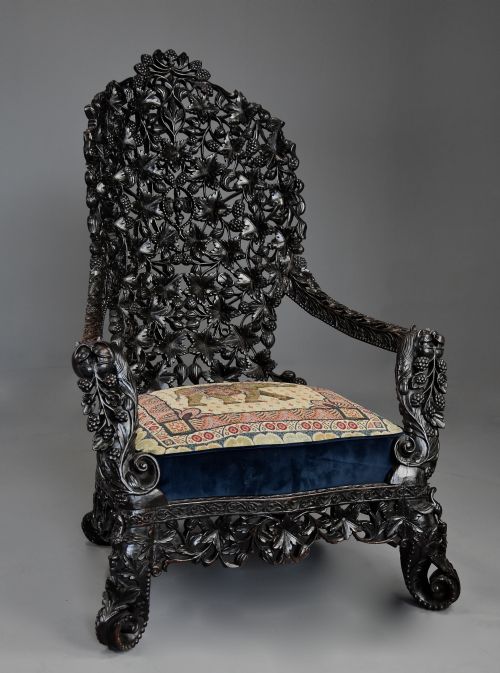
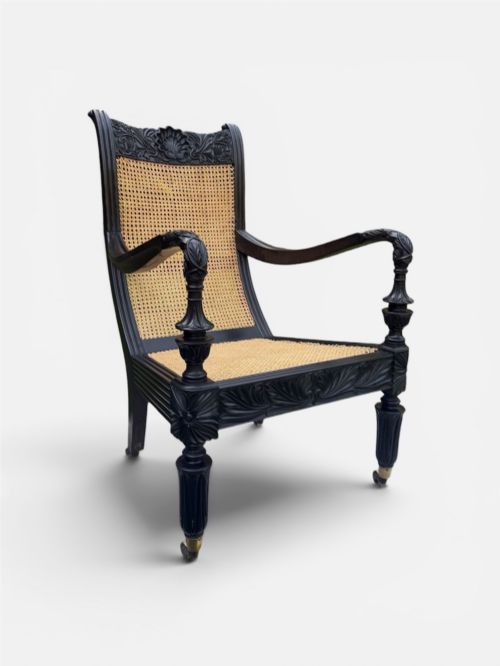
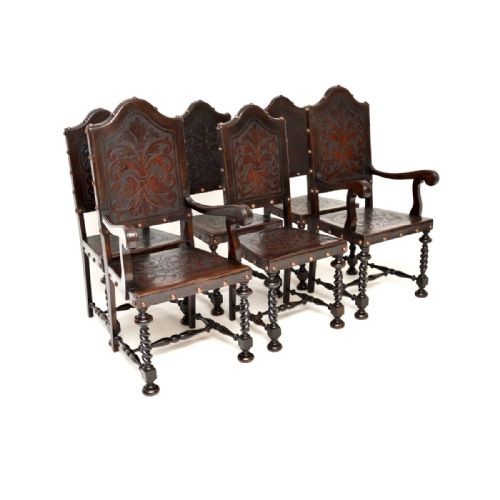
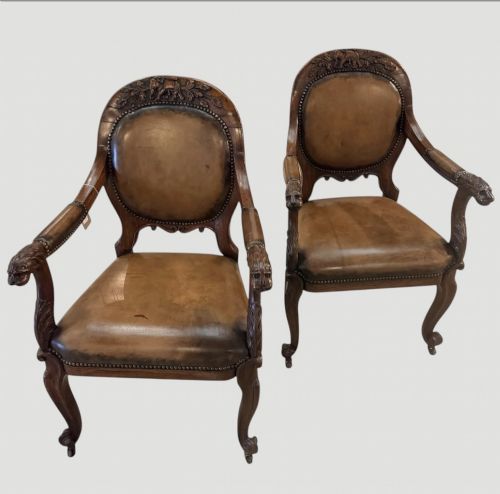
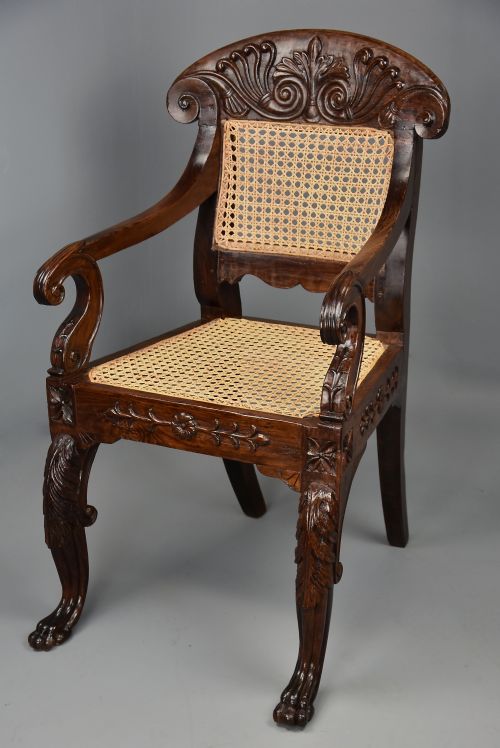
Surface enrichment involves elaborate hand carving executed in high and low relief, often featuring floral or geometric motifs. Selected pieces incorporate brass mounts, cane seating panels, and embossed leather or velvet upholstery.
Joinery techniques balance traditional regional methods with European carcass designs, producing sturdy armchairs, folding mechanisms, and expansive seating suites built to last centuries.
Listings feature nineteenth-century pieces alongside eighteenth-century examples, utilising materials such as cane, teak, brass, hardwood, ebony, leather, rosewood, and velvet.
What varies in quality
The standard of a carved colonial armchair rests primarily on the crispness and depth of the timber carving. Superior examples display sharply defined motifs and balanced symmetry executed by skilled hands.
Timber selection and grain presentation set finer chairs apart from simpler utility seating. Solid construction in dense materials like ebony or rosewood indicates higher workshop status than mixed secondary woods.
Proportion and structural integrity dictate the overall desirability of the piece. Well-balanced frames with original cane work, leather inserts, or brass fittings represent the upper tier of surviving examples.
The Carved Colonial Armchair Glossary
- Padouk
- A heavy, durable tropical hardwood with a reddish hue used frequently in colonial furniture making. It provides a stable base for detailed carving.
- Cane
- Woven rattan material utilised for seats and backs in warm climates to provide ventilation. It requires careful tensioning across the wooden frame.
- Anglo-Indian
- A descriptive term for furniture made in India during the British period, combining local craftsmanship with British room forms. These pieces often merge Regency styles with native carving techniques.
- Planters chair
- A specialised armchair featuring wide, flat arms designed to act as footrests for resting legs. This form prioritizes domestic comfort in tropical environments.
- Savonarola chair
- A folding chair constructed from multiple curved wooden slats forming an X-shape when viewed from the side. The design traces back to Renaissance Italy but appears in colonial contexts.
Carved Colonial Armchair: Frequently Asked Questions
Where were colonial armchairs made?
These armchairs were produced across various regions under colonial influence, notably in India, Ceylon, Burma, and the Philippines.
Local workshops adapted European forms like the Regency armchair or library chair to suit regional tastes and native timbers.
How do I identify an Anglo-Indian armchair?
Look for dense tropical hardwoods such as padouk, rosewood, or ebony combined with British furniture shapes from the Georgian or Regency periods.
The defining feature is usually intricate, deep-relief hand carving executed by local artisans using traditional motifs.
Are these chairs comfortable for daily use?
Many examples provide generous proportions and deep seating, particularly planters chairs and library chairs designed for relaxation.
Some incorporate cane panels for coolness or padded leather seats, though comfort depends on the specific historic form.
What is a campaign chair?
A campaign chair is a portable, folding seating design intended for travel and military use in the nineteenth century.
Colonial versions utilise durable hardwoods and brass hinges to allow easy collapse without sacrificing structural stability.