




Carved Cinnabar Lacquer
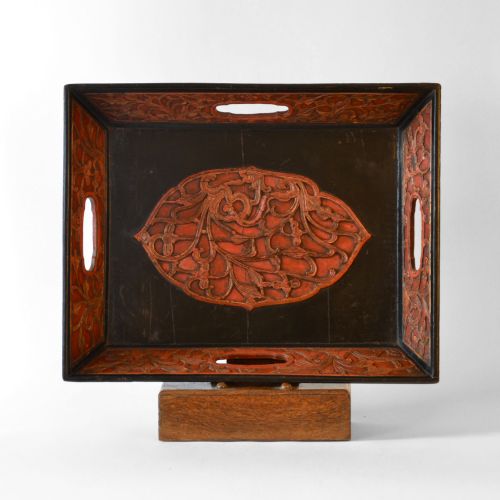
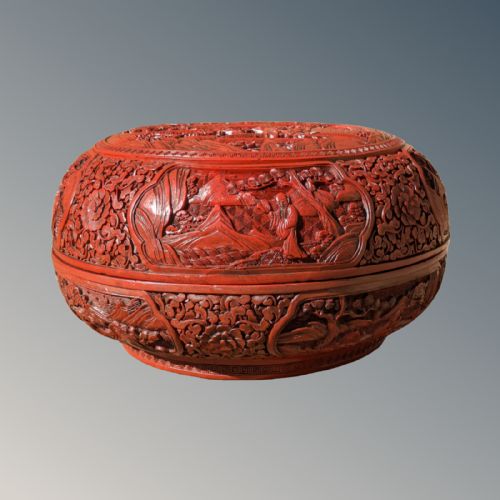
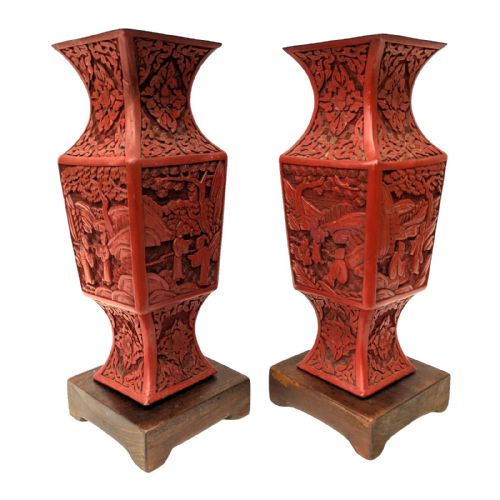
These pieces of carved cinnabar lacquer bring deep relief carving and rich red tones into a room.
Carved Cinnabar Lacquer
Carved cinnabar lacquer items span several forms and centuries, originating primarily from Chinese workshops during the Qing Dynasty as well as Japanese Meiji Period production. When you search for carved cinnabar lacquer, you encounter vessels, seating, and containers that showcase elaborate surface work.
The objects most frequently met on this page include lidded boxes, vases, and decorative boxes from the nineteenth century. These forms display the dense red layers characteristic of the technique, often combined with hardwood cores, brass, enamel, or porcelain.
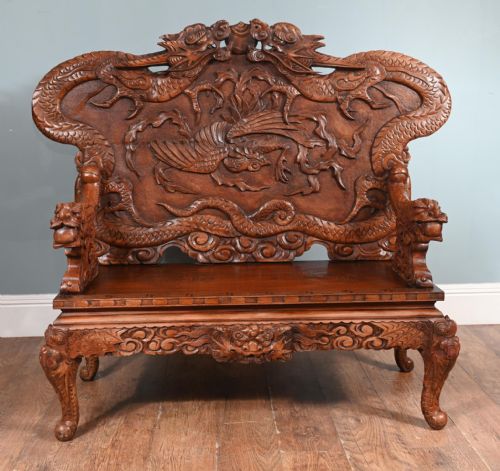
Larger items such as benches, side tables, and side cabinets also appear alongside chargers and platters. Each piece demonstrates the translation of intricate pictorial scenes and floral motifs into deep, carved relief.
How they were made
The primary material foundation involves building numerous successive coats of red lacquer upon a wooden, hardwood, or porcelain base. Artisans applied dozens or hundreds of layers to achieve the necessary thickness for carving.
Once the lacquer built up to a solid mass, carvers cut directly into the hardened red material to reveal intricate patterns of figures, landscapes, and flowers. Additional elements such as brass mounts, enamel panels, or glazed porcelain sections were integrated into specific furniture and vessel forms.
Carved Cinnabar Lacquer Retail Price Guide 2026
Typical asking prices for carved cinnabar lacquer among the pieces listed under this phrase on Sellingantiques today, from the lower quarter to the upper quarter. They describe what is for sale here now, not the wider market.
Some nineteenth-century artisans managed to carve detailed mythical phoenixes and dragon seats out of layers of tree sap.
What varies in quality
Quality rests upon the depth and precision of the carved relief work across the surface. Pieces with crisp, deeply undercut details demonstrate superior skill compared to shallow or uniform incisions.
The integrity of the underlying core structure and the evenness of the lacquer layers determine the durability of the object. Finer examples maintain smooth interior finishes and precise alignment between lids and bases on boxes.
The Carved Cinnabar Lacquer Glossary
- Cinnabar lacquer
- A decorative technique utilising layers of red lacquer coloured with mercuric sulphide. The resulting thick coating allows carvers to create deep relief designs.
- Totai
- A cloisonné-like technique where enamel or lacquer fills wire cells on a ceramic base. This method appears on specific chargers combined with lacquer work.
- Qing Dynasty
- The final imperial dynasty of China, lasting from sixteen-forty-four to nineteen-twelve. Many decorative lacquer pieces date from this extended era.
- Meiji Period
- The era of Japanese history running from eighteen-sixty-eight to nineteen-and-twelve. Production during this time included lacquer wares exported for international markets.
Carved Cinnabar Lacquer: Frequently Asked Questions
What is cinnabar lacquer made from?
The material consists of tree sap mixed with pigments built up in successive coats. Artisans carved into this thick hardened coating.
Wooden bases or porcelain cores support the layers, providing structural strength for the carved surface.
How do I care for carved lacquer?
Keep pieces away from direct sunlight and extreme humidity fluctuations to protect the material. Gentle dusting with a dry cloth maintains the surface.
Avoid using liquid cleaners or chemical polishes which can damage the historic finish.
How are nineteenth century pieces identified?
Dating relies on stylistic markers associated with Qing Dynasty production and Japanese Meiji manufacturing. Construction methods and material combinations provide further clues.
Comparative examination of carving depth and motifs helps place items within the eighteen-hundreds.