

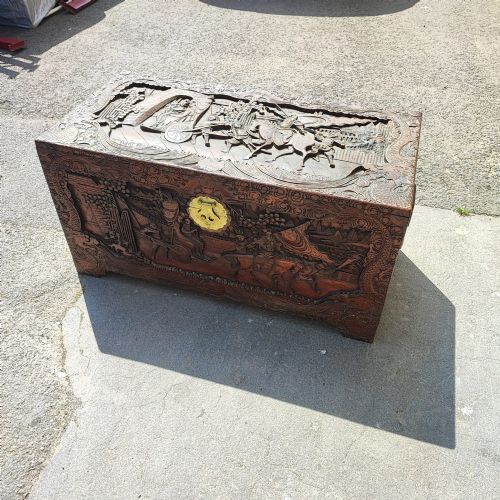


Carved Camphorwood Coffer
These carved camphorwood coffer pieces are sturdy storage trunks brought home from distant ports, prized for their aromatic timber and deep relief carving.
Carved Camphorwood Coffer
A carved camphorwood coffer serves as a traditional storage trunk or blanket box, built to protect linens and garments from insects while travelling or at home. You will most frequently meet nineteenth-century examples alongside pieces from the early decades of the twentieth century.
The form spans straightforward blanket boxes to low coffee tables and large storage chests, often associated with Chinese export work and traditional Chinese making. Makers also produced Anglo-Indian colonial variations incorporating contrasting timbers such as ebony.
These chests turn up in various dimensions, from compact boxes to large trunks fitted with metal hardware. The surfaces typically display dense relief carving depicting figures, landscapes or foliage across the lid and sides.
How they were made
Workshops built these coffers using solid camphor wood or general hardwood timber, selected for its stability and strong natural scent. Craftsmen carved the exterior surfaces in deep relief by hand, creating heavily textured panels across the lid and sides.
Joinery involved sturdy box construction, often reinforced with brass bindings, handles and corner braces to withstand long journeys. Some variants incorporated contrasting woods like ebony alongside the primary camphor wood body, while others received a lacquered finish.
Carved Camphorwood Coffer Retail Price Guide 2026
Typical asking prices for carved camphorwood coffer among the pieces listed under this phrase on Sellingantiques today, from the lower quarter to the upper quarter. They describe what is for sale here now, not the wider market.
The pungent, medicinal scent locked inside these trunks has survived over a century of global travel.
What varies in quality
Quality depends upon the crispness and depth of the hand carving, where sharply defined figures and balanced compositions stand apart from softer, shallower work. The choice of secondary timbers and the weight of the brass mountings also dictate the calibre of a piece.
Proportion and structural integrity separate standard utility boxes from superior trunks, particularly where lid alignment and the preservation of the aromatic wood remain intact.
The Carved Camphorwood Coffer Glossary
- Camphor wood
- An aromatic timber native to Asia, prized for its distinct insect-repelling scent and resistance to pests. It is the defining material for this category of trunk.
- Chinese Export
- Goods manufactured in China specifically for Western markets, blending traditional Eastern forms and motifs with European domestic requirements.
- Anglo-Indian Colonial
- Furniture and decorative objects made in India under British influence, frequently combining local timbers like ebony with traditional British furniture shapes.
Carved Camphorwood Coffer: Frequently Asked Questions
What were camphorwood coffers used for?
These chests served primarily for storing garments, blankets and valuable textiles during maritime transport and home storage. The natural aroma of the timber helped keep moths and insects away from stored woollens.
Over time, many owners repurposed these trunks as low coffee tables or decorative living room storage, adapting the traditional blanket box for modern interiors.
How do I date a camphorwood chest?
Dating relies on examining the construction methods, the style of the brass hardware, and the character of the exterior carving. Nineteenth-century examples often display heavy brass-bound corners and traditional hand-cut joinery.
Pieces from the early twentieth century, such as those from the 1920s and 1930s, sometimes show slightly different carving motifs or lighter framing, though traditional production methods persisted across decades.
Are all camphorwood coffers Chinese?
While the majority originate from China as export pieces or traditional domestic trunks, the category also includes Anglo-Indian colonial examples. These variations might incorporate contrasting timbers such as ebony alongside the camphor wood.
Regional workshops adapted local carving traditions, meaning surface motifs can range from Cantonese floral designs to broader oriental landscape scenes.
How do I care for camphorwood furniture?
Maintain the timber by keeping the trunk out of direct sunlight and away from extreme heat sources that might dry out the wood. Regular dusting preserves the carved relief panels without needing heavy polishes.
Allowing the wood to breathe helps retain the natural camphor scent, which defines the character of these storage chests.