
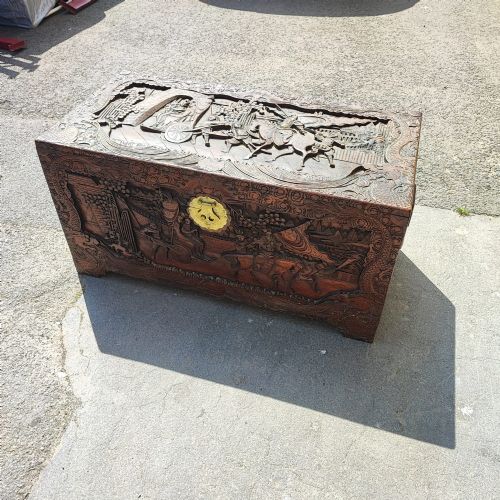


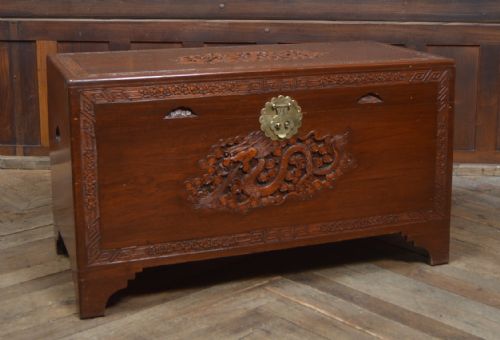
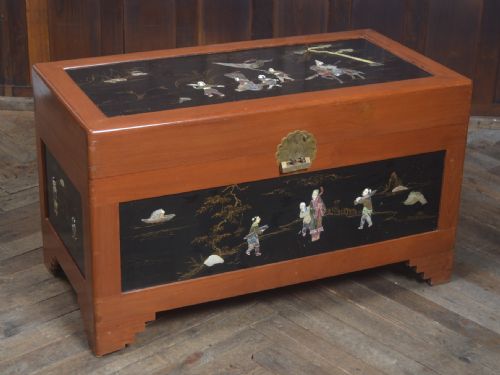
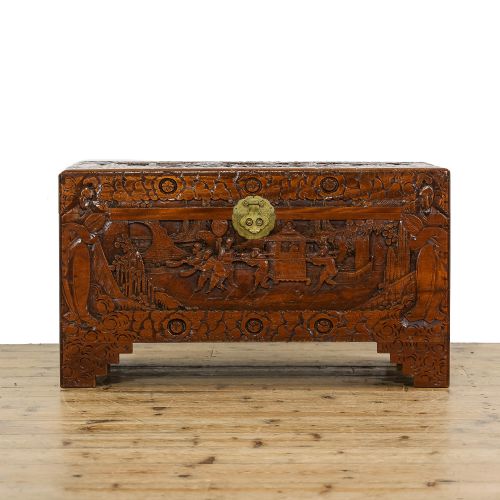
Carved Camphor Trunk
A carved camphor trunk offers fragrant timber construction and dense relief carving, serving as both practical storage and a distinctive interior surface.
Carved Camphor Trunk
A carved camphor trunk provides deep storage capacity while doubling as a low table or blanket box within a room. The items on this page span Chinese Export workshops, Victorian campaign contexts, and early twentieth-century production.
Buyers will most frequently encounter rectangular lidded chests made from aromatic timber, often decorated with figural or floral relief panels. These containers range from standard blanket boxes to more complex formats like cabinets on chests.
Originating largely from Asian trade routes and colonial hubs, these chests were built to protect contents from moisture and insects through the natural properties of the wood.
How they were made
Construction relies primarily on camphor wood or camphorwood, selected for its insect-repellent scent and stability. Artisans frequently combined this aromatic timber with structural additions of oak, ebony, or brass fittings.
Carving was executed by hand directly into the timber surfaces, creating high-relief scenes of figures, landscapes, and foliage. Corners and edges were often reinforced with brass strapping and recessed handles to withstand transit.
What varies in quality
The depth and intricacy of the hand carving dictate the aesthetic standing of each piece, distinguishing flat surface work from deeply undercut sculptural panels. Precision in the joinery and the weight of the solid timber further separate standard utility boxes from finer workshop outputs.
Hardware integration plays a role, with heavy brass bound corners and secure hinges indicating careful original assembly. The condition of the internal wood linings and the preservation of the natural camphor scent also influence the integrity of the piece.
The Carved Camphor Trunk Glossary
- Camphorwood
- An aromatic timber native to Asia, utilised for storage furniture due to its natural insect-repellent qualities and pleasant scent. It is soft to work yet stable over long periods.
- Campaign chest
- A form of portable furniture designed for military officers, typically featuring recessed brass handles and reinforced corners for travel. These chests divide or stack for ease of movement.
- Coffer
- A large box or chest used historically for holding valuables, often fitted with a hinged lid. In modern settings, these frequently double as coffee tables.
- Chinoiserie
- European interpretation and imitation of Chinese artistic traditions and motifs, applied to furniture and decorative objects. It appears on various imported and domestic items from past centuries.
- Brass bound
- Furniture edges and corners protected with fitted brass strips and brackets. This technique adds structural strength and visual contrast to the wood.
Carved Camphor Trunk: Frequently Asked Questions
How do I clean a carved camphor trunk?
Dust the relief carvings regularly with a soft, dry brush to prevent dirt accumulation in the deep recesses. Avoid applying modern polishes or water, as excess moisture can harm the unsealed wood.
Should the interior scent fade over many years, lightly sanding the inside surfaces with fine sandpaper will release the natural oils of the timber again.
Are these trunks safe for storing woollens?
The natural oils inherent in the timber act as a traditional deterrent against moths and other textile pests. This makes these chests suitable for blankets, woollen garments, and linens.
Direct contact between delicate fabrics and the raw wood can be prevented by lining the interior with clean acid-free tissue paper if desired.
Can I use a camphor trunk as a coffee table?
The flat top and sturdy construction of these chests make them suitable for use as low central tables in a sitting room. Their generous proportions provide a stable surface for books and decorative objects.
Ensure that hot mugs or wet glasses are placed on coasters to protect the antique timber finish from ring marks and water damage.
How do I date a camphor trunk?
Dating relies on examining the construction methods, the style of the carving, and any accompanying brass hardware. Pieces linked to nineteenth-century export trade often display deeper hand carving and heavy dovetail joinery.
Later twentieth-century examples tend to show standardised construction details and distinct decorative motifs influenced by Art Deco or transitional export periods.