

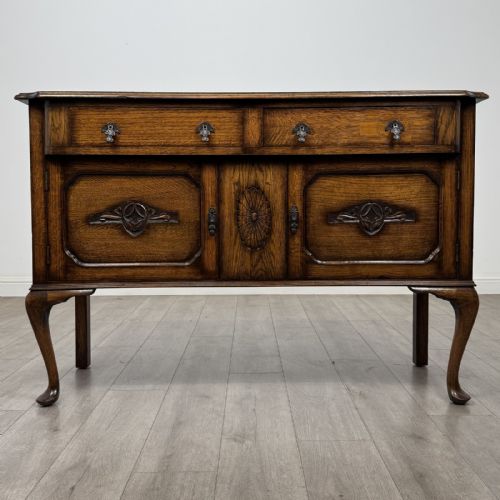
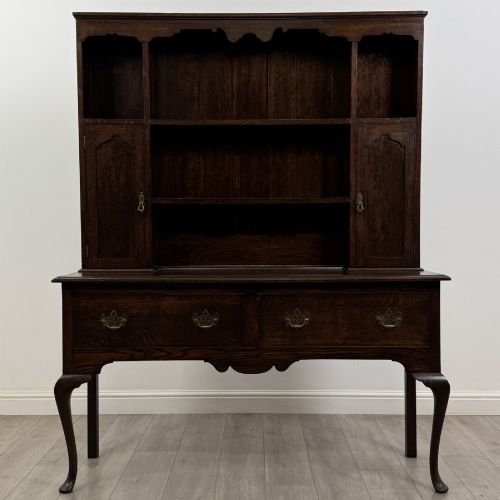
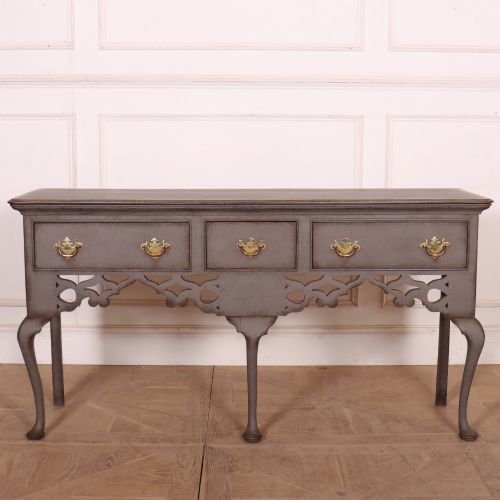
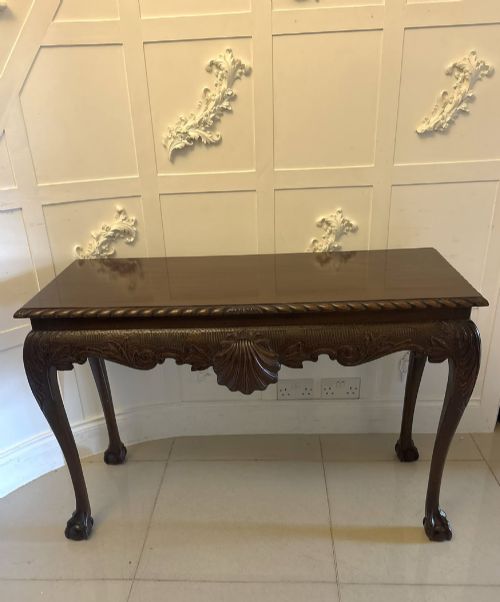
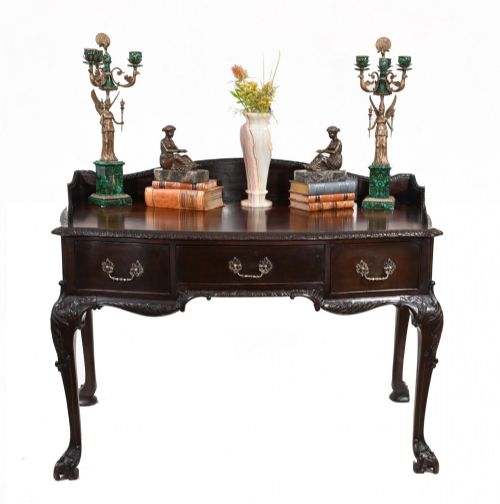
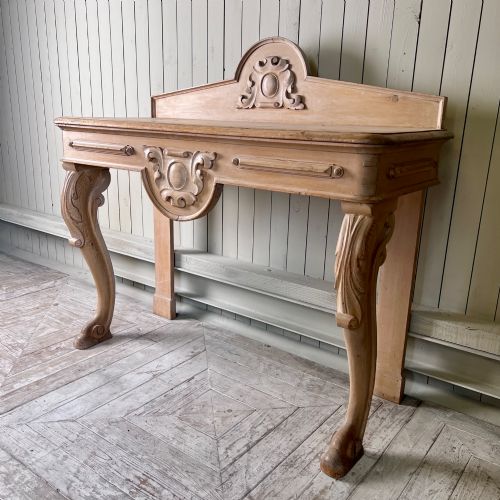
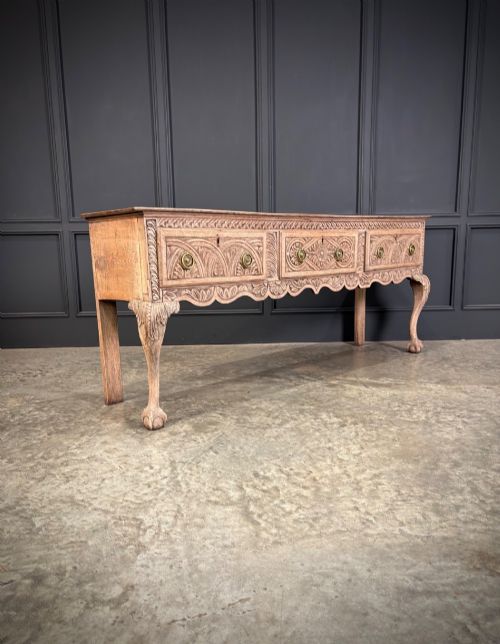
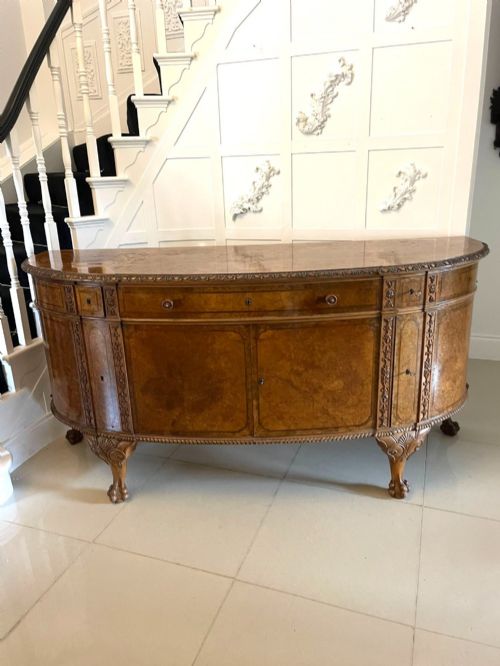
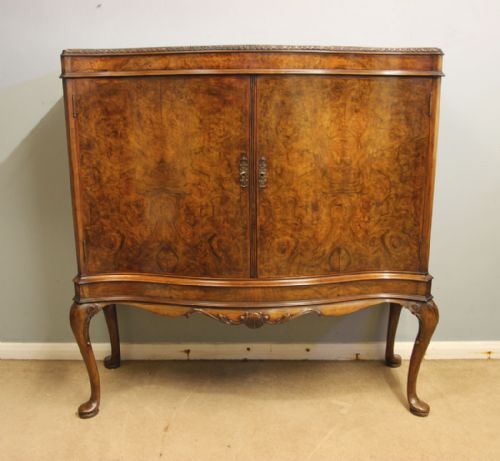
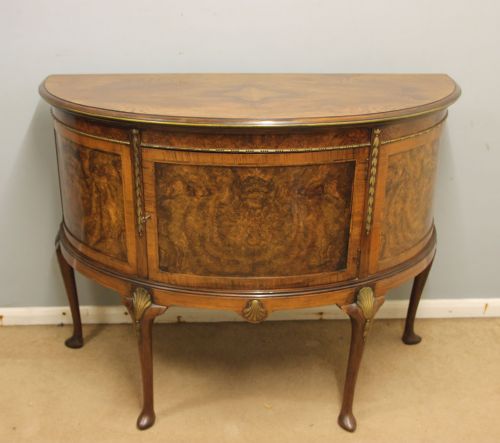
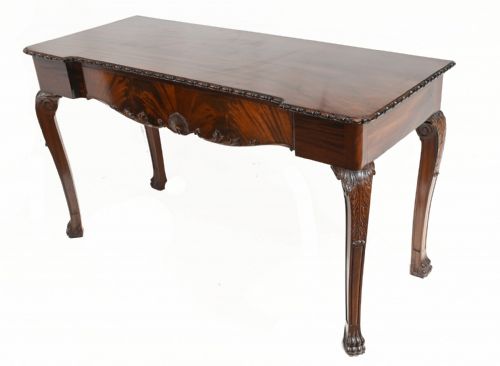
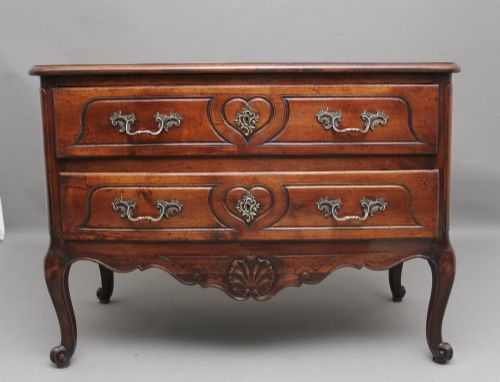
Carved Cabriole Sideboard
A carved cabriole sideboard unites formal storage with the characteristic curved leg of the eighteenth-century revival.
Carved Cabriole Sideboard
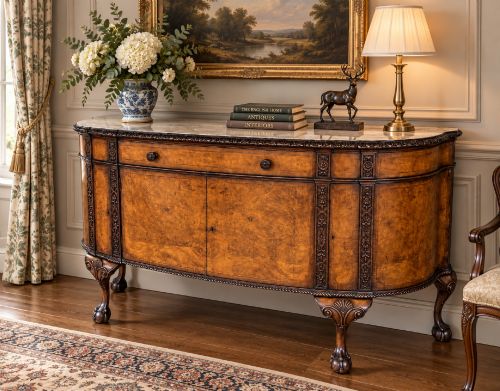
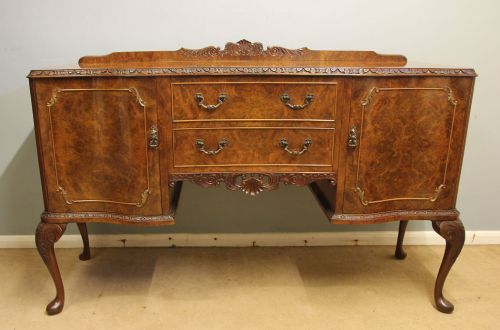
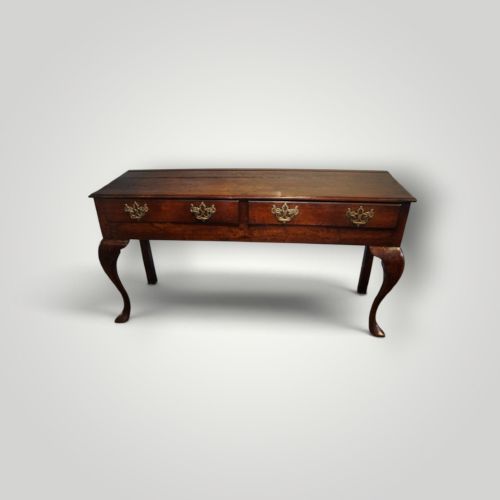
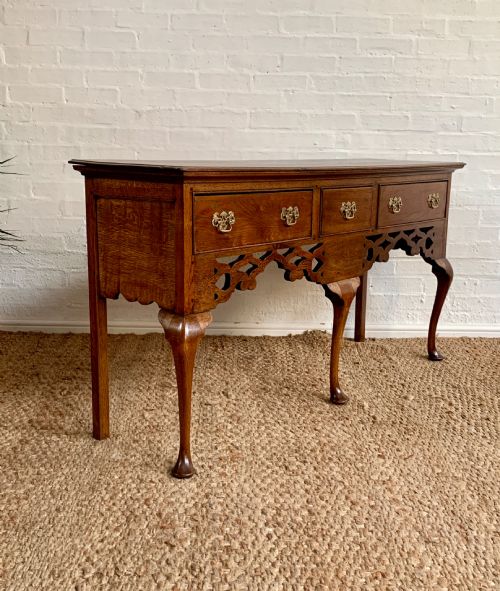
A carved cabriole sideboard represents a broad category of dining and serving furniture defined by distinctive leg forms and substantial timber construction. When you search for a carved cabriole sideboard, you meet pieces ranging from eighteenth-century country oak dressers to burr walnut servers and mahogany serving tables produced during the Victorian, Edwardian and later revival periods.
The primary forms on this page include traditional dresser bases, bowfront sideboards, serpentine servers and console tables mounted on scrolling or carved legs. Oak and walnut dominate the earlier and provincial examples, whilst mahogany and burr walnut appear frequently in Georgian revival and later twentieth-century interpretations.
Origin and period vary significantly across the inventory, spanning English country workshops, French provincial cabinets, and formal Georgian style dining room pieces. These items serve primarily as dining room storage or serving surfaces, bringing prominent timber figuring and carved detail into domestic interiors.
How they were made
Cabinet makers utilised solid timbers such as oak, mahogany, walnut and pine for the structural carcasses, drawer linings and framing. Selected items incorporate decorative veneers, most notably burr walnut and figured mahogany, applied to drawer fronts and cabinet doors to create striking grain patterns.
Carving techniques vary from simple hand-chiselled mouldings and Green Man motifs on regional oak pieces to elaborate rococo shellwork and acanthus leaf details on revival console tables and serving furniture. Cabriole legs were shaped from solid stock, often integrating pad, claw and ball, or hoof feet at the terminals.
Secondary materials such as brass drop handles, keyhole escutcheons, marble tops and glazed door panels complement the timber framework. French polishing, wax finishing and hand-painting were employed to protect the wood and enhance its natural lustre.
Carved Cabriole Sideboard Retail Price Guide 2026
Typical asking prices for carved cabriole sideboard among the pieces listed under this phrase on Sellingantiques today, from the lower quarter to the upper quarter. They describe what is for sale here now, not the wider market.
Listings feature items from the 18th Century, Victorian, Edwardian, and 1920s periods, constructed primarily in oak, walnut, mahogany, and burr walnut.
What varies in quality
Quality in these items rests upon the selection of timber and the precision of the cabinet work. Superior pieces display continuous, well-matched grain across wide surfaces and crisp, deep relief carving executed by hand rather than machine duplication.
The construction of the carcass and drawers indicates the standard of manufacture, where tight dovetail joints and solid timber drawer linings distinguish finer workshops from simpler regional output. Proportions and the grace of the cabriole curve dictate the overall aesthetic balance of the piece.
Gillows·Elkington & Co·Epstein
The Carved Cabriole Sideboard Glossary
- Cabriole leg
- A furniture leg that curves outward at the knee and tapers inward toward the ankle, imitating animal limbs. This form became prominent during the Queen Anne and Chippendale periods.
- Dresser base
- A low, heavy wooden cabinet fitted with drawers and occasionally cupboards beneath a broad top surface. These serve as practical precursors to the modern sideboard.
- Burr walnut
- A prized timber veneer obtained from the irregular growths on walnut trees, yielding highly decorative, swirling grain patterns. It is frequently utilised on high-grade sideboards and cabinets.
- Serpentine front
- A furniture front characterised by a concave central section flanked by two convex ends, or the reverse. This undulating profile requires skilled joinery.
- Bowfront
- A convex, outwardly curved furniture front that projects forward from the frame. It gained popularity in late eighteenth and nineteenth-century case pieces.
Carved Cabriole Sideboard: Frequently Asked Questions
What is a cabriole leg?
A cabriole leg is a furniture support that bends outward in a convex curve at the top and inward in a concave curve below, ending in a distinct foot. It derives its shape from animal legs and defines much of the stylistic vocabulary found across eighteenth-century and revival furniture.
Craftsmen shaped these components from solid timber to bear weight while providing a graceful visual transition between the body of the sideboard and the floor. The presence of this leg type immediately signals an influence from Queen Anne, Georgian or later revival design traditions.
Where should I place a serving table?
A serving table fits naturally in a dining room, hallway or living space where its surface and storage can be utilised daily. Long, narrow console and serving tables work effectively against plain walls beneath mirrors or artwork without obstructing walkways.
Due to their decorative wood grains and carved legs, these pieces often serve as focal points within a room. Placing them away from direct heat sources and strong sunlight protects the timber and finish over time.
What is the difference between a sideboard and a dresser base?
A sideboard is primarily designed as a dining room cabinet for storing cutlery, linen and serving dishes, often featuring drawers and cupboards below a long flat top. A dresser base stems from traditional country kitchen furniture and typically presents a heavier, more utilitarian timber construction with deep drawers.
While some dresser bases originally supported plate racks above, sideboard designs focused entirely on enclosed storage and serving space. Over time, the terms frequently overlap in antique descriptions as forms evolved across different regions.