





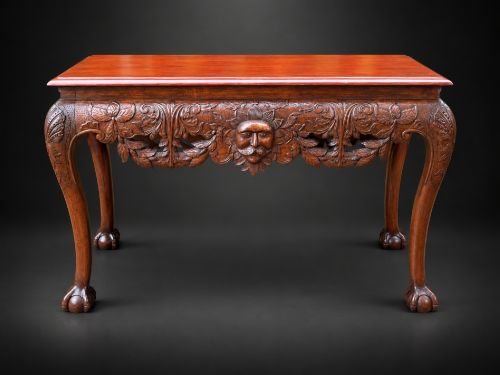

Carved Cabriole Buffet
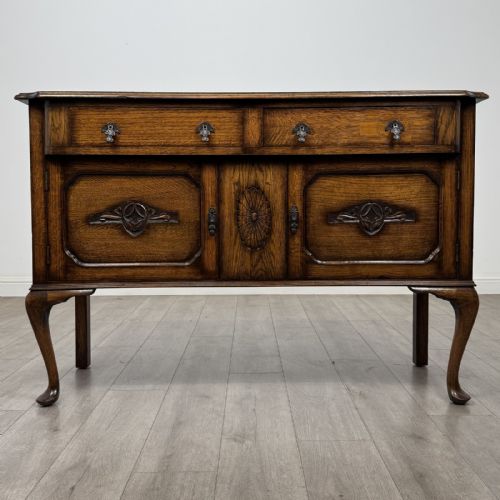
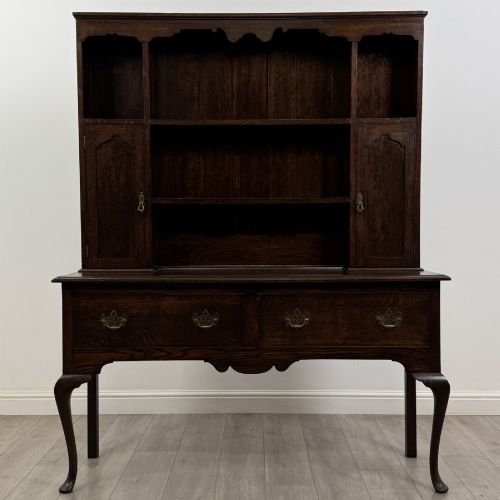
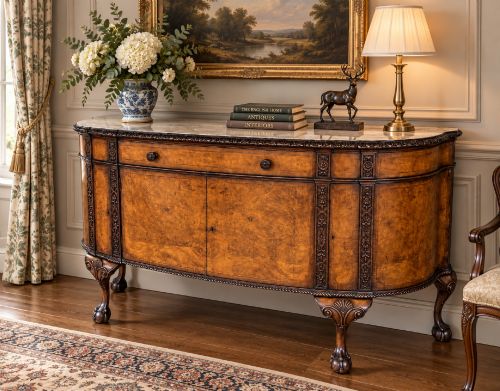
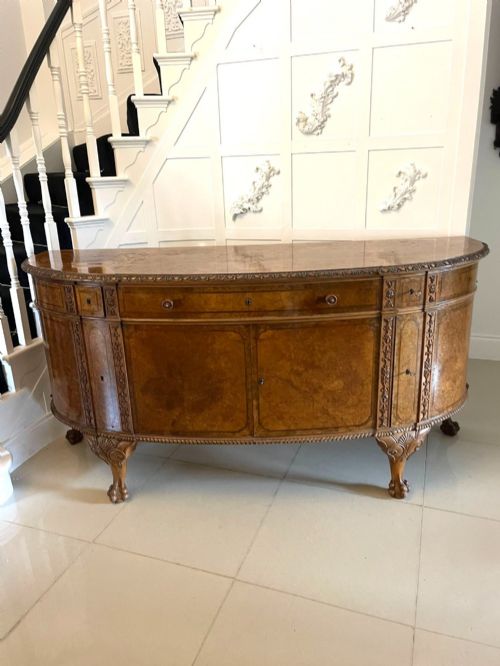
A carved cabriole buffet brings presence to a room through curved legs and figured timber.
Carved Cabriole Buffet
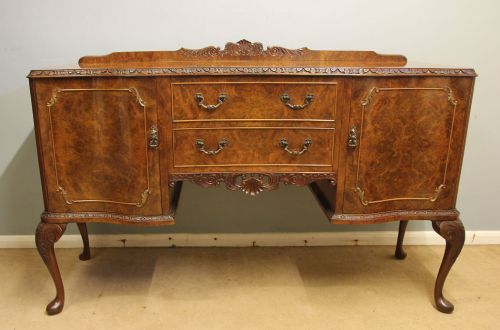
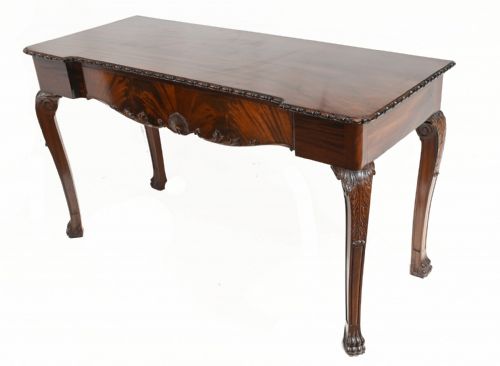
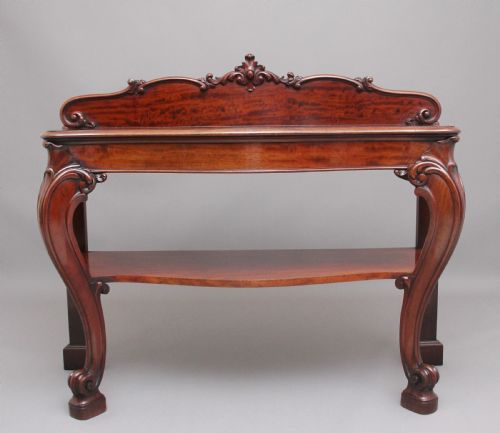
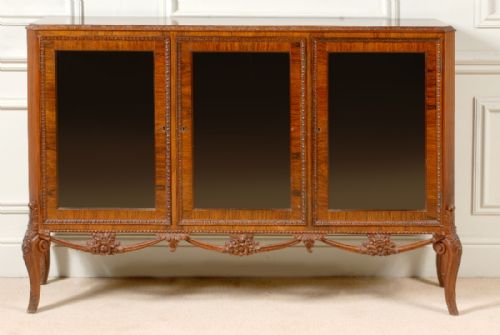
A carved cabriole buffet combines storage and display, appearing as sideboards, serving tables, side cabinets, and servers across this selection. These pieces span periods from the eighteenth century through the Edwardian era and into the nineteen-twenties and nineteen-thirties.
Makers drew on various design vocabularies, producing examples in Queen Anne Revival, Georgian Revival, Chippendale Style, Jacobean Revival, and French Provincial. Walnut, mahogany, and oak dominate the forms, often enriched with burr walnut veneer or hand carving.
How they were made
Craftsmen built these pieces using solid timbers such as mahogany, oak, and walnut, frequently applying burr walnut veneer to create striking grain patterns on drawer fronts and doors. Brass hardware and wrought iron details provided functional and decorative accents.
Construction involved traditional joinery paired with hand carving, particularly along the distinctive cabriole legs. Parquetry tops and glazed doors also appear, showing specialised cabinet-making techniques from different regional workshops.
Carved Cabriole Buffet Retail Price Guide 2026
Typical asking prices for carved cabriole buffet among the pieces listed under this phrase on Sellingantiques today, from the lower quarter to the upper quarter. They describe what is for sale here now, not the wider market.
Some sideboards arrive with their original cutlery sets tucked inside, ready for the next grand dinner party.
What varies in quality
The choice of timber and veneer creates a distinct visual hierarchy, where well-matched burr walnut or dense mahogany elevates a piece above standard utility items. The crispness and depth of the hand carving along the legs and friezes also separate standard workshop output from finer productions.
Proportion and execution of the revival styles dictate overall refinement, with maker attribution adding further distinction. Pieces bearing signatures from established cabinet-makers demonstrate superior structural integrity and design balance.
Gillows·Hille of London·Epstein
The Carved Cabriole Buffet Glossary
- Cabriole leg
- A furniture leg that curves out in a convex shape at the top and curves in in a concave shape at the bottom, ending in a foot. This form derives from animal legs and became a defining feature of eighteenth-century and revival furniture.
- Burr walnut
- Timber taken from a walnut tree growth where the grain has grown in a deformed swirl pattern, sliced into veneer. It creates highly decorative, mottled patterns highly prized by cabinet-makers.
- Serving table
- A long, narrow table designed for dining rooms to hold dishes before service. These frequently share forms with sideboards and servers.
- Serpentine front
- A furniture front characterised by a concave central section flanked by two convex ends, or the reverse. This shape requires considerable skill to construct and veneer.
- Parquetry
- Geometric wood mosaics used for surface decoration, commonly seen on table and cabinet tops. Artisans fit small pieces of contrasting timber together to form patterns.
Carved Cabriole Buffet: Frequently Asked Questions
What is a cabriole buffet?
A cabriole buffet is a dining room or living space storage piece defined by its characteristic curved legs. These items function as sideboards, servers, and side cabinets.
They appear in various revival styles, utilising timbers like mahogany, oak, and walnut.
How do I style a buffet?
These pieces suit dining rooms, hallways, and living areas as serving surfaces or display consoles. Pair them with table lamps, mirrors, or ceramics to complete the arrangement.
Their robust timber construction allows them to anchor larger wall spaces effectively.
How do I date a buffet?
Dating relies on timber selection, hardware, joinery methods, and stylistic revival cues. Pieces range from eighteenth-century examples to twentieth-century revivals.
Maker marks and construction details help narrow down the exact period.
What is burr walnut?
Burr walnut is a specialised wood veneer sourced from tree burls. It exhibits swirling, complex grain patterns that catch the light.
Cabinets featuring this veneer were typically produced by finer workshops.