

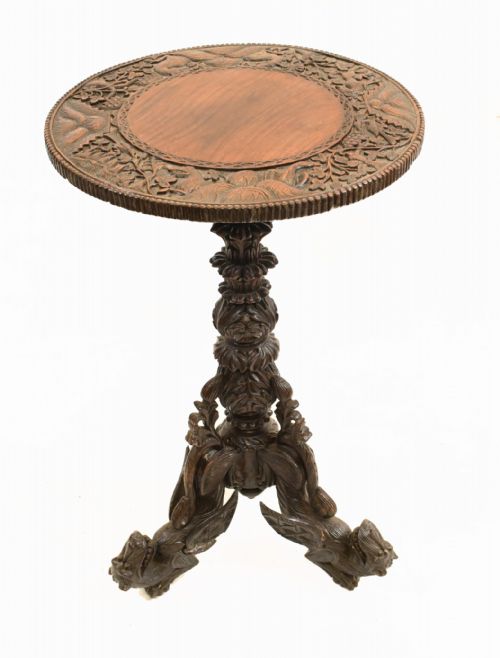
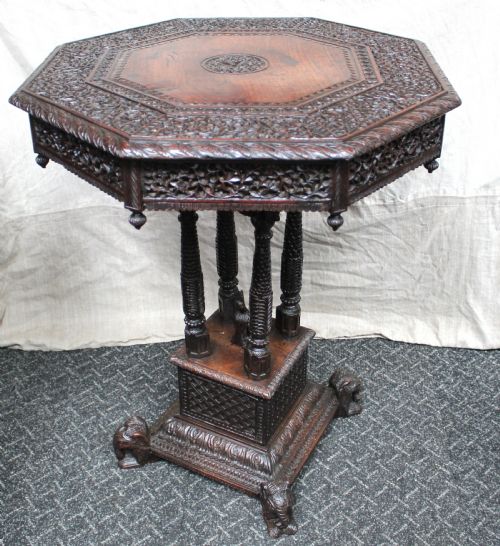


Carved Burmese Occasional Table
A carved Burmese occasional table brings intricate colonial craftsmanship and rich timber into a room, offering both history and utility.
Carved Burmese Occasional Table
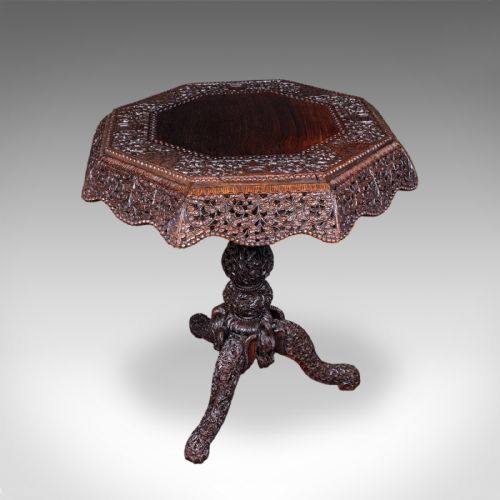
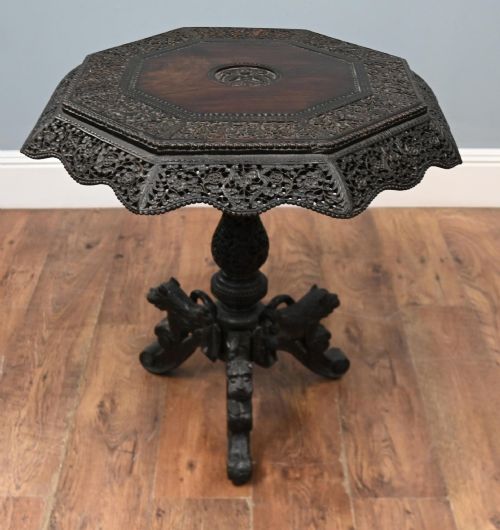
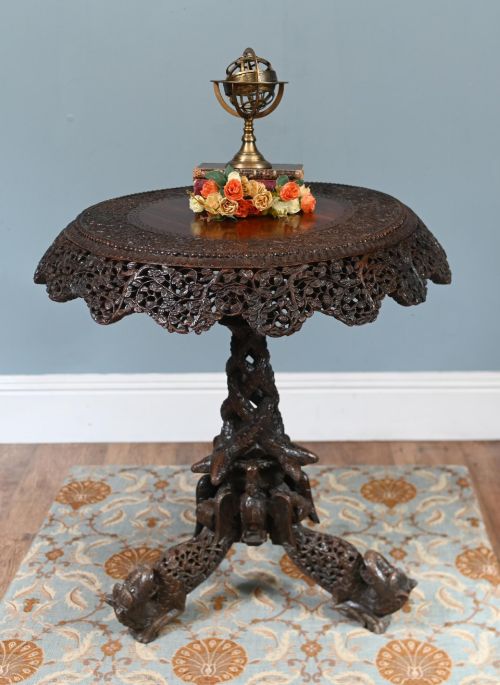
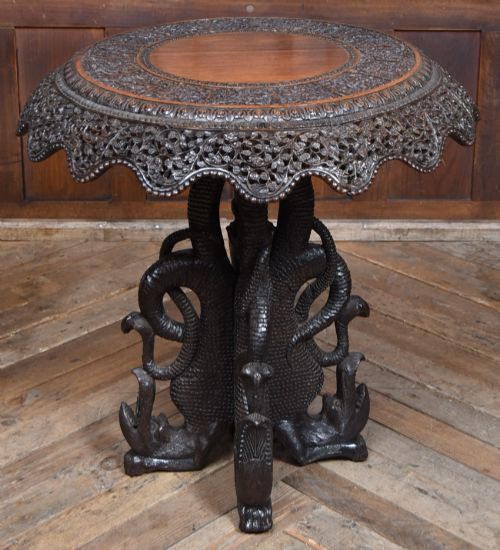
A carved Burmese occasional table is a low or side table originating from Myanmar, often produced during the Victorian era and the late nineteenth century. These items include side tables, tea tables, two tier versions, and round or octagonal formats designed for colonial interiors.
Most examples found on this page date from the nineteenth century, encompassing periods from the eighteen sixties to eighteen nineties, alongside occasional later pieces. Makers utilised traditional forms to create compact occasional furniture suited for display and daily use.
Materials and construction
Artisans constructed these pieces using dense regional timbers such as teak, padouk, and other hardwoods, occasionally incorporating lacquered wood or bone inlay. The selection of heavy tropical woods provided a stable foundation for deep, continuous carving.
Construction techniques relied on regional joinery and hand carving to produce heavily decorated surfaces and figural supports like elephant legs. Lacquer finishes appear on specific examples, adding a smooth surface coating over the wooden core.
Carved Burmese Occasional Table Retail Price Guide 2026
Typical asking prices for carved burmese occasional table among the pieces listed under this phrase on Sellingantiques today, from the lower quarter to the upper quarter. They describe what is for sale here now, not the wider market.
Common forms include octagonal tea tables, two-tier side tables, and occasional tables supported by carved elephant legs.
Quality variations
The depth and crispness of the hand carving distinguish finer examples from simpler production, particularly where foliage and figural elements meet the timber. Superior pieces exhibit precise detailing across the entire surface rather than superficial stamping or shallow incision.
The choice of material also marks a distinction, with dense padouk and figured teak carrying greater weight and structural integrity than secondary hardwoods. Condition and the preservation of original lacquer or surface patination influence the character of each piece.
The Carved Burmese Occasional Table Glossary
- Padouk
- A heavy, durable tropical hardwood with a reddish hue used in fine nineteenth-century furniture. It takes a high polish and resists shrinkage.
- Teak
- A dense, oil-rich timber valued for its stability and resistance to decay. It forms the primary structure of many colonial tables.
- Anglo-Burmese
- A style describing furniture made in Burma during the British colonial period, combining local craftsmanship with British room forms. These pieces often feature dense foliate carving.
- Occasional table
- A small, movable table intended for specific, intermittent uses such as holding a lamp or tea service. They appear in round, octagonal, and two-tier configurations.
Carved Burmese Occasional Table: Frequently Asked Questions
How do I date a carved Burmese table?
Dating relies on recorded production eras, wood choice, and stylistic markers documented across nineteenth-century examples. Pieces often span from the eighteen sixties to the turn of the twentieth century.
Examination of the timber density and carving depth helps separate mid-Victorian pieces from later twentieth-century iterations. Labels or specific colonial construction traits occasionally narrow the origin.
What woods were used for these tables?
Carpenters utilised dense regional timbers such as teak and padouk, which tolerated intricate hand carving without splintering. These heavy woods provided durability for colonial household items.
Alternative examples feature lacquered wood or secondary hardwoods, sometimes accented with bone details. Each material responds differently to cleaning and environmental humidity.
Are these tables sturdy enough for daily use?
The heavy tropical hardwoods used in their construction offer inherent strength and stability for holding lamps or small objects. Their robust frames were built to withstand colonial climates and transport.
Care should be taken with joints and protruding carved elements during relocation. Regular dusting preserves the intricate crevices of the wood without damaging the surface.
What is an Anglo-Burmese style piece?
The Anglo-Burmese style combines traditional Burmese woodcarving techniques with European furniture forms required by British residents. This fusion resulted in compact occasional tables tailored for Victorian parlours.
These items frequently display deep relief work depicting foliage, animals, or local figures. They represent a specific period of cross-cultural design exchange in nineteenth-century Myanmar.