




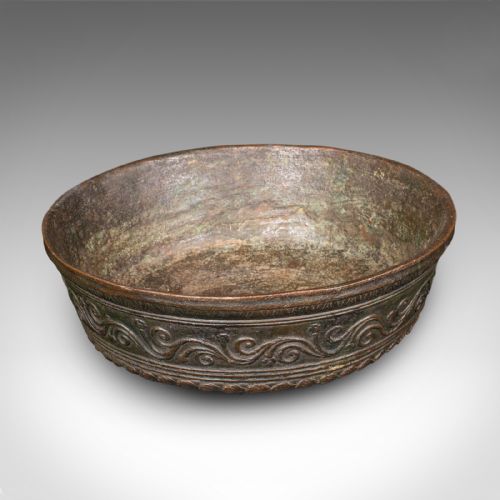

Carved Bronze Censer
These pieces of carved bronze censer range from scholar's vessels to ritual bowls, bringing historic metalwork and traditional incense burning into a modern interior.
Carved Bronze Censer
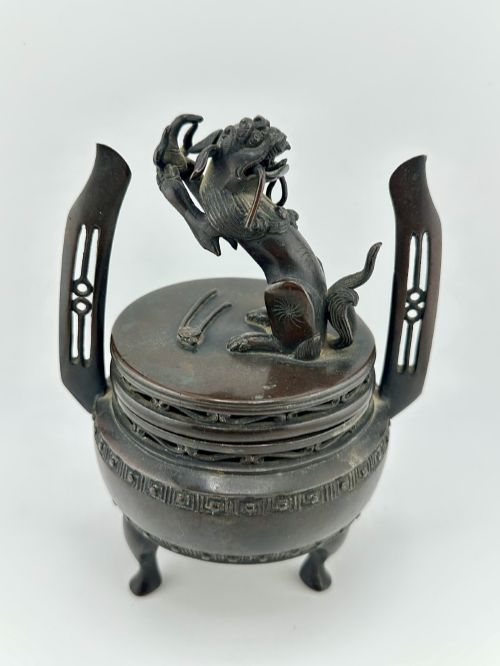
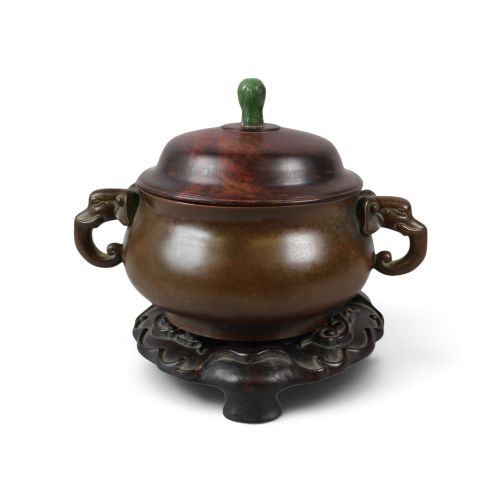
When you search for a carved bronze censer, you encounter heavy metal vessels produced across multiple centuries in China and Japan, often accompanied by custom wooden stands. These forms span tripod incense burners with covers, ritual vessels such as the gui and fangding, and decorative bowls designed for scholar's desks.
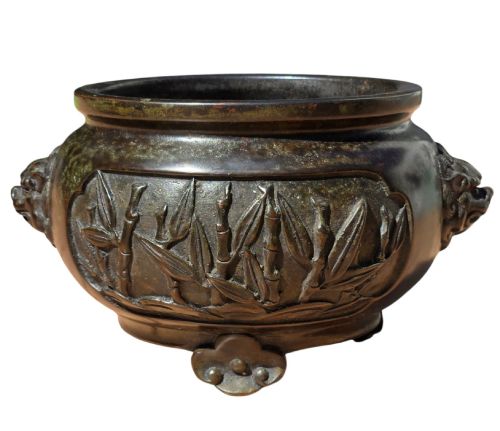
The selection on this page relies heavily on Chinese dynasties and Japanese periods, notably the Ming and Qing dynasties alongside the Edo and Meiji periods. Pieces range from scholar's table items featuring relief panels to large ritualistic food bowls and heavy cast incense burners.
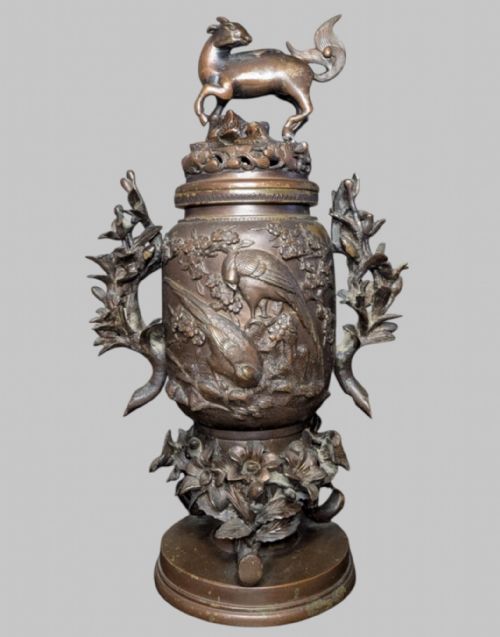
Many examples arrive complete with specialised fittings, including carved hardwood or zitan stands, jade finials, and qilin or goat handles. These functional vessels served both ritual purposes and domestic fragrance burning.
How they were made
The construction of a carved bronze censer relies primarily on metal casting techniques, producing heavy bodies that frequently incorporate patinated bronze or brass. Artisans worked molten metal into complex shapes, including tripod legs, lion-mask motifs, and elephant-head handles.
Secondary materials play a structural and decorative role, with makers pairing the metal vessels with carved hardwood, zitan wood, and jade. Finials and stands utilise these contrasting textures to complement the dark, patinated surfaces of the central metalwork.
Several animals keep watch over the smoke, from mythical qilin and dragons to domestic goats perched atop the covers.
What varies in quality
Quality in a carved bronze censer rests upon the weight of the metal cast and the crispness of the surface relief, such as the detail found in scholar's panels or animal-mask handles. Heavier vessels demonstrate a more substantial use of bronze, while finer examples show disciplined modelling in elements like qilin finials and dragon motifs.
The presence of original associated elements, such as custom-carved hardwood stands and jade finials, elevates the integrity of an object. Patination also dictates visual success, where a deep, stable surface finish enhances the underlying bronze form.
The Carved Bronze Censer Glossary
- Archaistic
- A style that consciously imitates ancient ritual bronzes from earlier dynasties. This aesthetic runs through many Qing and Ming dynasty pieces.
- Gui
- An ancient Chinese ritual bronze vessel used for food offerings, characterised by a bowl shape and prominent handles. These forms often double as incense burners in later periods.
- Koro
- The Japanese term for an incense burner, frequently resting on legs and fitted with a decorative cover. These often feature animal finials like goats or dragons.
- Qilin
- A mythical hooved Chinese creature often depicted as a finial on censer covers. Its sculptural form serves as the handle for lifting the lid.
- Zitan
- A dense, heavy tropical timber used for custom stands accompanying fine Asian metalwork. This dark wood provides a stable base for heavy bronze bowls.
Carved Bronze Censer: Frequently Asked Questions
How do I clean a bronze censer?
Maintenance requires only gentle dusting with a dry cloth to protect the historic patina and surface details. Avoid using metal polishes or water, which can strip the aged finish.
Preserving the original surface texture maintains the visual integrity of the metal. Aggressive cleaning removes the oxidation built up over centuries of handling.
Are these censers meant for burning incense?
While originally designed for ritual burning or scholar's fragrance use, many buyers today display them as decorative objects. The metal bowls accommodate modern or traditional incense if used carefully.
Placing a protective layer inside prevents direct heat or ash damage to the historic base. Most collectors choose to appreciate the sculptural form rather than active burning.
How do I distinguish Ming from Qing pieces?
Ming dynasty vessels often exhibit restrained scholar's designs, such as subtle relief panels and dense, heavy casting. Qing pieces frequently embrace archaistic revivals and elaborate animal-mask handles.
Stylistic markers and casting weight help separate these periods in the record. Examining the handle formation and patination provides further clues to the date of manufacture.