


Dragon Bronze Censer
These dragon bronze censer examples bring cast metal artistry and intricate mythical iconography straight to your interior.
Dragon Bronze Censer
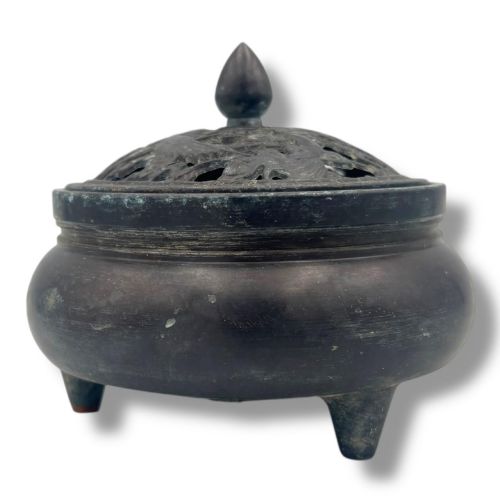
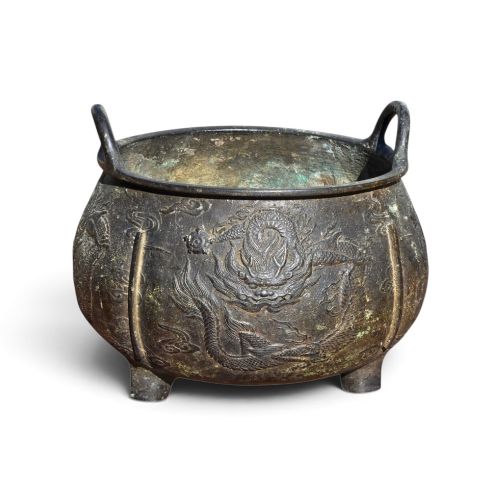
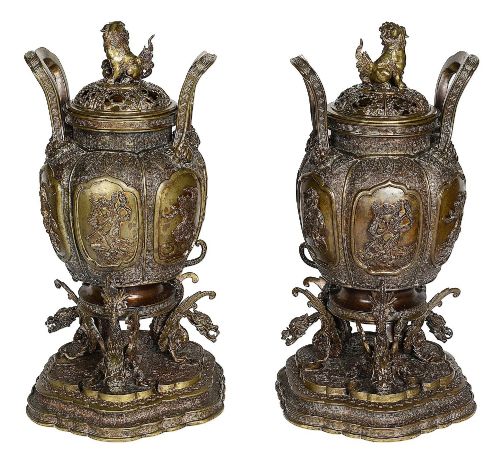
A dragon bronze censer functions as a vessel for burning aromatic resins and woods, taking the form of tripod bowls, lidded urns, and monumental jardiniere formats. When you search for a dragon bronze censer, you encounter examples originating from Chinese dynasties, Meiji period Japan, and French Japonisme workshops.
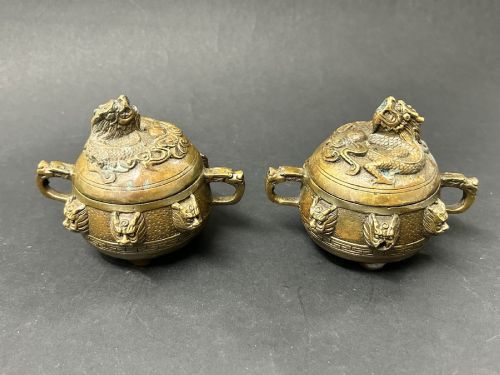
The most common form on this page is the 19th-century Chinese tripod vessel featuring dragon handles and cast phoenix or mythical beast lids. Pieces span from the late 16th-century Ming Dynasty through to the late Qing period and Victorian-era imports.
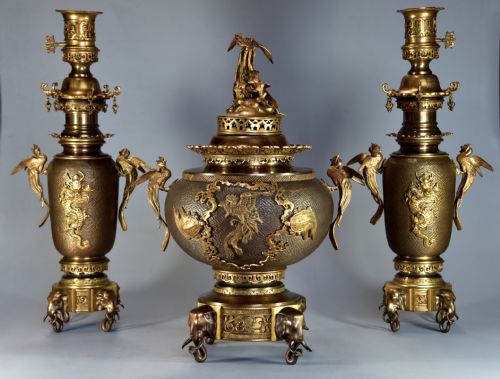
Beyond traditional altar vessels, the selection includes related oriental plant stands, large bronze vases, and associated incense burner sets. Each item integrates cast metalwork with the distinct sculptural motifs of Asian and European revivalist design.
How they were made
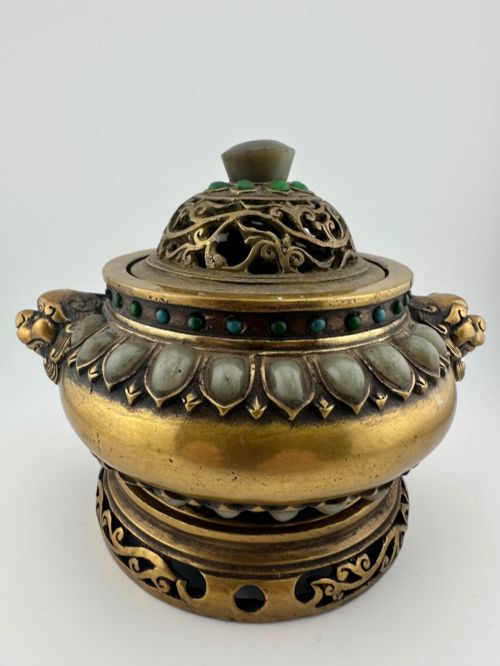
The primary material used is bronze, alongside variations in brass, patinated bronze, parcel-gilt bronze, and cast bronze. Artisans shaped these metals through casting techniques, producing thick-walled vessels with integrated mask handles and relief decoration.
Surface treatment often involves patination to darken the metal, supplemented by gilt highlights and parcel-gilt finishes. Certain decorative examples incorporate hardstone and jade inlays set directly into the bronze structure.
One heavy bronze censer tips the scales at six kilograms, ensuring it stays firmly put even if a mythical dragon tries to fly away.
What varies in quality
Surface finish and material composition also separate standard production from superior examples. The presence of original carved hardwood stands, complex patination, and secure jade or hardstone inlays elevate the status of a vessel.
The Dragon Bronze Censer Glossary
- Tripod censer
- An incense burner supported by three distinct legs, commonly seen in Chinese metalwork. This configuration provides stability on altar tables and domestic surfaces.
- Patinated bronze
- Metal treated chemically or environmentally to produce a controlled surface colour, ranging from deep brown to metallic green. This finish protects the alloy while enhancing visual depth.
- Parcel-gilt bronze
- A technique where selective areas of the bronze surface receive a thin layer of gold leaf or gilding. This creates contrast against the darker patinated body.
- Japonisme
- A Western artistic movement of the late nineteenth century influenced by Japanese art and design. French workshops utilised this aesthetic to produce European interpretations of eastern forms.
- Jardiniere
- A decorative pot or stand designed to hold plants or floral arrangements. These metal vessels often share decorative motifs and manufacturing techniques with incense burners.
Dragon Bronze Censer: Frequently Asked Questions
How do I use a bronze censer?
These vessels were originally designed to burn aromatic incense sticks, cones, or resins during domestic rituals and ceremonies.
In modern spaces, they serve as sculptural display objects on mantelpieces, tables, and plant stands without needing to burn incense.
Are these censers Chinese or Japanese?
The inventory contains both Chinese productions spanning the Ming and Qing dynasties alongside Japanese Meiji period and Edo era items.
Stylistic markers such as specific dragon motifs, reign marks, and regional casting techniques help distinguish their cultural origin.
What is the difference between a censer and a jardiniere?
A censer is specifically constructed as a lidded or open vessel intended for burning incense, frequently featuring tripod feet and pierced covers.
A jardiniere functions as a planter or decorative bowl designed to contain potted plants, lacking the specific ventilation lids found on incense burners.
How do I date a bronze censer?
Dating relies on stylistic periods, manufacturing marks such as Xuande or Qianlong references, and the specific patina of the metal alloy.
Late nineteenth-century Victorian imports often display distinct European influence or heavy cast dimensions compared to earlier dynasty works.