

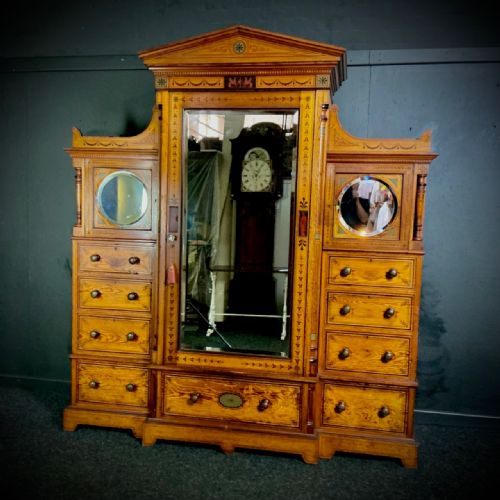
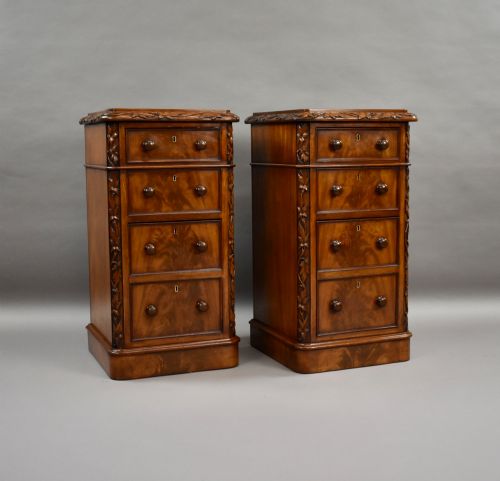
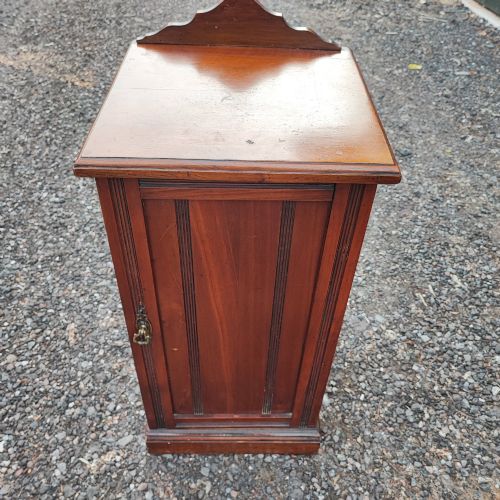
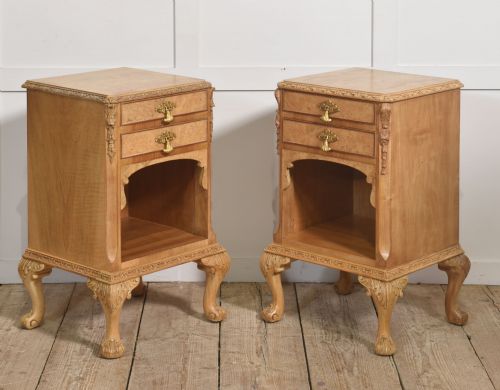





Carved Bedroom Pedestals
Carved bedroom pedestals bring practical surface space and period timber figure to the bedside, spanning Victorian and Edwardian centuries.
Carved Bedroom Pedestals
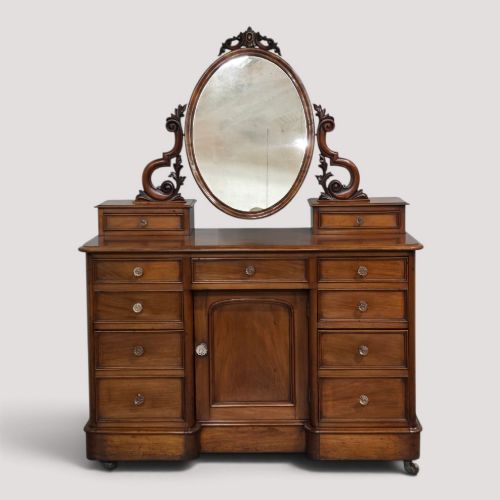
Carved bedroom pedestals encompass bedside cabinets, cupboards, chests of drawers and washstands designed to sit beside a bed or function within a larger bedroom suite. When you search for carved bedroom pedestals, you meet items originating predominantly from the Victorian and Edwardian eras, alongside pieces dated around the late nineteenth and early twentieth centuries.
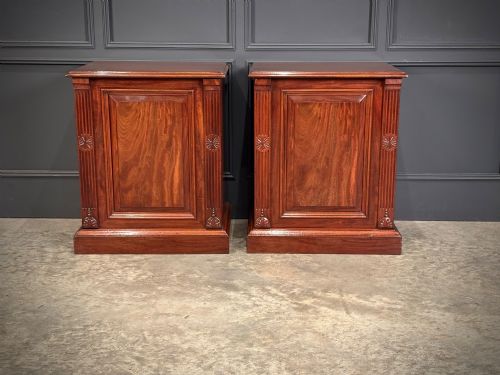
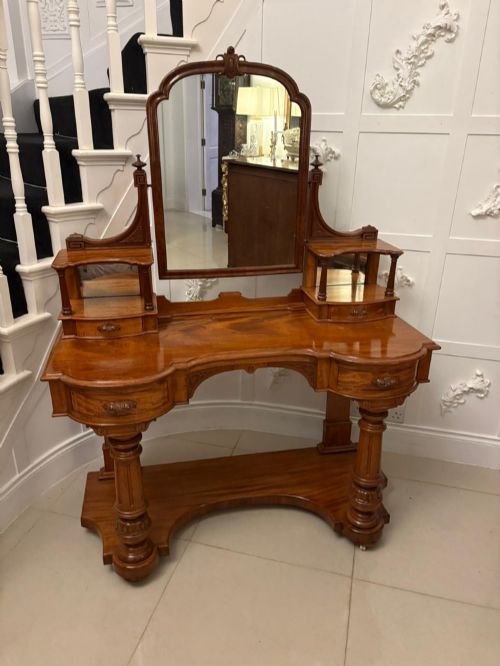
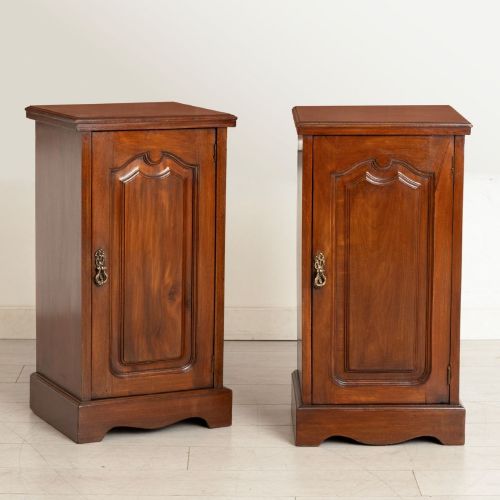
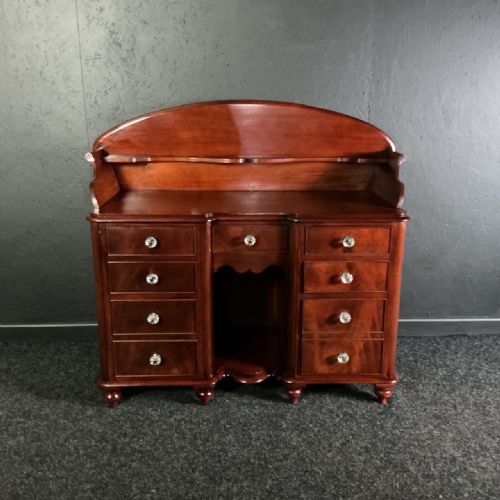
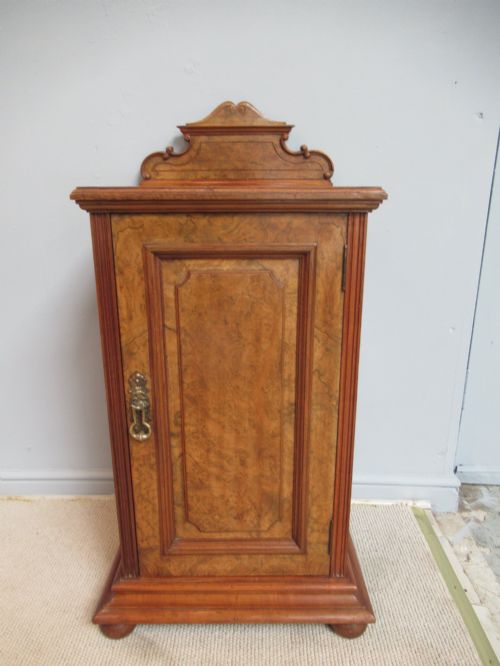
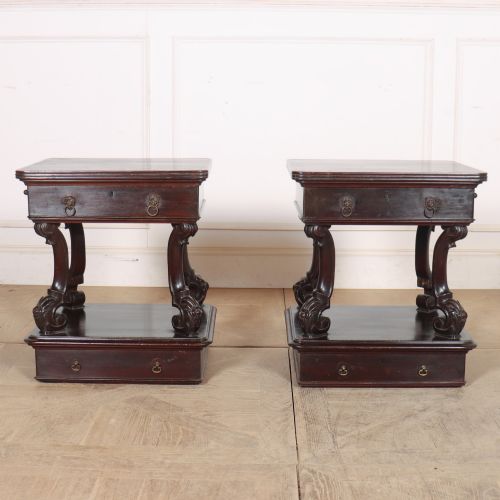
The form frequently appears as a single cabinet or a matched pair, offering enclosed storage behind a panelled door or accessible tiers via small drawers. Alongside standard bedside cupboards, listings include dressing tables and washstands sharing similar pedestal construction.
Originating largely from British workshops, pieces also reflect French, Irish and Gothic stylistic influences that dictate the nature of the timber carving.
How they were made
Cabinet makers relied heavily on solid and veneered timbers, utilising mahogany, walnut, burr walnut, satin birch, ash and oak to build the foundational carcase. Exotic hardwoods and marble tops also appear on select cabinets and washstands, adding weight and contrasting texture.
Surface enrichment relies on carved details, panelled doors and distinct grain patterns brought out through traditional polishing methods. Brass hardware frequently provides structural and decorative contrast against the darker tones of mahogany and walnut.
Carved Bedroom Pedestals Retail Price Guide 2026
Typical asking prices for carved bedroom pedestals among the pieces listed under this phrase on Sellingantiques today, from the lower quarter to the upper quarter. They describe what is for sale here now, not the wider market.
Listings feature timbers including mahogany, walnut, burr walnut, marble, pitch pine, oak, satin birch and ash across Victorian and Edwardian periods.
What varies in quality
Quality rests primarily in the selection of timber veneers, where highly figured burr walnut or carefully matched mahogany grain separates standard utility pieces from finer items. The crispness and depth of the timber carving further distinguish workshop output, alongside the integration of secondary woods and internal drawer construction.
Proportion and symmetry also dictate standard, particularly when evaluating pairs of cabinets where matching grain orientation and uniform height reflect deliberate craftsmanship.
The Carved Bedroom Pedestals Glossary
- Burr walnut
- A highly figured timber harvested from the wart or burl growths of walnut trees, prized for its swirling, decorative grain patterns. It appears frequently on luxury Victorian cabinet doors.
- Pedestal
- A foundational support structure or a standalone cabinet housing internal storage beneath a flat top. They form the structural base for many bedside cupboards and dressing tables.
- Washstand
- A bedroom piece traditionally fitted with a marble or timber top to hold a wash basin and pitcher. Many examples share the pedestal proportions found in bedside cabinets.
- Gothic Revival
- An architectural and decorative style drawing on medieval motifs, visible in pointed arches and heavy carving. Pieces from this movement display robust structural lines.
- Satin birch
- A pale, lustrous timber utilised for bedroom furniture during the nineteenth century. Its bright grain offers a distinct visual contrast to darker mahogany.
Carved Bedroom Pedestals: Frequently Asked Questions
How do I date a Victorian bedside cabinet?
Dating relies on observing timber choices, construction methods, and stylistic cues recorded across the period from the mid to late nineteenth century. Earlier Victorian pieces often utilise dense solid mahogany, while later decades favour burr walnut veneers and lighter ash or satin birch.
Hardware choices, such as brass pulls and hinges, alongside stamp marks or pencil inscriptions inside drawers, offer further chronological clues.
Are these pedestals usually sold as pairs?
Many listings feature matched pairs of bedside cabinets designed to flank a double bed symmetrically. Single pedestals also appear frequently, reflecting original configurations where rooms utilised only one bedside table or washstand.
Pairs require careful inspection of the grain and carving to confirm they were built together rather than assembled later.
What woods were used for these pieces?
Makers utilised a wide range of native and exotic timbers, with mahogany and walnut forming the majority of surviving examples. Burr walnut and exotic hardwoods provided decorative surface veneers on luxury cabinets.
Lighter woods such as satin birch, ash and oak also appear, particularly on pieces produced toward the end of the nineteenth century and into the Edwardian period.