



Carved Bear Figure
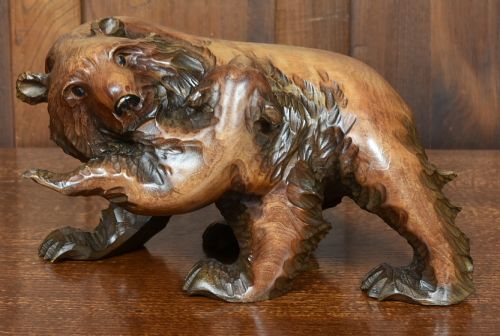
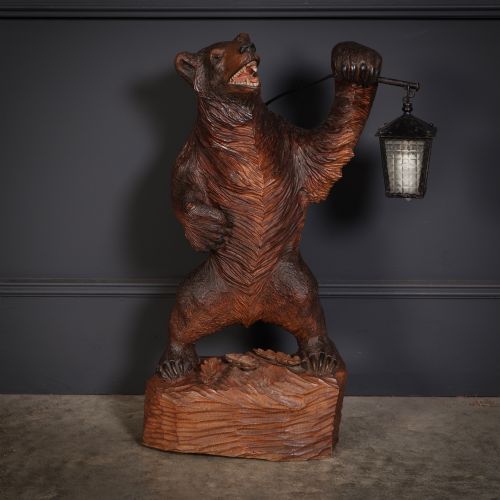
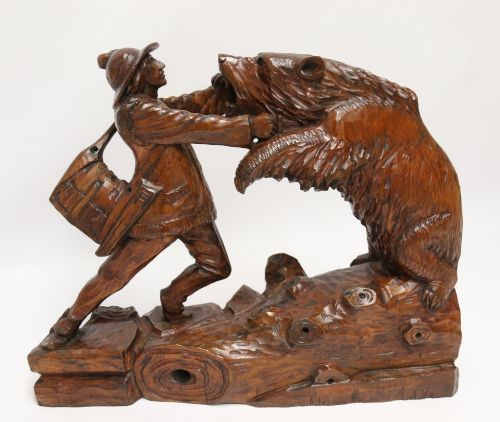
These carved bear figure examples range from compact Black Forest studies to detailed Japanese folk art representations, offering genuine character for any mantelpiece or desk.
Carved Bear Figure
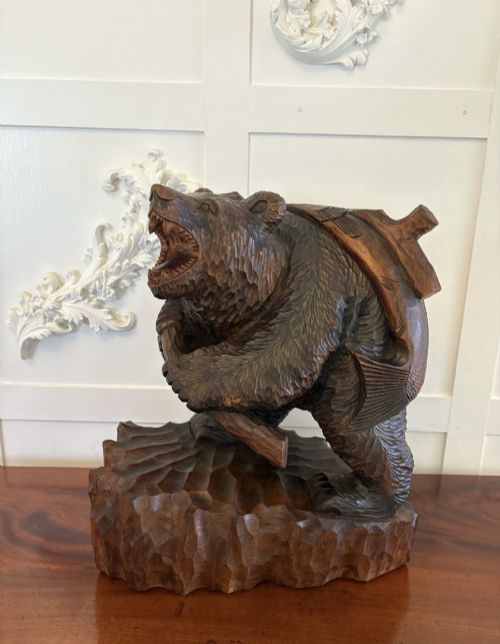
A carved bear figure brings tangible folk art tradition into a room, spanning distinct regional schools such as Swiss, German, and Japanese workshops. These sculptures appear as solitary animals, figures carrying fish, mothers with cubs, or integrated into functional objects like inkstands and condiment sets.
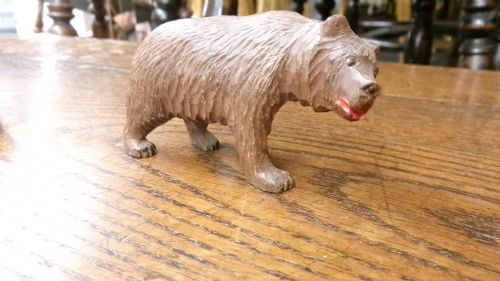
The pieces on this page draw predominantly from the nineteenth century, the Edwardian era, and the Georgian period. Forms range from miniature carvings to large sculptural groups shaped from linden wood, walnut, cedar, and other hardwoods.
Materials and construction
Carvers shaped these objects primarily from linden wood, walnut, cedar, and assorted hardwoods using traditional hand-chiselling techniques. Softer woods like linden allowed artisans to achieve deep relief and textured fur without splitting the material.
Detailing often included applied stud eyes and surface staining to highlight natural wood grain. Artisans working in Japanese and European folk art traditions relied entirely on hand-carved facets to render the musculature and expression of each bear.
Carved Bear Figure Retail Price Guide 2026
Typical asking prices for carved bear figure among the pieces listed under this phrase on Sellingantiques today, from the lower quarter to the upper quarter. They describe what is for sale here now, not the wider market.
Listings feature woods including linden wood, walnut, cedar, and hardwood across nineteenth-century and Edwardian eras.
Judging quality in a carved bear figure
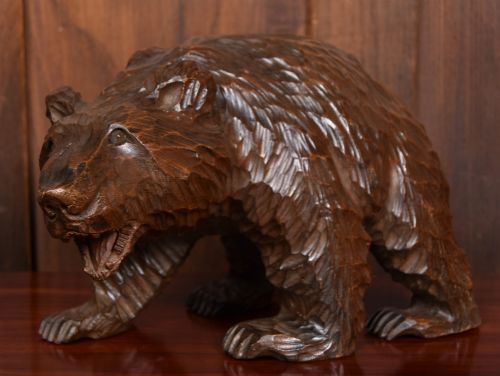
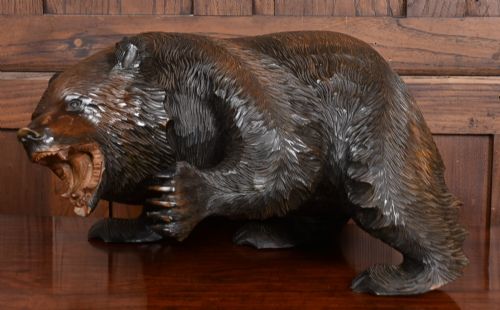
Quality rests upon the naturalism and depth of the carving, distinguishing stiffly blocked forms from lifelike musculature and fur texture. A superior carving shows careful attention to anatomical proportions and expressive posture rather than generic shaping.
The condition of the wood surface and the retention of original details like stud eyes or functional fittings elevate certain pieces. Objects that combine sculpture with utility, such as inkstands, demonstrate higher ambition in design.
The Carved Bear Figure Glossary
- Black Forest
- A regional style of wood carving originating from the forested mountain region in central Europe. These works typically depict local wildlife, particularly bears, rendered in walnut or linden wood.
- Kibori Kuma
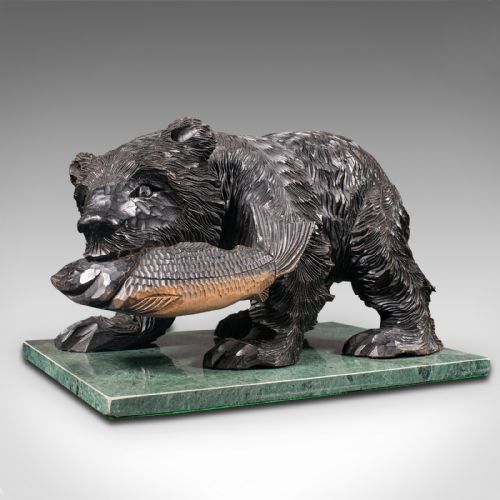
- A traditional style of Japanese wood-carved bear originating from Hokkaido. These figures often hold fish in their jaws and reflect indigenous folk art traditions.
- Linden wood
- A pale, fine-grained timber frequently utilised by European carvers for its smooth consistency. This material permits intricate detail work without splintering.
- Inkstand
- A desk accessory designed to hold writing equipment, occasionally incorporating carved animal figures into the base. These functional objects combine utility with decorative sculpture.
Carved Bear Figure: Frequently Asked Questions
How do I identify a Black Forest bear?
Black Forest carvings usually feature rich brown walnut or linden wood, often depicting bears engaged in human activities or standing on all fours. They stem from nineteenth-century European workshops.
Look for deep texturing in the fur and realistic facial expressions that characterise the regional Swiss and German folk art tradition.
What is Kibori Kuma?
Kibori Kuma refers to Japanese wooden bear carvings traditionally produced in Hokkaido during the Meiji period and onwards. These bears frequently clutch fish or salmon in their mouths.
They represent a distinct regional folk art style that differs markedly from European carving techniques.
Where should I display a carved bear figure?
These figures suit placement on bookshelves, desks, or mantelpieces where their tactile wood grain and character can be appreciated up close. Functional variants like inkstands work well atop wooden surfaces.
Keep them away from direct heat sources and strong sunlight to protect the aged timber and prevent cracking.
How are different periods told apart?
Nineteenth-century pieces often display deeper, more assertive hand-chiselling and darker patinas, whereas Edwardian examples may utilise lighter linden wood. Stylistic markers connect specific regional motifs to their respective decades of production.
Examining the tool marks and the type of wood provides clear clues to the age of the carving.