
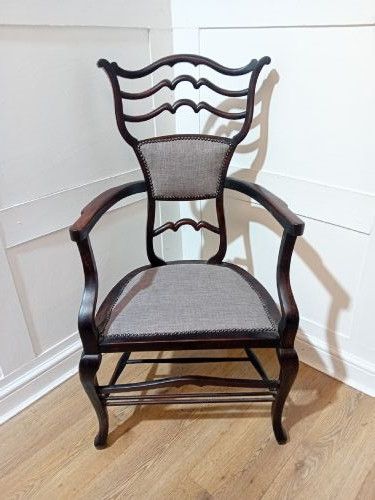
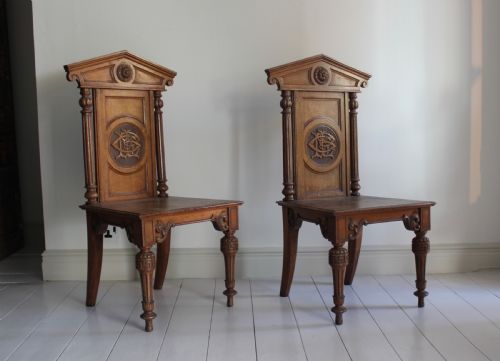


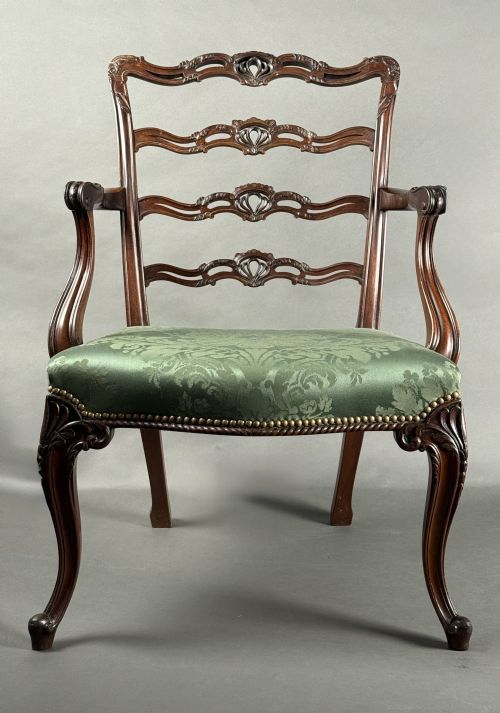
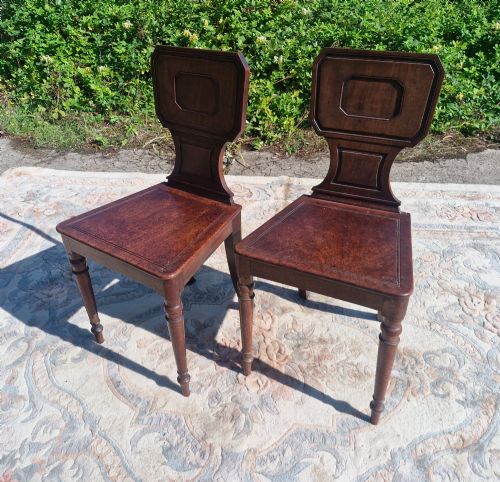
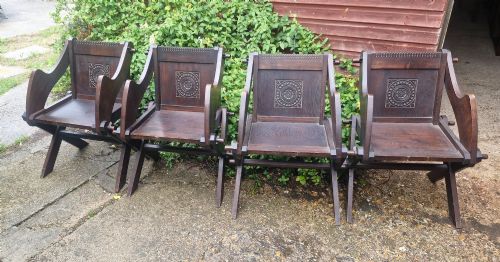
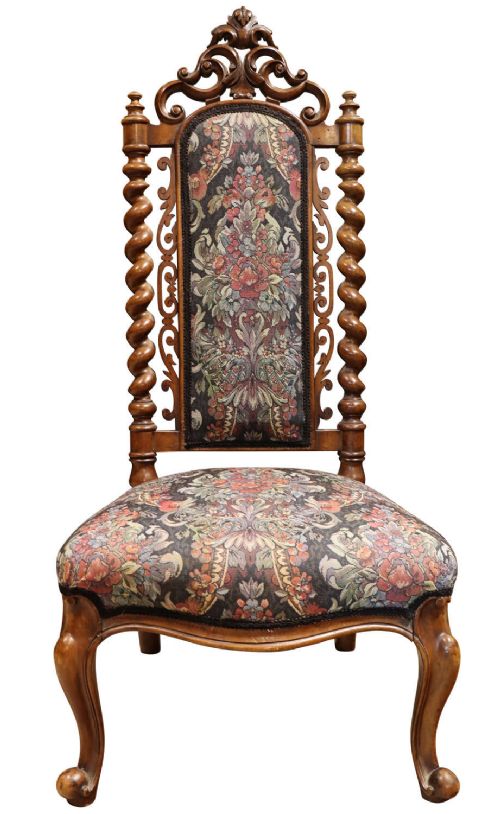
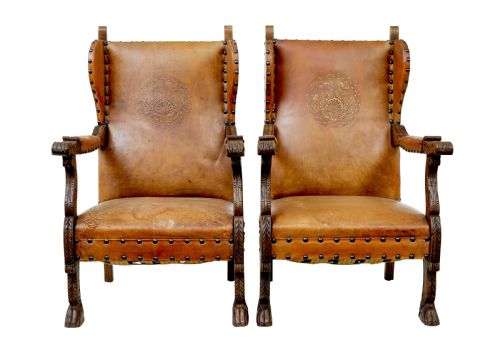
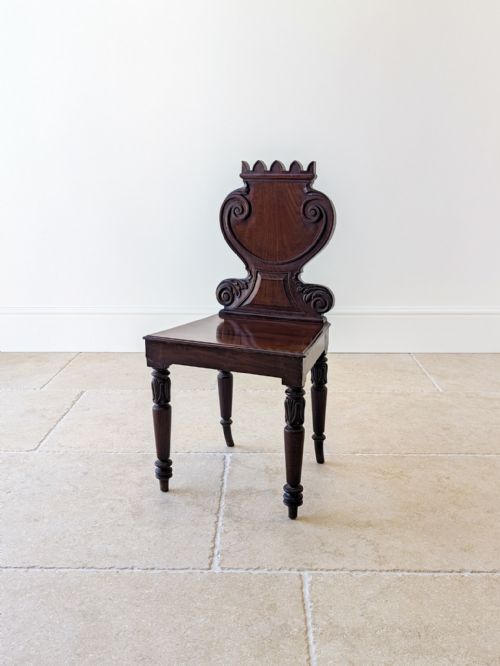
Carved Back Accent Chair
A carved back accent chair brings centuries of timber framing and ornamental relief into a modern room, offering a functional seat with strong period presence.
Carved Back Accent Chair
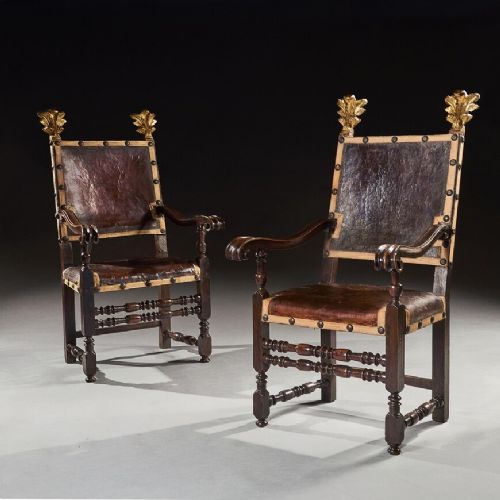
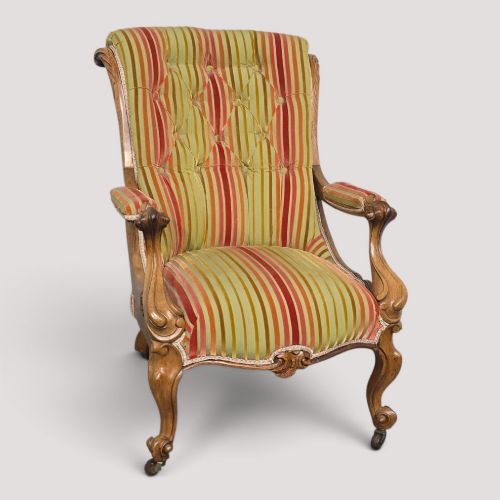
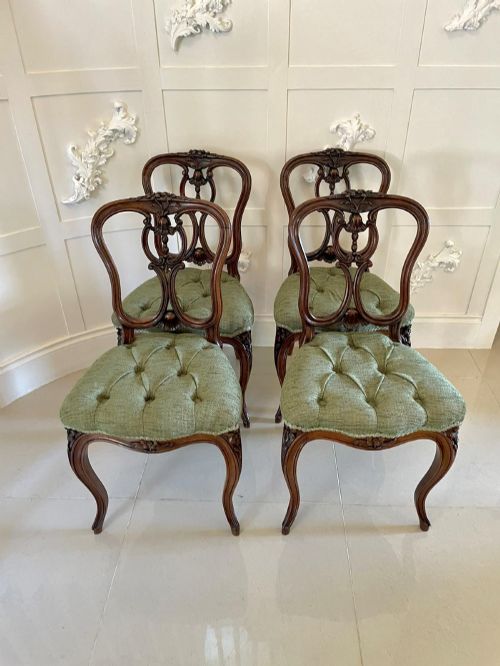
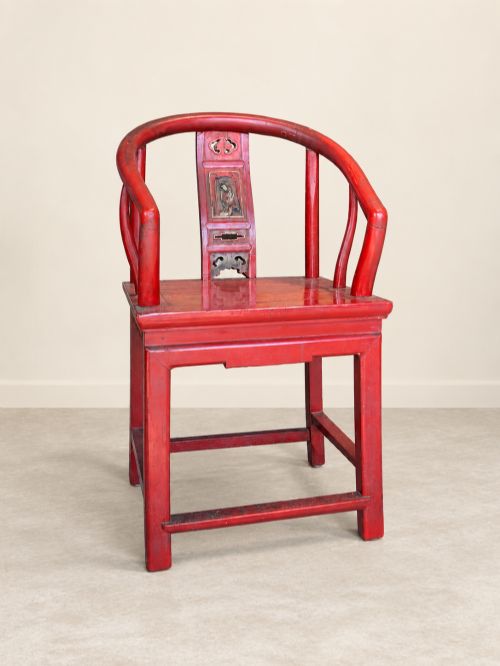
A carved back accent chair spans multiple centuries of seating design, appearing in formats ranging from formal dining and hall chairs to low library armchairs and bedroom nursing seats. These items serve as decorative focal points in domestic interiors while maintaining their original structural purpose as functional seating.
The selection here draws primarily upon nineteenth-century Victorian and Regency examples alongside eighteenth-century George III pieces, constructed in varied timber species. Buyers frequently encounter side chairs and open armchairs displaying carved wooden backrests, cabriole legs, or upholstered panels suited to reception rooms and parlours.
Materials and construction
Cabinetmakers constructed these seats using dense hardwoods such as walnut, mahogany, and oak, often selecting specific grain patterns for visibility on prominent crest rails and back splats. Joinery relied on traditional mortise and tenon frames, reinforced in later revival periods with applied mouldings and parcel-gilt details.
Upholstery methods varied by decade, incorporating materials like embossed leather, silk velvet, tapestry, and plain fabric fixed over webbing or stuffing. Surface finishes range from polished French polish on mahogany to painted or giltwood treatments on French and Italian salon pieces.
Listings incorporate timber varieties such as walnut, mahogany, and oak across periods stretching from the seventeenth century through the twentieth.
Assessing the craftsmanship
The standard of a carved back accent chair rests upon the crispness of the timber relief work and the integrity of the underlying joinery. Superior pieces display deep, hand-chisselled ornamentation rather than shallow machine routing, maintaining sharp corners and balanced proportions across the crest rail and splat.
Originality of surface finish and timber components dictates the standing of an individual seat. Examples that retain their initial hardware, unblemished timber patination, and period upholstery methods command greater respect than those altered by modern restorations or heavy sanding.
Charles Tozer·Thomas Chippendale·Andrea Brustolon
The Carved Back Accent Chair Glossary
- Bergère
- An enclosed upholstered armchair with wooden framing exposed around the sides and back. This French form typically incorporates a cane or padded backrest.
- Cabriole leg
- A furniture leg that curves outward at the knee and tapers inward toward the foot, often ending in a pad or claw shape. The design echoes eighteenth-century stylistic preferences.
- Gainsborough chair
- A wide, open-armed easy chair with a padded back and seat designed during the eighteenth century. These items were originally intended for writing desks or reading.
- Hall chair
- A rigid wooden seat placed in entranceways or corridors, frequently featuring a solid carved back emblazoned with a family crest or painted shield. These utilitarian objects date largely from the eighteenth and nineteenth centuries.
- Parcel-gilt
- Partially gilded woodwork where thin gold leaf highlights specific carved details against a contrasting painted or polished timber ground.
Carved Back Accent Chair: Frequently Asked Questions
Where should I place a carved back accent chair?
These seats suit entrance halls, reading corners, and bedrooms where their decorative woodwork remains visible against plain walls. They function well as individual statement pieces rather than matching sets.
Position the chair away from direct heat sources and strong sunlight to protect vulnerable timber patination and historical fabric coverings from drying out.
How do I identify a Victorian piece?
Victorian examples often employ dark walnut or mahogany with heavy, rounded carving styles influenced by earlier Gothic and Rococo revivals. The turned components tend to be robust and darker in hue.
Examine the underside and interior joinery for machine-sawn marks and screw types, which help separate nineteenth-century manufacturing methods from earlier hand-tool traditions.
Can these chairs handle daily sitting?
Most antique seating remains structurally sound for regular use provided the joints are firm and the frame has not suffered from woodworm or damp. Lighter occasional chairs require more mindful treatment than robust oak hall seats.
Check the stability of the legs and arm fixings periodically, and avoid dragging the chair across carpeted or uneven floors to preserve the foot joints.