
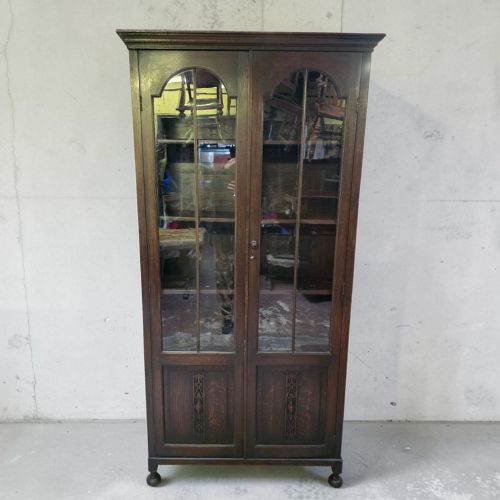
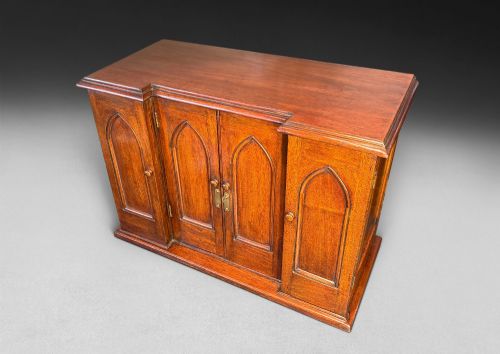
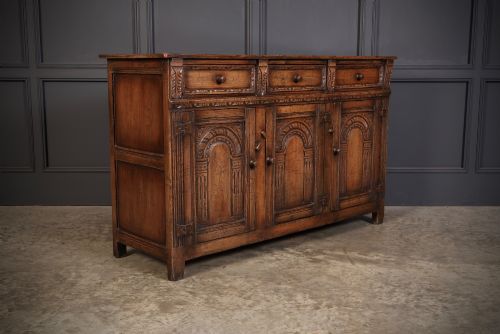
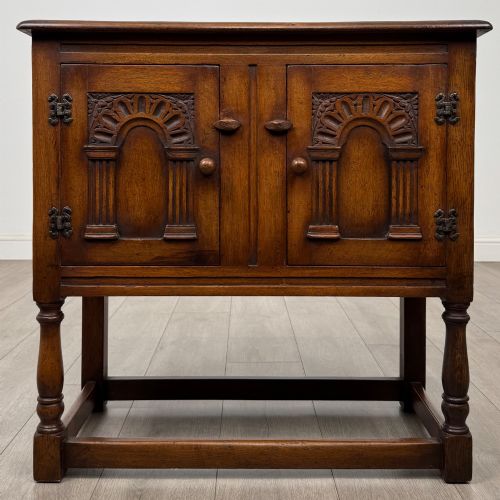


Carved Arch Oak Cabinet
These carved arch oak cabinets span several centuries of vernacular and revivalist craftsmanship, offering substantial storage alongside striking architectural detail.
Carved Arch Oak Cabinet
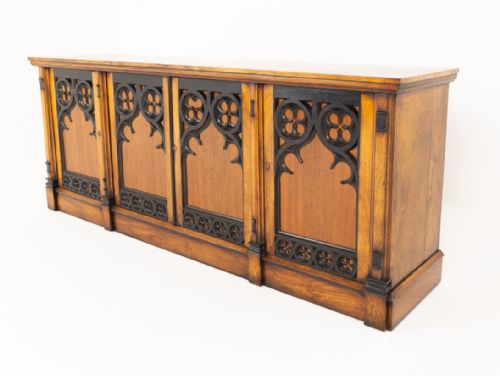
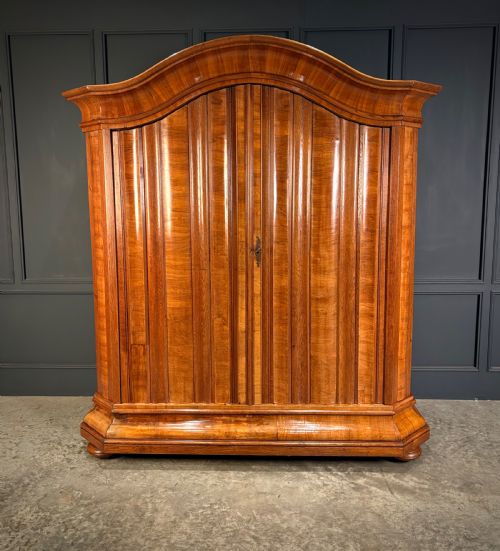
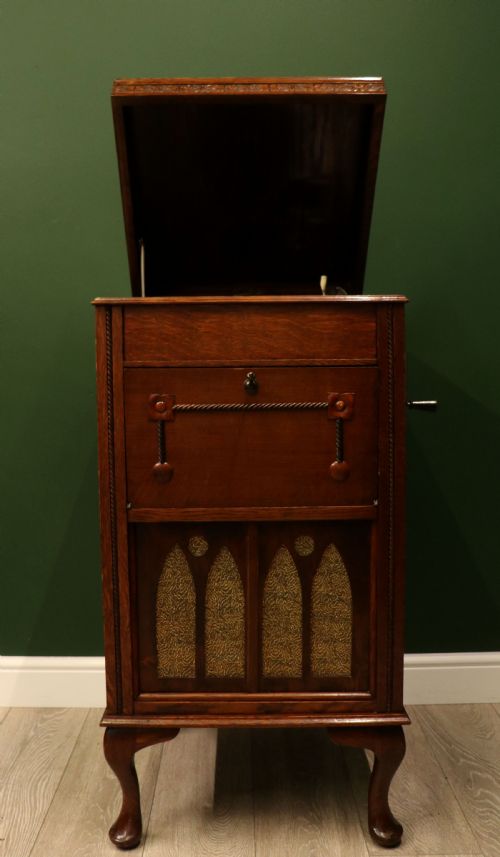
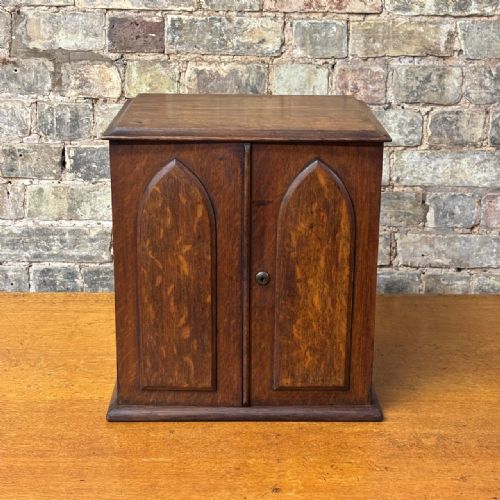
A carved arch oak cabinet brings together sturdy domestic storage and pronounced architectural motifs, drawing on centuries of woodworking traditions. When searching for a carved arch oak cabinet, buyers encounter diverse forms ranging from compact table-top collectors pieces to large linen presses and armoires.
The selections span the nineteenth century, the Edwardian era, and the nineteen-twenties, incorporating regional styles such as Welsh vernacular, French design, and English country pieces. Gothic revival and Jacobean revival influences dominate the aesthetic, frequently displaying pointed arches, panelled doors, and robust timber construction.
Materials and construction methods
Makers relied primarily on solid oak, sometimes accented with walnut or ebonised wood to create contrast within the carved panels and mouldings. Secondary elements incorporate brass, iron, and metal hardware such as hinges and locks, alongside glass door panels on display variants and fabric linings in select cupboards.
Joinery techniques reflect traditional cabinet-making standards, utilising pegged frames, panelled doors, and heavy timber boards designed to endure generations of daily use. Carved details are worked directly into the solid wood grain, combining geometric patterns, barley twists, and architectural archways.
Materials across these listings include solid oak, walnut, ebonised wood, brass, iron, glass, and fabric.
Assessing quality in construction and design
Quality reveals itself in the depth and crispness of the timber carving, where sharper architectural lines and well-defined arches distinguish finer workshop output from simpler vernacular items. The selection of the oak timber itself matters significantly, with tighter grain patterns and uniform colouration indicating superior material selection.
Structural integrity depends on the original joinery remaining tight and true, particularly around heavily loaded doors and linen press shelves. Well-preserved hardware, original hinges, and intact glass or panel work preserve the historical integrity of each piece.
U Phone of Leeds
The Carved Arch Oak Cabinet Glossary
- Arch
- A curved architectural member spanning an opening, frequently carved into cabinet doors and panels within revivalist furniture.
- Linen Press
- A tall storage piece traditionally used for stowing folded textiles and garments, often featuring sliding internal trays.
- Gothic Revival
- A nineteenth-century design movement that revived medieval architectural forms, including pointed arches, tracery, and heavy mouldings.
- Vernacular
- Regional furniture built by local craftsmen to satisfy domestic needs rather than following strict metropolitan design rules.
- Liège Cabinet
- A distinctive style of large storage cabinet originating from Belgium, noted for baroque carvings and prominent cornices.
Carved Arch Oak Cabinet: Frequently Asked Questions
What periods do these cabinets come from?
The available pieces originate primarily from the nineteenth century, alongside Edwardian examples and items dating around nineteen-twenty.
Revival styles such as Gothic and Jacobean frequently draw inspiration from much earlier centuries while maintaining nineteenth-century manufacturing techniques.
Where were these cabinets made?
Geographical origins vary widely across the selection, encompassing English country workshops, Welsh vernacular makers, and continental European pieces from France.
Regional differences appear in the timber selection, carving style, and overall proportions of each cupboard or armoire.
How do I care for antique oak?
Maintain the timber by keeping pieces away from direct heat sources and sudden temperature fluctuations that can cause the solid oak to split.
Apply traditional wax sparingly and buff gently with a soft cloth to preserve the natural lustre of the wood.
Are these pieces suitable for modern homes?
Their robust construction and varied storage formats, from compact table cabinets to large wardrobes, allow them to function effectively in contemporary interiors.
They provide practical storage solutions while introducing distinct historical character and architectural timber detail to a room.