

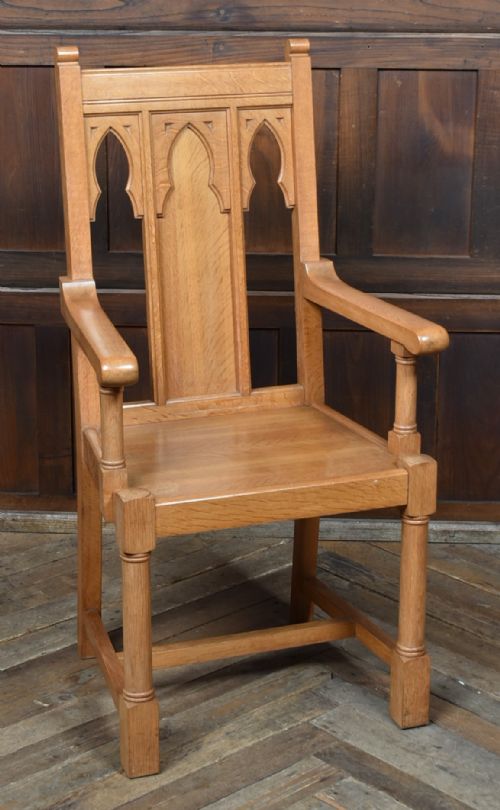


Carved Arch Back Chairs
These carved arch back chairs bring architectural presence to a room through pointed silhouettes and timber frames.
Carved Arch Back Chairs
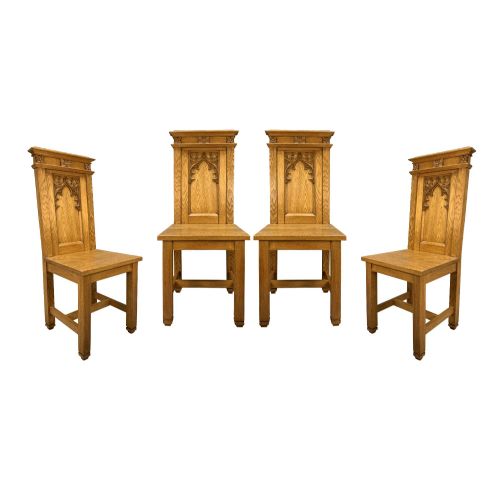
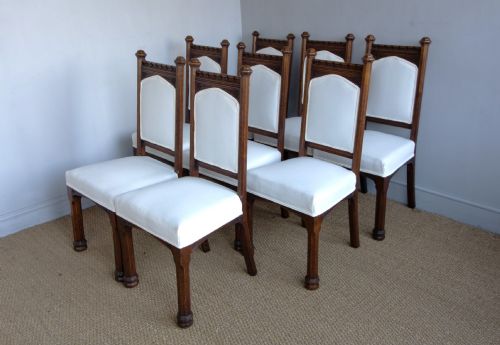
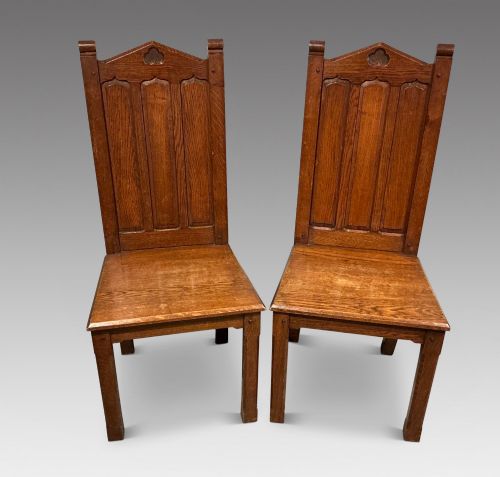
Carved arch back chairs take many forms across the evidence, appearing most frequently as oak hall chairs and dining chairs built in the Gothic Revival style. You will encounter tall arched timbers shaped into pointed profiles, often paired with panelled seats or upholstered leather.
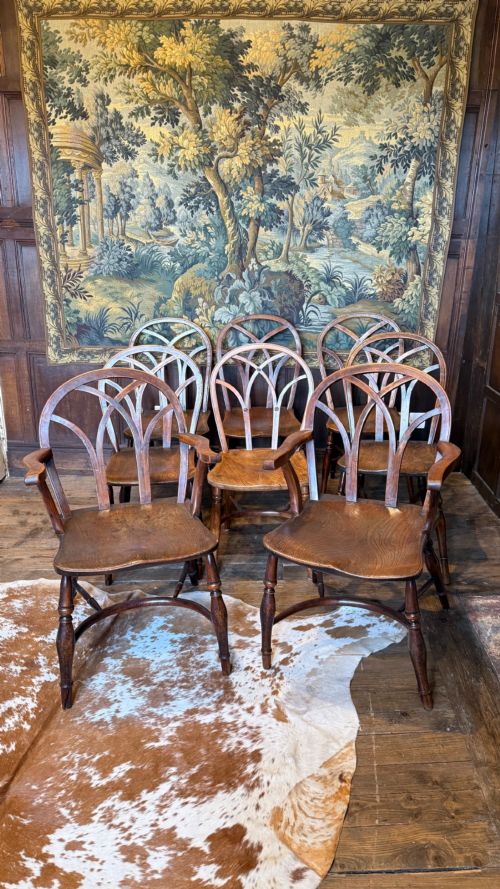
The selection ranges from robust nineteenth century seating in English oak to painted side chairs and Windsor variations. Makers drew heavily on medieval ecclesiastical architecture to shape these tall backs, turning domestic seating into focal points.
How they were made
Makers relied primarily on English oak, mahogany, and pitch pine, shaping solid timbers into upright frames and pointed arches. Joinery typically involved traditional tenons and pegs to support the substantial weight of high backs.
Surface decoration relies on deep relief carving rather than applied ornamentation, tracing tracery and cusped arches directly into the wood. Leather inserts and brass studding appear on upholstered variants, while other pieces feature painted finishes over softwood.
Carved Arch Back Chairs Retail Price Guide 2026
Typical asking prices for carved arch back chairs among the pieces listed under this phrase on Sellingantiques today, from the lower quarter to the upper quarter. They describe what is for sale here now, not the wider market.
Object forms recorded here range from modest side chairs and Windsor variants up to substantial chapel thrones.
What varies in quality
Depth and crispness of the carved tracery distinguish finer examples from simpler vernacular pieces, with sharp architectural mouldings indicating skilled workshop execution. The choice of timber also shifts the balance, as dense English oak and figured mahogany command greater presence than plain pine.
Structural integrity rests on the original joinery within the upright arch joints, which face high stress when the chair is moved. Surviving original surface patination or period leather upholstery further separates standard production from exceptional library or chapel seating.
Norwich Maker·A.W.N. Pugin
The Carved Arch Back Chairs Glossary
- Gothic Revival
- An architectural and decorative style drawing inspiration from medieval building forms, featuring pointed arches and vertical emphasis. This aesthetic defines the majority of the arched seating seen here.
- Tracery
- Openwork stonework patterns translated into woodwork, forming geometric designs within the carved chair back. It provides both structural bracing and decorative rhythm.
- Hall chair
- A rigid, upright wooden seat designed for an entrance hallway rather than prolonged sitting. These pieces prioritize sculptural silhouettes over cushioning.
- Throne chair
- An oversized armchair with an elevated back and heavy proportions, often inspired by ecclesiastical seating. They function as commanding statement pieces within a room.
Carved Arch Back Chairs: Frequently Asked Questions
Where were carved arch back chairs used?
These seats traditionally stood in entrance halls, formal dining rooms, and libraries where their architectural silhouettes could command attention. Chapels and large country houses also utilised them as prominent seating.
Today, they function well as occasional seating or decorative anchor pieces in hallways and living spaces rather than everyday lounging chairs.
How do I care for antique oak chairs?
Maintain the timber by keeping the chairs away from direct heat sources and sudden humidity shifts that can split old wood. Regular dusting with a dry cloth protects the carved details.
Apply a microcrystalline wax periodically to nourish the surface without building up excessive layers that obscure the carving.
Are hall chairs comfortable to sit in?
Hall chairs were built with rigid, upright wooden backs intended for brief use in an entranceway. They offer firm posture rather than relaxed lounging.
Examples fitted with leather seats or padded upholstery provide slightly more give, but the primary design focus remains architectural presence.
How do I identify the period of these chairs?
Dating relies on timber selection, tool marks, and the specific evolution of Gothic Revival design throughout the nineteenth century. Earlier pieces often display heavier English oak construction and hand-cut joinery.
Later Victorian interpretations tend to use lighter framing and machine-finished mouldings, while Edwardian examples occasionally introduce painted finishes.