




Carriage Clock Key
A carriage clock key is the essential winding tool for portable timepieces, designed to keep mechanical clocks functioning properly.
Carriage Clock Key
When you search for a carriage clock key, you are looking at winding implements originally supplied with portable timepieces from the Victorian period through to the mid-twentieth century. The pieces recorded in the evidence emerge from eras spanning the nineteenth century, the Edwardian period, and twentieth-century decades like 1950 and 1960. These items accompany carriage clocks, mantel clocks, and clock accessories that originate predominantly from French workshops and English makers.
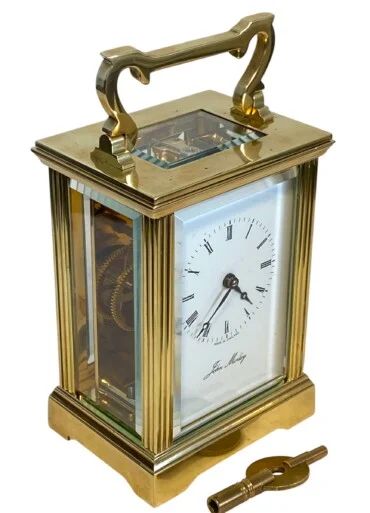
You are most likely to meet examples fashioned from brass, gilt brass, and gilt bronze, often accompanying complete clocks housed in glass panels and leather outer cases. The forms range from standard winding tools to numbered keys that correspond directly to specific clock movements by makers such as Drocourt and Henri Jacot. These objects serve both a practical mechanical function and form part of complete antique clock sets preserved from earlier centuries.
What varies in quality
Quality in these items is determined by the precision of the metalwork, the presence of original matching numbered cases and keys, and the reputation of the maker. Pieces by established makers such as Drocourt or Henri Jacot demonstrate superior finishing compared to unmarked or standard production items from the period. The inclusion of original fitted outer cases and matching numbered keys elevates the integrity of the surviving set.
Materials also indicate the tier of the piece, with heavy gilt bronze and fully engraved gilt brass cases sitting at the upper end of the range. Simpler brass cases and standard carriage clock designs represent more common production. The preservation of the original enamel dial, crisp roman numerals, and working mechanical complications like grand sonnerie or alarm functions further distinguishes finer examples.
Listings feature items from the Victorian and Edwardian periods, alongside mid-twentieth-century pieces from 1950 and 1960.
John Morley·L Epee·Drocourt·Delepine Barrois·Duverdrey Bloquel·Henri Jacot·Asprey·Bernard Freres
The Carriage Clock Key Glossary
- Carriage clock key
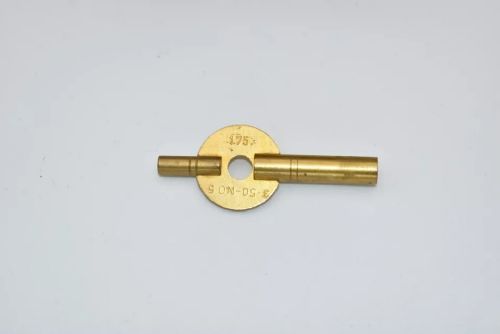
- A specialised winding tool designed to fit the square arbors of portable mechanical clocks. These implements are necessary for tensioning the mainsprings.
- Gilt brass
- Brass metal treated with a thin layer of gold or gold-coloured wash to improve appearance. This finish is commonly seen on nineteenth-century clock cases and associated hardware.
- Grand sonnerie
- A striking mechanism that chimes both the hours and the quarters automatically. This complex complication requires precise gearing within the clock movement.
- Repeating mechanism
- A function that allows the clock to repeat the last struck hour or quarter when a button or lever is pressed. It is frequently found on higher-quality French carriage clocks.
- Corniche case
- A specific architectural style of carriage clock housing featuring flat top and bottom plates with rounded pillars at the corners. This form is typical of French manufacture.
Carriage Clock Key: Frequently Asked Questions
What is a carriage clock key used for?
A carriage clock key winds the mainsprings housed inside mechanical portable clocks. Turning the key tensions the springs to power the timekeeping, striking, and alarm trains.
Without the correct matching key, operating the mechanical movement is not possible. Original keys are therefore valued components of surviving clock sets.
How do I know if a key is original?
Original keys often feature matching numbers stamped on the metal to correspond with numbers on the clock movement or case. Makers such as Henri Jacot and Drocourt utilised this system.
The fit of the square aperture on the key must match the winding arbor precisely. Original examples show consistent wear and metal patination matching the clock housing.
What periods do these clocks and keys come from?
The pieces recorded in the evidence date primarily from the nineteenth century and the early twentieth century. Specific periods noted include Victorian, Edwardian, and the 1950s and 1960s.
French makers dominated production during the nineteenth century, creating gilt brass and bronze pieces in various revival styles. English retailers also imported and retailed these movements.
What materials were used for carriage clocks?
Carriage clock cases are constructed predominantly from brass, gilt brass, and gilt bronze, fitted with glass panels on all sides. Dials are typically made of white enamel featuring roman numerals.
Travel cases accompanying these clocks are commonly made of leather lined with velvet or silk. The keys themselves are formed from shaped metal with square interior apertures.