



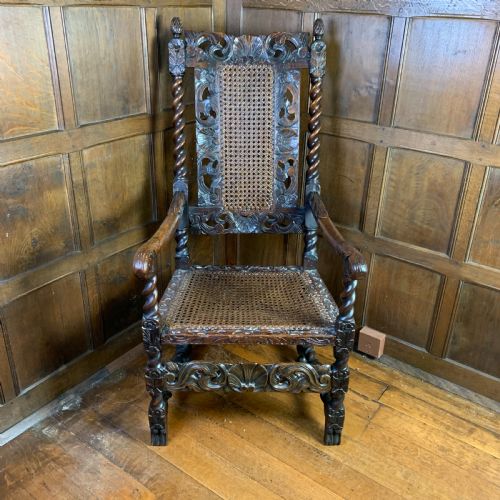


Carolean Walnut Armchair
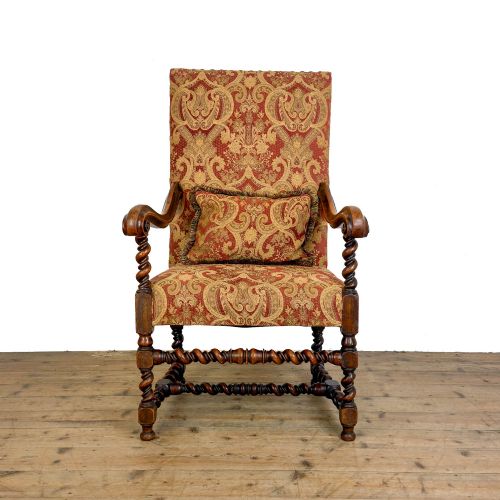
A carolean walnut armchair brings seventeenth-century presence to a room, trading quiet lines for high relief and structural timber.
Carolean Walnut Armchair
The search for a carolean walnut armchair leads directly into seventeenth-century seating and its later nineteenth-century revivals. Buyers encounter authentic period examples alongside revival pieces built across the Victorian era and into nineteen-ten.
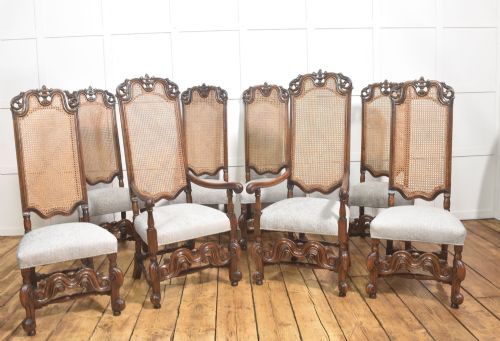
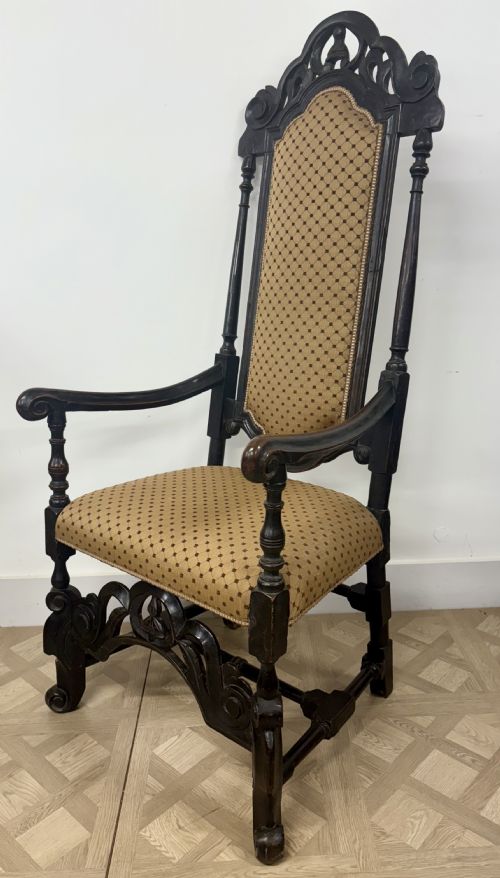
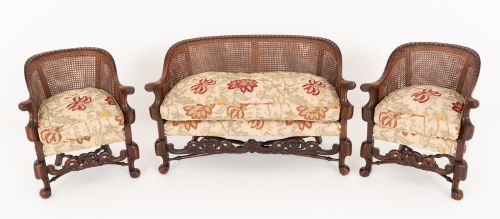
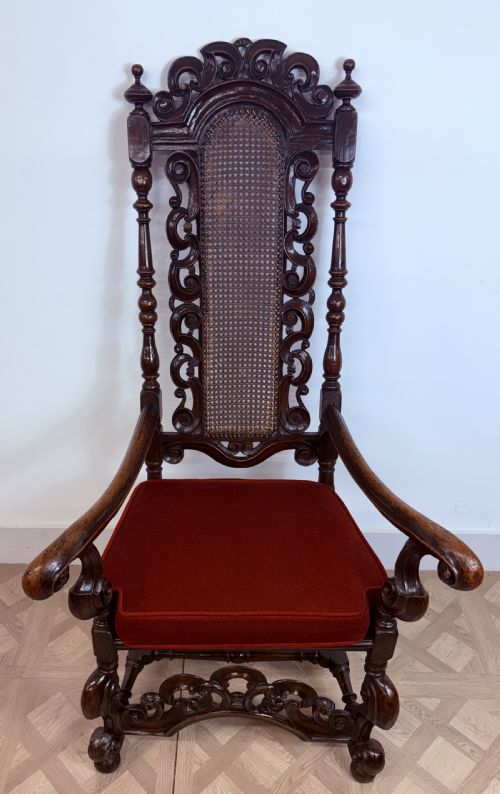
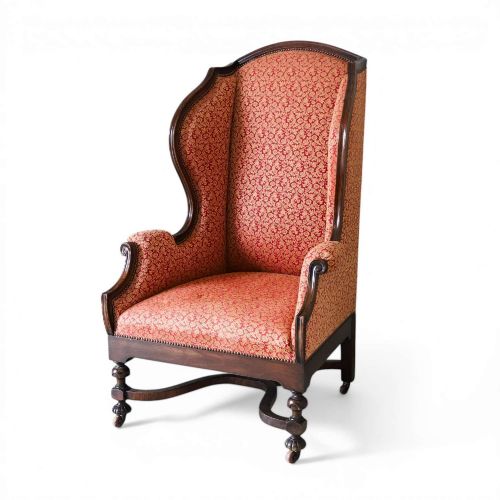
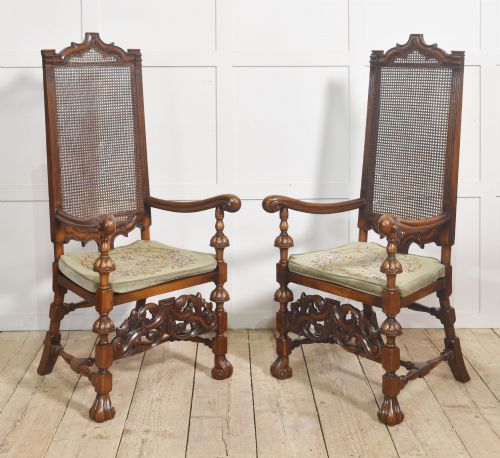
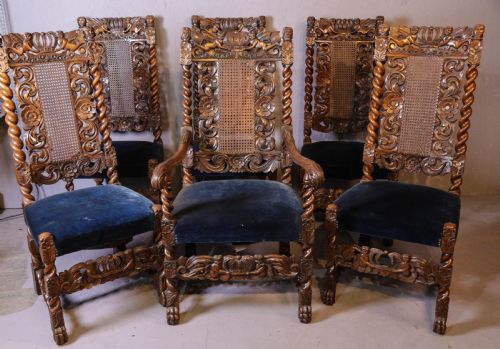
Forms span sturdy elbow chairs, high-back dining suites, and large open throne chairs upholstered in velvet, tapestry, or modern fabric. Walnut remains the central timber, often paired with cane panels or deep textile fringe.
Assessing quality and craftsmanship
Quality rests in the crispness of the walnut carving and the integrity of the timber frame rather than surface finish alone. Finer pieces display deep, undercut relief work on scrolls and crests that holds its definition across the arms and legs.
Proportion and scale separate standard seating from exceptional library thrones and high-back armchairs. Original seventeenth-century construction commands attention through authentic patination, whereas revival interpretations depend on the weight and selection of the walnut timber.
Some carved walnut frames carry secret provenance notes tucked inside the upholstery.
The Carolean Walnut Armchair Glossary
- Carolean
- The period spanning the reign of Charles the Second, noted for lavish wood carving, scrolls, and cane seating. This style defines the ornamental vocabulary of late seventeenth-century English furniture.
- Cane
- Split rattan woven into patterned mesh panels for chair backs and seats. It offers lightweight flexibility while maintaining frame strength.
- Scroll arm
- A curved terminal shaped like a rolled scroll, typical of Baroque seating designs. It provides an ergonomic handrest while adding sculptural movement to the silhouette.
- High-back
- A tall vertical chair frame designed to support the head and shoulders, frequently seen in seventeenth-century dining sets and revival suites.
- Tapestry
- Woven textile used for upholstery, often featuring pictorial or floral designs. It brings historic texture and colour to period frames.
Carolean Walnut Armchair: Frequently Asked Questions
How do I spot a reproduction?
Examine the timber colour, tool marks, and wear patterns across the frame. Nineteenth-century revivals often feature heavier carving and darker patination compared to seventeenth-century originals.
Check the joinery and hardware used in the construction. Hand-cut pegs and traditional joinery point to earlier dates, while machine-cut elements suggest later revival periods.
Are these chairs comfortable for daily use?
Many examples feature upright backs and rigid carved wooden arms built for formality rather than lounging. High-back and dining variations encourage an upright posture.
Upholstered wing chairs and bergere suites offer softer support with padded seating foundations. Consider adding custom cushions if you plan to sit for extended periods.
What is the difference between original and revival pieces?
Original pieces date from the seventeenth century, showing age-related wear, oxidised walnut surfaces, and period-specific construction methods. They carry centuries of handling and historical patina.
Revival pieces date from the Victorian era up to nineteen-ten, replicating the baroque aesthetic with heavier timber and nineteenth-century upholstery techniques.
How should I care for antique walnut?
Keep walnut furniture away from direct sunlight and heat sources to prevent the timber from drying out and splitting. Maintain a stable room temperature to protect the wood and cane panels.
Dust regularly with a dry cloth and apply a microcrystalline wax sparingly when the surface appears dry. Avoid commercial liquid polishes that contain silicones.