




Carolean Carved Oak Coffer
A carolean carved oak coffer brings rugged seventeenth-century craftsmanship directly into a modern room, offering authentic period storage with deep historical character.
Carolean Carved Oak Coffer
When searching for a carolean carved oak coffer, collectors look at heavy seventeenth-century storage furniture originating from English workshops. These pieces span styles from Jacobean to Charles II, representing a sturdy domestic tradition.
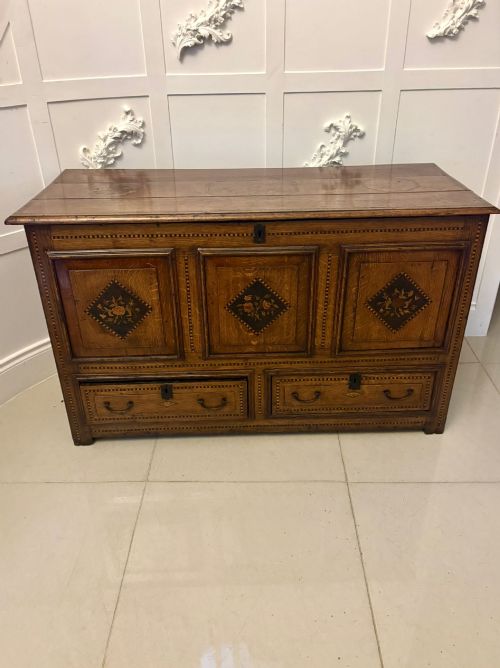
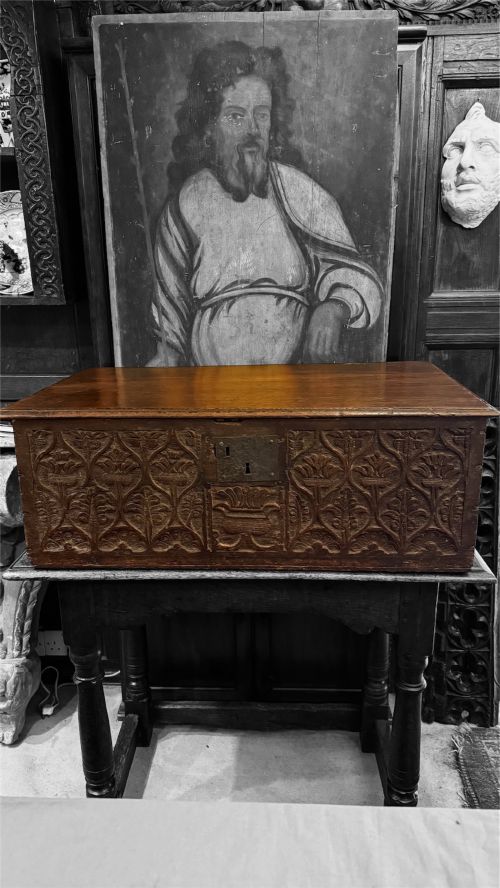
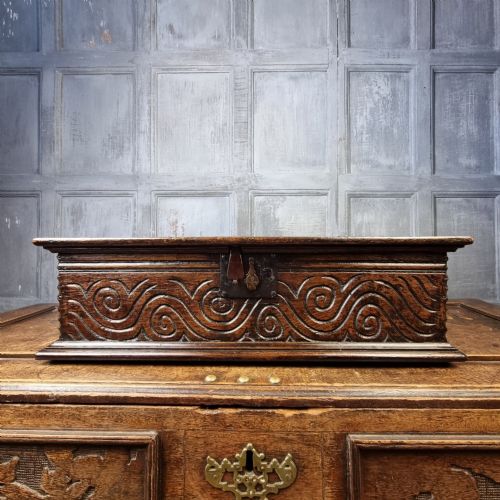
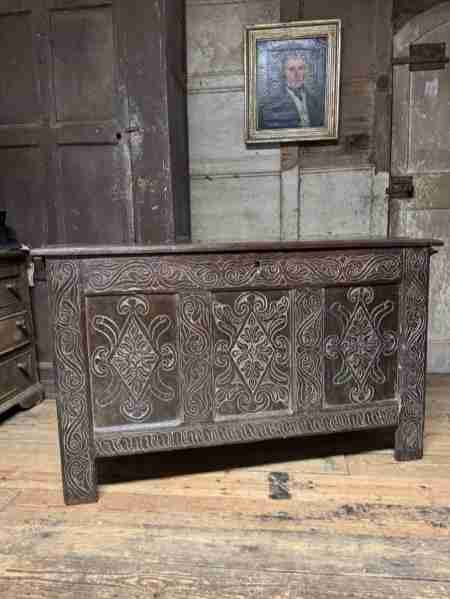
The most common forms on this page include traditional coffers and chests, alongside related pieces like mule chests, desk boxes, document bible boxes, and box stools. They survive from the seventeenth century, often showing regional English origins such as Lakeland or Exeter.
Each carolean carved oak coffer demonstrates the utilitarian needs of its period, serving initially for clothing, valuables, or documents before becoming prized decorative antiques. Buyers value the genuine period surface and structural honesty visible in these surviving domestic items.
How they were made
Construction relies primarily on solid oak, shaped with traditional joinery techniques suited to seventeenth-century workshops. Carpenters utilised durable local timber to build heavy frames capable of enduring centuries of household use.
Surface enrichment often includes detailed carved ornamentation alongside structural elements of iron, wrought iron, and brass. Certain examples incorporate marquetry inlay to add decorative contrast to the dark timber surfaces.
Carolean Carved Oak Coffer Retail Price Guide 2026
Typical asking prices for carolean carved oak coffer among the pieces listed under this phrase on Sellingantiques today, from the lower quarter to the upper quarter. They describe what is for sale here now, not the wider market.
What varies in quality
Quality separates through the crispness of the original carving and the integrity of the timber surfaces. Pieces retaining their early solid plank lids and original structural fixings command greater appreciation from collectors.
The depth of regional attribution, such as documented West Country workshop origins, elevates certain examples above standard domestic chests. Furthermore, the survival of undisturbed patination across the oak defines the upper tier of these historical items.
Thomas Dennis
The Carolean Carved Oak Coffer Glossary
- Carolean
- Pertaining to the reign of Charles II, spanning the mid-to-late seventeenth century. This era produced distinctive carved oak furniture with vigorous surface ornamentation.
- Mule chest
- A storage chest featuring one or more drawers beneath the main compartment. It bridges the transition between traditional coffers and modern drawer chests.
- Bible box
- A small tabletop box historically used to store household ledgers and Bibles. These portable pieces frequently feature sloping lids and carved decoration.
- Marquetry
- The art of applying small pieces of veneer to form decorative patterns. This technique appears on select seventeenth-century pieces to enrich the timber surface.
- Joined oak
- Furniture constructed using mortise and tenon joints secured with wooden pegs. This method defined sturdy seventeenth-century cabinet making before the widespread adoption of dovetails.
Carolean Carved Oak Coffer: Frequently Asked Questions
What is a carolean carved oak coffer?
A carolean carved oak coffer is a heavy seventeenth-century storage chest decorated with period carving from the reign of Charles II. These pieces served as secure household storage for textiles and valuables.
Today, they function as focal storage items in traditional and contemporary interiors alike.
How were these coffers originally used?
Households utilised these sturdy chests primarily to store valuable blankets, clothing, and domestic documents securely. Their robust construction kept contents safe from dampness and pests.
Over time, smaller variants evolved to hold books, writing materials, or family Bibles.
How do I care for seventeenth-century oak?
Maintain seventeenth-century oak furniture by placing it away from direct heat sources and dramatic humidity shifts. Natural beeswax applied sparingly helps preserve the dry timber surface.
Avoid modern liquid polishes that can penetrate old grain and alter the historic patination.
How do I distinguish regional styles?
Regional variations appear in the specific carving motifs, construction methods, and local timber characteristics. Workshops in areas like Lakeland or Exeter often utilised distinct decorative patterns.
Comparing structural details helps attribute pieces to specific seventeenth-century English traditions.